nder the leadership of Professor Freddy Boey, who became City University of Hong Kong (CityUHK) president in May 2023, the University is reshaping education for a rapidly changing China through its "venture creation" model and global collaboration.
Known for his decades-long leadership at Singapore's top universities, Boey has championed "Innovating into the Future," a program that aims to Ucreate a globally connected academic environment. His efforts have earned recognition: CityUHK was named "Most International University in the World" by Times Higher Education in 2024, 2025 and 2026.
While CityUHK's iconic Kowloon campus remains its heart, its expansion in the Chinese mainland, from Dongguan and Shenzhen in Guangdong Province to Chengdu, Sichuan Province, reflects a strategic effort to integrate research, innovation and industry collaboration.
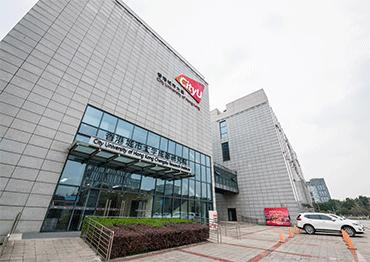
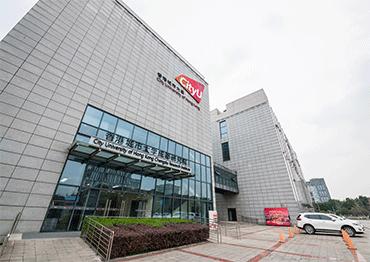
Most recently, its Chengdu Research Institute, which opened in 2017, has evolved into an innovation hub for technology transfer, startup incubation and cross-regional collaboration in areas such as AI, new materials, biomedical sciences, energy tech and IP commercialization. It currently serves as CityUHK's key platform to scale its innovation model in western China and to connect global innovation resources with local industries.
Rather than just providing lab space, it actively cultivates high-tech startups, using patents as the foundation for new startups and promoting the translation of research into real-world applications.
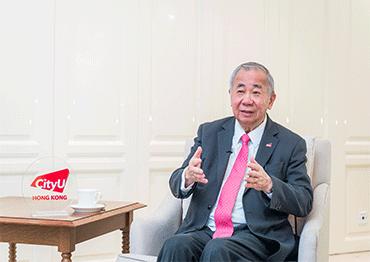
NewsChina spoke with Boey at the CityUHK Chengdu Research Institute about the university's strategy in the Chinese mainland and the future of higher education.
NewsChina: What characteristics make CityUHK stand out?
Freddy Boey: I led two top universities in Singapore for 36 years. Hong Kong is of great interest to me, as it offers a unique platform connecting China with the world. The reason I went to Hong Kong was because of [the Chinese mainland]. When I came to CityUHK, I saw a very competent university. But my interest in any university is its future.
Universities cannot do everything. But they can prepare young people for a bright future. When I came to CityUHK, I made a quick decision to focus on two things. The first thing was to make the university international.
We say a university is "a universecity." Not everybody can travel around the world, but students can come to Hong Kong and see the world through a university. That's education. It's not about passing exams or learning a speciality. It's learning about life and preparing for life.
The second thing is innovation. Everyone talks about innovation, but what do they really mean by it? Everybody points to Silicon Valley as the modern invention of technology innovation. But the world changes.
So let me come back to Hong Kong and [the Chinese mainland]. I run this CityUHK not just as a university. Universities are not a special, unique creature that makes professors rich or gives them an easy life. Why are universities so important? Why do so few universities in the world fail? Companies fail, but universities usually won't. Universities are the basic institutions of society. But for me, this institution is not just for a select group of young people, but for the city of Hong Kong and for [the Chinese mainland].
When you ask a young person in this part of the world, more often than not, they don't just want a job. They want something valuable. They know that society has changed, and they want something that aligns with future trends, not just a job. That is both exciting and encouraging.
When I run CityUHK, I don't want our students to focus only on writing good research papers. I hope to provide a culture, an environment that young people want to explore. I always encourage them to run student societies and have interests, not to just get a degree, but to get an education. There is a big difference between the two.
NC: How does CityUHK compare with other mainland universities?
FB: There are big challenges, yet also opportunities for Chinese mainland universities. They must transform because society has already transformed.
Companies transform rapidly because if they don't, they die. Universities may not die, but they can fall behind, leaving all the young people they've educated behind as well. The big opportunity for mainland universities lies in the future.
AI has changed the world, but we don't need to worry about it too much. It's better for universities not to worry too much about students passing exams or the potential for cheating with AI. What is important is that students receive an education that prepares them for future trends, and they are confident in their futures. I think this is a huge challenge. But if you get it half right, or even one-quarter right, the country's future will be really amazing. Just one Stanford University can transform the entire US West Coast. In China, there are hundreds of good universities. You just need a few of them to drive transformative change.
NC: Why did CityUHK choose Chengdu?
FB: In Chengdu, I see a strong industrial base and tremendous potential for higher education and innovation development. I see opportunity. Sichuan Province has tons of industry. What the city needs is a continuous stream of talent and technology to support its future growth.
NC: How will CityUHK develop education, research and production integration at the Chengdu Research Institute?
FB: As always, we start with startups. Startup companies need oxygen to survive in the market. We need to work even more closely with industries.
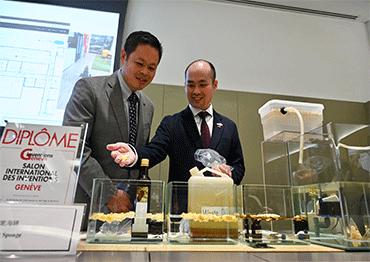
One of the things I help set up is the IP Transformation Platform. The IPs come from CityUHK and international innovation resources. What's it for? Chinese companies are seeking technologies. The majority of them [IPs] are from foreign countries, such as Australia, Israel and Singapore. They worry about coming to China because they fear people might steal their ideas. But the trading platform is bona fide. So we have willing buyers and also willing sellers, and they trade.
Once that happens, more things can be done. So with the IP Transformation Platform, you have the whole ecosystem training talent for creating startups, bringing technology to industries and also the IP side. This forms a full innovation ecosystem linking talent, IP, capital and industry.
NC: You have talked about CityUHK's "venture creation" model, which actively designs and creates companies rather than relying on traditional incubation. Could you elaborate on that?
FB: Most think they could help startup companies, but few think they could give birth to a startup company. In Singapore, I came up with the idea that universities would be the best place for this because they have two advantages: one is a huge library of IPs. Without IPs you can't create good startups. The second is that every year, clever people are fighting to get into these universities. Universities, therefore, have both the ideas and the talent needed to create new ventures. If we create 100 startups a year, even with a small success rate, over time, we build a strong pipeline of successful ventures.
NC: What types of partnership does CityUHK aim to establish with local governments?
FB: When I worked with cities like Chengdu (Sichuan Province), Hangzhou (Zhejiang Province) and Qingdao (Shandong Province), we worked directly with the local government. We'd give them a concept: What they need for the future is not just more students, but training them in a very specific way for innovation.
Chinese mainland civil servants are incredible. Managing a city like Chengdu is akin to running a country. In fact, overseeing cities in China might be even more challenging than managing Singapore, given that Singapore has a population of only five million, whereas Chengdu boasts a population of over 20 million.
The good news is that China has been so up for investment and policy support. Every city, even third- and fourth-tier cities, has funds for a startup company, funds for investment and also joint funds from the private capital. So all I need to do is tap into these resources. And that's another great thing about China. The one thing that many people don't realize is that Chinese governments [at all levels] place a high value on knowledge. They place a high value on knowledge and are willing to offer strong financial support when cooperating with universities.
To achieve long-term cooperation with local governments, we would demonstrate our worthiness. It's very hard to measure this by GDP, but it's not something I can measure on my side. I measure by talent training. We would show them how many professionals we've trained. It's the government that needs to keep these talents in the region for as long as possible.
NC: What long-term achievements do you expect for the Chengdu Research Institute?
FB: I hope young people in Chengdu see CityUHK as an opportunity to experience internationality without physically leaving, and to learn about technology and get involved in it. That's how I would expect them to experience it, not just get a degree. We will include master's programs. [But] what's more important is that they use them to have the option, if they dream, to have a startup, come to us and have a proper training here. So, we will have programs that will cater to graduate students and cater to businesspeople.
In the first few years, I'd like to measure it by the number of talents trained. Five years later, we can talk about how many startups have benefited the city by supporting big industries and so on. But it would take three to five years to do that, because startups can't be successful overnight. First things first, train talent. Without talent, you won't have startups, and ultimately no sustainable innovation ecosystem.
 Old Version