Since the late 1960s, filmmakers like Chang Cheh and King Hu ushered in the golden age of Hong Kong wuxia cinema. But it was Bruce Lee that propelled the genre onto the world stage with films like Fist of Fury (1972), The Way of the Dragon (1972) and Enter the Dragon (1973).
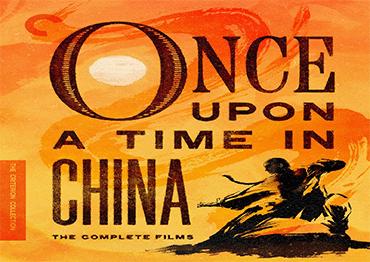
Later, kung fu comedies pioneered by Yuen alongside Jackie Chan brought humor to martial arts with films such as Drunken Master (1978) and Snake in the Eagle’s Shadow (1978). Jet Li’s Shaolin Temple and Once Upon a Time in China series blended realism, history, nationalism and martial arts to set benchmarks for the genre.
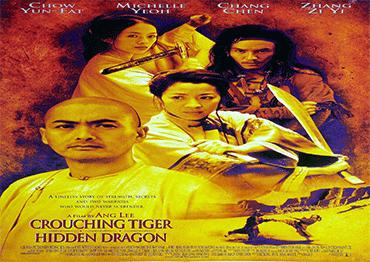
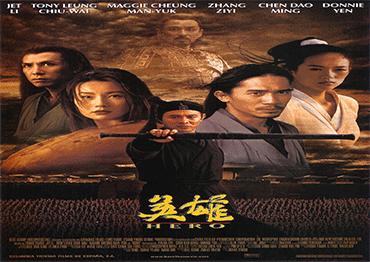
The 2000s marked wuxia’s critical peak. Ang Lee’s Crouching Tiger, Hidden Dragon won the Oscar for Best Foreign Language Film, paving the way for blockbusters such as Zhang Yimou’s Hero (2002), House of Flying Daggers (2004) and Curse of the Golden Flower (2006).
Yet in recent years, the genre has undergone a conspicuous decline marked by a decrease in output, dismal earnings and waning audience reception. In 2025, renowned martial arts filmmaker Tsui Hark’s big-budget Legend of the Condor Heroes: The Gallants flopped, scoring 5.4/10 on Douban, China’s leading media review website.
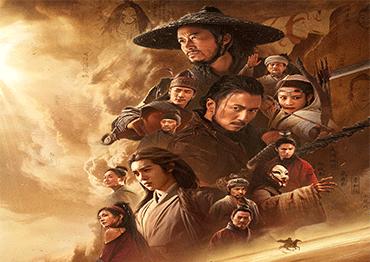
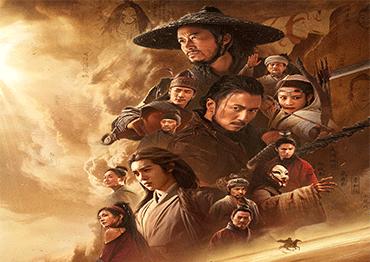
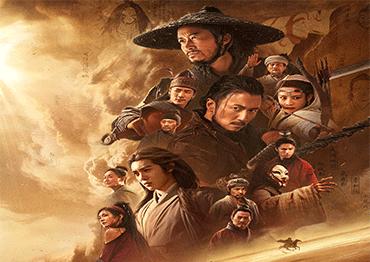
Blades of the Guardians offers hope for the genre’s revival. It received a 7.5/10 on Douban, where many praised the production’s efforts to present an “authentic” and “old-school” martial arts film compared with recent CGI-saturated wuxia releases.
“Cherish this film. There won’t be many filmmakers making wuxia films like this in the future,” commented Douban user Zou Ma.
Beyond action, the film resonates with modern audiences through its themes and characters.
“What touched me most was the film’s portrayal of female characters,” Xia Yan, a martial arts movie fan from Shanghai, told NewsChina. “In traditional wuxia films, women are often depicted either as subjects of romance or marginal roles without any character development. In this film, women are independent, empowered and complex,”
“Ayuya, in particular, has her own arc of personal growth: from a rebellious daughter who boldly refuses an arranged marriage to a furious archer who avenges her father to a strong-willed, powerful woman who vows to be ‘queen of the desert,’” Xia said.
The film embraces a cast of morally complex, anti-heroes that are relatable to contemporary viewers. Instead of fighting for nation or glory, their motivations are more utilitarian – money, personal freedom and self-respect.
“We didn’t want to make a costume film that masquerades as wuxia. We wanted to present a work that touches the minds and souls of modern audiences,” said the film’s screenwriter Yu Baimei in an interview with The Paper.
He likens Dao Ma to the delivery riders that work in China’s cities. “He chooses a life of self-imposed exile in the Gobi Desert, far away from the political center of Chang’an. To raise his nephew Xiao Qi, he has to make ends meet as a bounty hunter,” Yu said. “Dao Ma is a rather unnoteworthy bounty hunter using his exceptional martial arts skills just to make a living. He is not a superhero at all. He’s only protecting the people he cares about,” he added.
For Yuen Woo-ping, the wuxia spirit persists in everyday acts. “Times may change, but the core message does not,” he said at the Beijing seminar. “Today, this spirit means protecting people we care about, the faith and values we believe in, and the peaceful life we crave.”
 Old Version