Old Version
Cover Story

Sketchy Premises

A new wave of Chinese comedy abandons story and moral messaging for pure absurdity, resonating with young viewers online. But as the trend goes mainstream, will the laughs last?

By Li Jing , Xu Ming Updated Jun.1

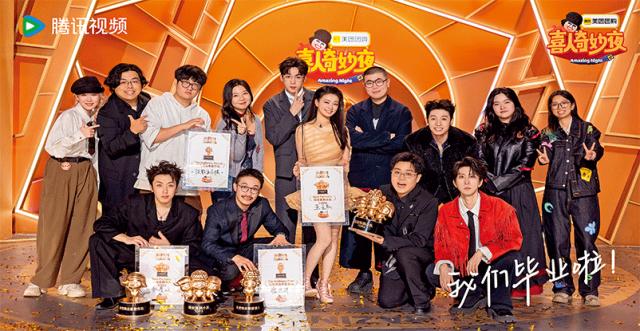
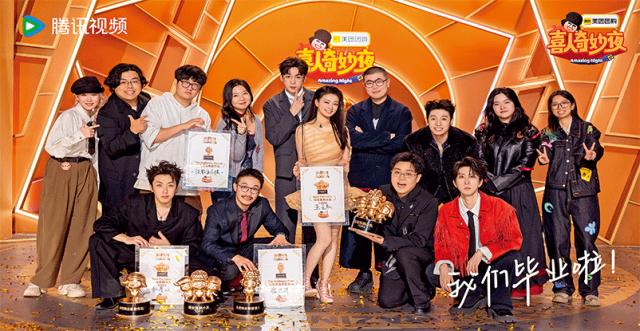
Winning comedy acts on Amazing Night’s second season pose with their trophies in Beijing, December 2025 (Photo Courtesy of Interviewee)

On hit variety show Amazing Night, one sketch won the internet for its sheer absurdity. 

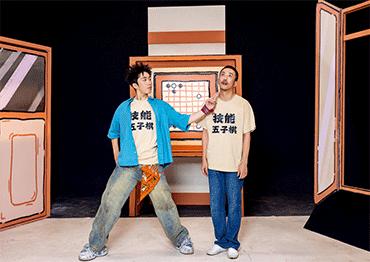
In "Gomoku with Skills," a young champion of the ancient chess-like game visits a Gomoku school, where a student and teacher show off a string of silly strategies. 

The student and teacher (played by the comedy duo Two Aliens) toss away pieces and flip the board, claiming the moves mean "instant victory." The ensuing loose plot and rapid-fire lines seem more like random ideas than jokes. 

And yet, it has become one of the most widely shared comedy clips in China since it aired in late September 2025. 

By December, the sketch had 2.5 billion views, while Amazing Night's second season surpassed 10 billion views, making it the most-watched comedy program across all short-video platforms that year. 

For many viewers, the appeal is simply a lack of message. "I can just laugh without feeling any burden," said Junjun, a Beijing resident who watches the show with her daughter after work. "They're not trying to teach you anything." 

"Abstract" has become the most common word viewers use online to describe their surprise and confusion at the surreal performances of Zhang Xingchao and Li Jiacheng, the comic duo behind Two Aliens. 

A mix of postmodern and surrealist humor, the "abstract" genre has gained mainstream appeal in China, and not only with comedians. Viral dances, memes and even marketing, like KFC's "Crazy Thursdays" campaign, lean into this form of experimental, fringe humor that recalls the surrealism of British sketch comedy troop Monty Python and the "anti-comedy" of American performer Andy Kaufman. 

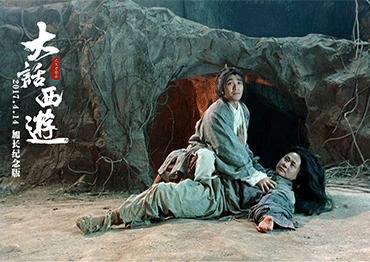
Closer to home, some have likened the trend to the mo lei tau ("nonsensical") comedies of Hong Kong cinema made famous decades earlier by the films of actor-writer-director Stephen Chow, like Kung Fu Hustle (2004). 

But beyond its roots, Amazing Night (formerly Super Sketch Show) is widely considered the accelerator for this comedy genre, whose success is revealing a greater shift in audience tastes. For many younger viewers, comedy is no longer expected to deliver a message or social commentary. Instead, it offers something else, and many viewers are simply having fun figuring out what that is. 

"I love this kind of vibrant insanity!" wrote "Xiaoyuminaicha" on Sina Weibo about "Gomoku with Skills," where others said it had "broken conventional perceptions" and "reshaped how they understand comedy." 

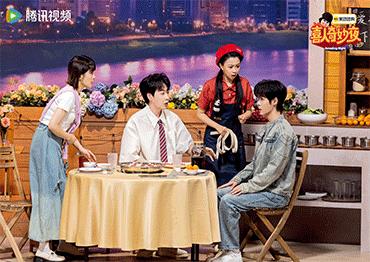
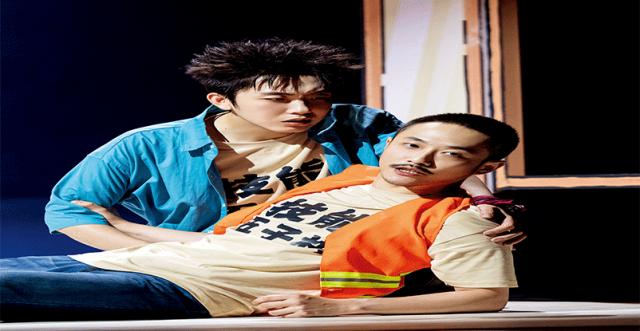
A screenshot of a comedy sketch on the second season of Amazing Night by performers Wang Nan (in red shirt, standing) and Wang Guang (seated, center), Beijing, 2025 (Photo Courtesy of Interviewee)

But What Does It Mean?
Chinese comedy has long been tied to storytelling and moral expression. From traditional Chinese stand-up called crosstalk to family-friendly sketches on the annual Spring Festival Gala, humor has traditionally carried clear narratives and emotional or moral messages. 

This new wave of sketch comedy, brought into the mainstream by Amazing Night, is built on a different logic. Rather than telling complete stories, these sketches often begin with a single absurd premise and escalate it through repetition and exaggeration. Narrative is secondary and emotional resolution is optional. 

An early example is "Father's Funeral," which appeared on the first season of Amazing Night's predecessor Super Sketch Show in 2021. 

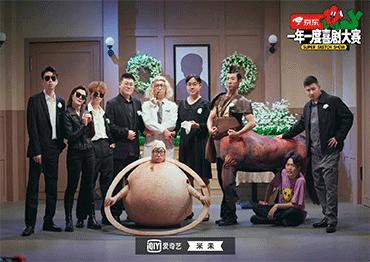
At a funeral, a grieving son encounters a string of bizarre visitors, including Albert Einstein, a gang leader and even the planet Saturn, each claiming to have known his father. The sequence never resolves into a coherent explanation. The humor lies in its refusal to do so. 

Such sketches raise a basic question: does comedy need to mean anything at all? 

For many of its creators, the answer is no. Performers Zhang Xingchao and Li Jiacheng of Two Aliens told NewsChina that they once attempted to develop a sketch with a message about struggling, unknown actors, based on their own experiences. However, they found it lengthy, overly complex and not funny, so they abandoned it. 

Li Nannan, executive producer of Amazing Night, said that while writing a family-themed sketch, performer Wang Nan initially tried to explore the unique emotional bond between mothers and daughters in East Asia, but the cast dropped the idea. "These actors are very sensitive about avoiding overly sentimental content," Li said.

A screenshot of “Gomoku with Skills”starring Zhang Xingchao (right) and Li Jiacheng on the second season of Amazing Night in 2025 (Photo Courtesy of Interviewee)

The cast of a sketch called “Father’s Funeral” performs on Super Sketch Show, predecessor of Amazing Night, which aired in 2021

‘Simple Enjoyment'
The show's popularity reflects how well this format caters to fragmented viewing habits in the age of short video. "It's tailored to short attention spans and meets the needs of viewers who just want simple enjoyment," Junjun said. 

Most are fast-paced sketches, often around 10 minutes and dense with punchlines, requiring little context and delivering immediate payoff. 

"Their only goal is to make people laugh. They don't have additional aims like traditional comedy," she added. 

These "abstract" sketches cater to a broader emotional need. "In an era of intensifying competition, young people accumulate fatigue from an overload of meaning," wrote Dai Shuo, vice director of the School of Television and Audiovisual Arts at the Communication University of Zhejiang, in a March article in newspaper the Guangming Daily. "Absurd and exaggerated expression allows them to release that pressure in a playful, ironic way, while also creating a shared sense of connection." 

Many viewers agree. Xiaohua, a Beijing resident in her 30s, said she appreciates that the shows do not lecture the audience. "After a long, stressful day, no one wants to be lectured a lesson," she said, adding that she recently stopped watching another comedy program because it felt too "patronizing." 

Sun Mingzhe, a sociologist at Northwest University in Xi'an, Shaanxi Province, said the popularity of such sketches reflects a desire for a mental escape, spaces where people can temporarily withdraw from external interference they feel sensitive to. "In that space, no thinking is required," he said.

‘Comedy Prison'
After debuting in 2021, Amazing Night's first iteration called Super Sketch Show was hailed as a "comedy utopia" in Chinese media for its emphasis on creative freedom. It welcomed all formats, including clown theater, musical comedy and funny-man, straight-man duos. 

Over time, sketch comedy emerged as the dominant format. 

Ma Dong, founder of the show's producer Beijing MeWe Media and panel guest on the show, told NewsChina this was not by design, but a natural outcome. 

"It's what the times demand. Even if MeWe didn't do it, someone else would, under a different name," Ma said, whose father Ma Ji is also a renowned comedian. 

Curiously, someone had. The New York-based sketch comedy franchise Saturday Night Live was localized for China and released on streaming platform Youku in 2018. It was pulled only weeks after its debut due to a mix of challenges. In addition to a tightening of online content regulations for younger viewers, many criticized the Chinese version's writers for recycling tired internet memes and lacking the satire of its American cousin. 

Apart from better timing, part of Amazing Night's success lies in the show's format. 

Sketches are performed in front of an audience and a panel of celebrity "mentors," often established names in the Chinese comedy world. While technically a contest, it avoids outright judgment. Each of the around 100 audience members votes individually, and the mentors carry no extra weight. Low scoring performers are eliminated in the rounds. 

Behind the scenes, performers spend months developing material through workshops and repeated live tryouts. Most sketches are collaborative efforts, with actors, writers and directors working closely together. Many performers take on multiple roles. 

Since 2021, MeWe Media has held annual workshops where the show's actors and writers collaborate over nine months to develop material. Much like Saturday Night Live, many participants are relatively unknown performers who train together and form creative partnerships. Many performers also take on multiple roles, pulling double or triple duty as writers and directors. 

Cast members jokingly describe the production as a "comedy prison," where performers are pushed to exhaustion in pursuit of better material. 

Even before making it to the actual show, acts had to try out dozens of times in front of test audiences, honing their sketches again and again until they won a coveted slot. 

Early failures often turn into later successes. Zhang Xingchao and Li Jiacheng first performed "Gomoku With Skills" in the show's first season, but it failed in early tryouts. The version that later went viral was the result of more than a year of refinement. 

This process helps performers cultivate styles that are deeply personal. 

Comedian Wang Nan said the environment allowed her to embrace her individuality. Known for her exaggerated facial expressions, she found appreciation on the show. "Here, I realized some people genuinely like my style," she said.

A scene from Hong Kong fantasy-comedy fflm A Chinese Odyssey starring Stephen Chow, a typical example of Japanese-style mo lei tau comedy which features a straight man and a comic foil

‘Living-Person Feel'
The result is what viewers have called huo ren gan ("living-person feel"), a relatable, unpolished authenticity that resonates with audiences, especially in contrast to the highly curated personas often seen in mainstream entertainment. 

For example, Zhang Xingchao is known for his exaggerated antics, which shapes his comedic style. While recording the program, he does handstands to alleviate pressure. When he saw a singer perform the viral dance from "Gomoku with Skills," he collapsed with excitement, and then ran off to sleep on the studio's rooftop. 

Wang Nan, who describes herself as coming from a happy family, often draws on everyday moments and relationships in her work, focusing on themes such as sibling bonds or mutual appreciation between women. 

"I never thought of speaking for women in my scripts or calling on women to rise up," Wang said. "I just want to depict the world as I see it." 

Many sketches tap into relatable pressures and experiences, including anxiety over appearance, social awkwardness, fan culture, workplace burnout, midlife concerns and generational tensions. 
"We see ordinary people on stage, their small fears, awkward moments and private thoughts. They're exaggerated, but still familiar," viewer Junjun said. 

Zhou Kui, who worked as a consultant on Amazing Night, said the show offers an emotional outlet. "It transforms anxiety, exhaustion and self-doubt into something expressive and accessible," said Zhou, who is also an associate professor in communications at the Online Video Research Center at the Communication University of China in Beijing. "Through laughter, audiences recognize themselves, people trying to get by, maintain appearances and manage their emotions. In traditional comedies, performers are making you laugh while in these shows, they are ‘being you.'" 

The report "Unlocking G Z 2026: China Focus" by Japanese creative media consultancy Dentsu notes that younger generations increasingly use absurd humor to cope with external pressures, even in everyday communication. For example, it is common for young people to give absurd replies to text messages they do not like. 

Zhou added that the entire variety show industry is shifting from amplifying emotions to responding to them. "It's about making audiences feel understood and less alone," he said. 
"The internet has decentralized comedy creation. It draws from a shared social pool of experiences from across society," Zhou said. "This is reflected not only in sketches but also in stand-up." 

Next Season?
Despite its popularity, Amazing Night drew criticism in later seasons. Some viewers argue that sketches now lean toward emotional or moral messaging to win votes, a shift away from the show's original emphasis on pure humor. 

Its rating on respected media review website Douban dropped from 8.6 in the first season to 6.6, sparking debate over whether deeper themes belong in comedy. Meanwhile, a perceived lack of fresh ideas after three seasons from increasingly demanding audiences is also regarded by some as contributing to the decline. 

"The winning sketches often include emotional elements," said Chenlu, a viewer from Shenzhen, Guangdong Province who has followed the show since its debut. "There's nothing wrong with that, but it moves away from the original goal of innovation." 

"I'm not a fan of any particular performer," she added. "I just want to watch something genuinely funny. If emotional endings are included, they should feel natural, not forced." 

In response, Beijing MeWe Media founder Ma Dong acknowledged that sketches "should have endings." "The audiences' emotions need somewhere to land," he told LatePost, a financial news outlet, in January. "The problem is not whether there is an ending but whether the setup beforehand was done right." 

"If the setup is wrong, the timing is off, and if you just force an ending on it, it'll feel awkward. The audience will see it as a cheap ‘message moment,'" Ma said. 

Zhou Kui said as the show progressed, the comedians increasingly drew on their own feelings and personal expression, which at times was a buzzkill for audiences seeking more "meaningless" sketches. 

"Consistently putting out high-quality work is hard," Zhou said. "For the first one or two rounds, you might have three months to polish a sketch. But the further you go, the shorter the turnaround gets," Zhou said. "On top of that, actors also start to run short on ideas with such a high output." 

Ma added that if audiences feel uncomfortable, "That just means [the sketch] wasn't done well. Just do it better next time." 

That remains to be seen. As Amazing Night faces declining ratings and with no confirmed return, the format that once rejected messaging or commentary may now be forced by audiences to evolve. In trying to avoid giving answers, abstract comedy may eventually have to decide what it wants to be. 

Regardless, Zhou said the show has expanded the boundaries of comedy in China, and will encourage more to join. He remains confident in the creative potential of Chinese comedians. "These performers are highly active online on social media, engaging with people and reaching out to a wider world of new experiences, immersed in a vibrant, passionate life," Zhou said. "Taking it all in as fuel, their creativity will never run out."
Print