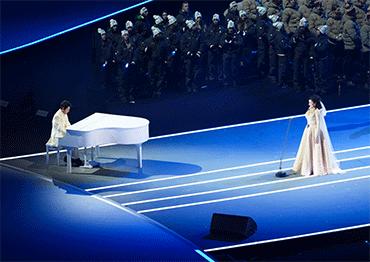
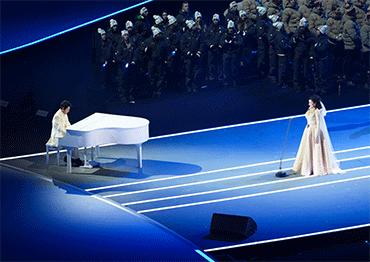
t the opening ceremony for the 2026 Milano-Cortina Winter Games on February 6, Chinese pianist Lang Lang took to the Olympic stage once again.
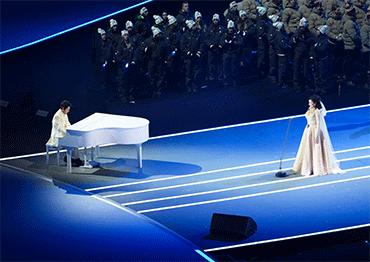
Performing the Olympic anthem at Milan's San Siro Stadium, he joined Italian mezzo-soprano Cecilia Bartoli, the first time the two artists had appeared together at an Olympic ceremony. The collaboration came at Bartoli's invitation, a friend who Lang had collaborated with in the past, he told the China Daily.
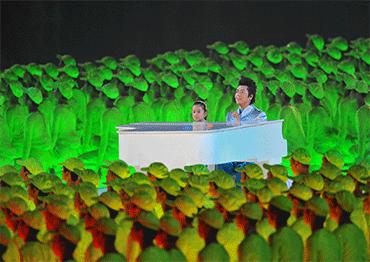
For Lang, the moment echoed an event in his home country. At the opening ceremony of the 2008 Summer Olympics in Beijing, he performed the Apiece "Starlight" by Chinese composer Ye Xiaogang, sharing the bench with 5-year-old pianist Li Muzi.
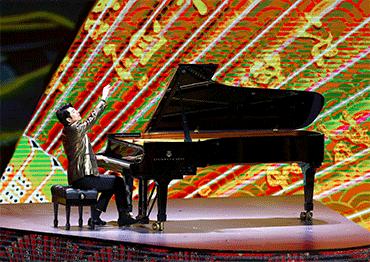
Nearly two decades later, Lang returned to the Olympic spotlight as one of the world's most recognizable classical musicians. Over the years he has appeared at major sporting events like the Asian Games and the World Cup, collaborated with international artists from Metallica and Lady Gaga to Andrea Bocelli, and performed with leading orchestras around the world.
Beyond the stage, he has devoted much of his work to music education and cultural exchange, serving as a United Nations Messenger of Peace and a UNICEF Goodwill Ambassador, and supporting young musicians through his foundations.
In an interview with China News Service after the opening ceremony, Lang talked about his Olympic experiences, the parallels between music and sport, and how music can help people from different cultures and backgrounds feel a shared sense of connection.
China News Service: You performed at an Olympic opening ceremony once again 18 years after your first appearance in 2008. How did it feel to return to the Olympic stage?
Lang Lang: I have very different feelings about the two Olympic performances. I was only in my 20s (26) back in 2008. And since it was in China at that time, I had a very strong feeling that it seemed I was representing China's new generation growing up and going out into the world. The experience of performing at the 2008 Beijing Olympic Games is a memory of a lifetime that I'll never forget. It's so special that it's hard for me to compare it with any other opening ceremony I have participated in.
This time, I am more experienced returning to the Olympic stage. After the 2008 Beijing Olympics, I participated in a number of large events, like the opening ceremonies of the Shanghai Expo [in 2010] and the Asian Games. These experiences have made me more familiar with the tempo of opening ceremonies for major sports events.
At the 2026 Winter Olympics I collaborated with my close friend Cecilia Bartoli. From my position on the stage, I could make eye contact with her. It was her first Olympics opening ceremony performance. Since I had Olympics experience, I told her there was nothing to worry about and that she should just perform as usual. So to some extent I felt more relaxed than I did in 2008.
But there were also challenges at the Winter Olympics this time. I was a bit worried that Milan's damp and cold weather might affect my hands. So I didn't take off my gloves until just before going on stage.
CNS: As a UN Messenger of Peace, you have long promoted the message of peace through music. "Harmony" was the theme of the opening ceremony of the 2026 Milano-Cortina Winter Games. How can the idea of harmony be conveyed to people from different cultural backgrounds?
LL: It would be easier to express the idea of harmony in Italy. There are many well-known melodies from Italian operas, such as "Nessun Dorma" [from Puccini's Turandot] and The Barber of Seville. You may not know where they are from, but very likely you have heard them somewhere. The melodies are easy to understand. Italian art is highly influential globally. This is why I believe the message of harmony from the opening ceremony can resonate with audiences worldwide.
A lot from Italian operas was adapted for the opening ceremony in Milan, like adding some electronic and pop elements. Masterpieces by Verdi, Rossini and Puccini were interluded during the ceremony. All this helped make the ceremony harmonious.
There were also adaptations in our performance of the Olympic Anthem, and I shared my ideas during the production process. When flag bearers from around the world walked together and the Olympic flag was raised, I felt that this warm moment symbolized peace: different people coming together under the same flag and with the same music.
CNS: What similarities do you see between music and sports? What special role do you think music plays in a sporting event like the Olympics?
LL: There are many similarities between music and sports. First, both take time. Players need strong willpower and perseverance. Many Winter Olympics events, in particular, are adventurous, and some are even extreme sports. The athletes' spirit of embracing challenges is admirable.
For me, another similarity between music and sports is that both are built on devotion and a pure heart. Athletes always strive to do their best, and so do musicians. Once we concentrate on our performance on stage, we become very focused with no distractions in our minds.
My hope for the opening ceremony of the 2026 Winter Olympics was that people around the world felt our aspiration for peace, and that our goodwill was conveyed through the music, leaving a warm and memorable moment.
CNS: The organizing committee describes you as "more than a pianist: he is a bridge between cultures, generations and worlds." What would you like to share with young Chinese artists about promoting cross-cultural communication?
LL: Each time I appear on the international stage, Western audiences often first notice my Chinese origin, that I come from an Eastern culture. The more connections I have with them, the easier it becomes for us to get closer to each other, and understand and respect one another.
For example, we held events involving Chinese culture at Carnegie Hall [in New York], like concerts and art exhibitions, so that locals could directly experience the charm of Chinese culture.
I remember that at one of those events I played the piano while my father played the erhu (a two-stringed Chinese instrument). We played "Horse Racing" (a classical erhu piece). The erhu produces a very powerful sound. Chinese folk instruments were introduced after Western music was performed, and the whole performance was received very well.
In terms of communication, I prefer making it natural and a part of daily life. For example, it is easier for different cultures to be seen and understood when trust and affinity are built through dining and chatting after rehearsals. This kind of understanding, based on real-life interaction, is often more effective than deliberate explanations.
My purpose in establishing the Lang Lang Arts Foundation is to offer systematic support for young Chinese musicians who aspire to perform on the international stage. Many young talents face challenges in gaining access to opportunities. I myself have experienced such challenges while growing up. Support at critical moments can even change the course of a person's development. This is why we try to provide various opportunities for young Chinese artists, including concert tours, master classes and stable platforms for international exchange.
We hope that young Chinese artists can be better prepared for the world stage, with higher professionalism and stronger stage confidence. I truly believe they will achieve their dreams.
 Old Version