Old Version
Culture

On the Record

For 51-year-old Taiwanese rock and hip-hop icon Chang Chen-yue, music is where storytelling and social issues meet – as long as he doesn’t become just another ‘preachy old guy’

By Qiu Guangyu Updated Feb.1

Chang Chen-yue (Photo Courtesy of True Color, a studio co-founded by Chang)

Time seems to have left few traces on Chang Chen-yue. During our interview, the 51-year-old musician, affectionately known by fans as A-Yue, was sporting his low-key style: backward cap, unshaven whiskers, white shirt and Hawaiian shorts.  

But 2025 has been anything but chill for Chang. Ending a 12-year hiatus, he released his 10th studio album called Follow the Flow followed by a tour in major cities across the Chinese Mainland starting in October in Beijing, followed by Shanghai, Wuhan and Chengdu. It will take him to more cities until June 2026.  

On September 25 this year, Chang also appeared at The Next Big Thing ACE Music Festival in Shanghai, his first DJ performance in the mainland. He has long made it a habit to spend one night each month DJing at bars in Taipei, where he performs as DJ Orange. “It’s fun, and I can earn a little cash,” he said.  

Since his 1993 debut album I Just Like You, he has created a distinctive musical style that blends rock, pop, folk, electronic, jazz and hip-hop, all with story-driven songwriting and a free-spirited, rebellious voice that never seems to age. 

Songs and Spotlights
Few in the Mandopop scene are as private as Chang Chen-yue. “He’s very rare,” said Taiwanese music producer Jeff Chia Min-Su, who has worked with Chang for years. “I’ve known many artists, but no one else in the industry loves life and dislikes work as much as he does.”  

Chang has written numerous Chinese-language hits over the past three decades, including “Goodbye,” “Xiao Yu” and “Love Me, Don’t Go.”  

Despite his success, he remains a reserved, low-profile artist, intentionally distant from the spotlight. Many listeners do not know what he looks like.  

But Chang is perfectly happy with this kind of anonymity. He recalled a story: During a concert on the mainland years ago, his bassist Tony Wong happened to look just like him, sporting his signature glasses, cap and whiskers.  

“After the show, some fans mistook Tony for me and had him sign my albums. It was hilarious,” Chang said, laughing.  

In 2013, Chang won Best Mandarin Album at the 25th Golden Melody Awards, one of the most prestigious honors in Mandopop. Chang is of Amis heritage, a group indigenous to Taiwan, and the winning album’s title, I Am Ayal Komod, proudly proclaims his Amis name. 

But he did not release another album for 12 years, instead focusing on his private life. He married an Amis woman, Sawu Koyouan, in 2019, and they had their second child this year.  

Despite his age, his spirit remains youthful. Chang spends most of his free time surfing, camping, skateboarding, cycling, hiking and hanging out in bars with younger friends. 

 “Even though I’m in my 50s, I want to stay mentally young,” Chang told NewsChina. “When you talk with young people about their thoughts and feelings, you shouldn’t be the ‘old guy.’ When I was young, I hated those preachy old guys. I still don’t want to become one.”  

Since 2014, Chang has taken an unconventional, casual approach to publishing. Under the name “The Underground Boss Ayal Komod,” he began uploading demos to StreetVoice, an independent music-sharing platform. He has shared 23 songs there, inviting open listening and discussion among music fans.  

“I love sharing music this way. Not as idol and fans, but as equal, music-loving friends online,” he said.  

Many of these deeply personal demos are as polished as studio tracks. On Sina Weibo in April 2024, pop music critic Er Di wrote: “Many of Chang’s demos have great melodies, heartfelt emotions and thoughtful reflections on life.”  

Er highlighted the 2021 demo track “Moving House,” which explores the emotional struggle of deciding what to keep or discard while moving, a metaphor for choices in life and love.  

He added, “Songwriting is a natural talent. Some artists work strenuously using all kinds of elements, yet their songs sound mediocre. But Chang writes freely and loosely, and even his demos impress. He’s a naturally gifted songwriter.”  

In July 2025, Chang released album Follow the Flow, featuring 10 songs inspired by his life, including the polished version of “Moving House,” a heartfelt tribute to his late mother in “Mom’s Eyes” and his love of surfing in “The Surfer.” 

Chang Chen-yue performs at a concert in Guangzhou, Guangdong Province, November 30, 2013 (Photo by VCG)

Chang Chen-yue performs at a shopping mall event, Chengdu, Sichuan Province, September 25, 2016 (Photo by VCG)

Sounds and Stories 
Born in a small fishing village in Hualien in 1974, Chang developed a love for music early on, singing in a church choir as a child. He began playing guitar in middle school and soon became passionate about Western rock music, especially hard rock and heavy metal.  

In 1993, at just 19, he released his debut album I Just Like You. But it was his third album, This Afternoon is Very Boring (1997), released under Magic Stone, that catapulted him to fame. The album’s 11 grunge-rock tracks, written entirely by Chang, stunned the industry and audiences with its raw rebelliousness, honesty and emotional power.  

Many of the songs were inspired by his time working at a musical instrument store in Kaohsiung. Through frank lyrics and catchy melodies, he vividly captured the struggles young people face: poverty, confusion about the future, longing for love, heartbreak and hope.  

A hallmark of Chang’s music is its storytelling quality, as if he is speaking directly through song. He often creates contrast by pairing cheerful, upbeat melodies with lyrics that are reflective, sorrowful or critical.  

In his 1997 hit “Love’s First Taste,” he wrote: “If you’re really going to leave me, give me back my photo. You don’t need it anymore. I’ll give it to my mom. […] I want to buy some alcohol to ease my sadness, but I’m too lazy to go out. I want to buy a pack of Longevity cigarettes, but I realize I’m not 18 yet. Is my 18-year-old self-destined to cry for love?”  

These lines, which so sharply capture the voice of a rebellious teenage boy, struck listeners as refreshing and authentic. The song became a major hit and remains a Mandopop classic.  

In his latest album Follow the Flow, Chang’s songwriting remains rooted in honest observation and vivid everyday detail. On “What a Terrible Party,” he sings: “What terrible pick-up lines and jokes. Let’s sneak out and grab some drinks at the convenience store next door.”  

“I’m good at expressing things that way,” Chang told NewsChina. “People say my lyrics are direct and simple, and that it’s easy to make music videos because the lyrics already paint such clear scenes. That’s how I write. I picture the exact elements in my head: people, objects, time, place, and then write them down.”  

Chang often remembers precisely the emotions surrounding a song’s creation. Years ago, when producer Will Lin asked him to write a song for singer Faith Yang, Chang recalled sitting in his top-floor apartment during a scorching summer. He had a bass guitar and a sampler beside him. Knowing that Lin and Yang, who were a couple, often quarreled and were close to breaking up, he poured his observations and empathy into writing “I Give You Love,” a 1999 pop ballad expressing love from a woman’s perspective.  

In 1998, he wrote “Freedom for Malaysian singer Angelica Lee,” inspired by her independence and determination to pursue her music dreams after moving to Taiwan from Malaysia at age 20. 

According to producer Jeff Chia MinSu, many female artists at Taiwanese legacy labels such as Rock Records and Magic Stone had distinct personalities, and needed songs tailored to their individuality, not generic, bland material. Chang, he said, was uniquely capable of writing songs that capture true feelings.  

“I’ve known so many musicians,” Chia said, “but it’s rare to find someone like Chang who expresses his feelings so freely, thoroughly and authentically in just one song. It’s incredible.”

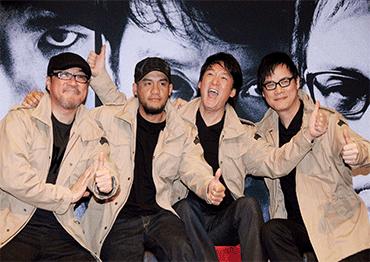
Chang Chen-yue (second from left) with other members of Super Band during a concert launch event in Beijing, March 11, 2009 (Photo by VCG)

New Connections 
Among Mandopop artists, Chang is one of the few who frequently writes about social issues. He said his awareness of injustice was first shaped by his father, a police officer. Watching TV news, his father often became angry about inequality and unfairness. In his song “Follow the Flow,” Chang wrote: “Turn off the television. The TV channel made me angry, but why are my eyes glued to it?” 

These feelings often inspire his songwriting. His 1998 funk track “I Want Money” takes the perspective of a young man shamelessly asking his parents for money to pursue a woman, a critique of materialism, consumerism and NEET culture (people who are not working or in school, and do not want a job).  

In the 2013 song “Go a Little Slower,” he depicts widening wealth gaps in what Japanese economist Kenichi Ohmae called an “M-shaped society,” where the middle class is hollowed out. Chang wrote: “Celebrities drive luxury cars to date girls. Rich guys are gods. No one buys magnolias or cares about the poor old man selling them by the road. Scholars say, ‘It’s an M-shaped society.’”  

Jeff Chia told NewsChina that Chang is deeply empathetic and caring, which drives his interest in writing about broader social issues.  

“He has strong compassion,” Chia said, “so his songs often reflect humanity and social conscience.”  

Beyond his well-known hits, many of his older, lesser-known songs have resurfaced and gone viral again over the years. In March 2025, Chang posted a short video singing his 2011 song “Empty Handed,” which portrays a young man frustrated by poverty and too insecure to pursue love. He sings: “I’m so poor and always working odd jobs. Who wouldn’t hope to relax in an air-conditioned office?”  

That summer, his 2016 song “Lost in Connection” suddenly gained renewed popularity on social media. A video he posted on Douyin in July has 1.42 million likes.  

“I think many songs I wrote in the past already touched on the anxieties and struggles young people are facing today,” he said.  

Even though Chang uses songwriting to reflect on social issues and common struggles, he does not want his music to be too melancholy. Instead, he hopes to deliver warmth, optimism and joy. “I hope people enjoy my concerts,” he said. “ 

I hope my music brings warmth and good memories, that they go home feeling happy. That’s all I want.”

Print