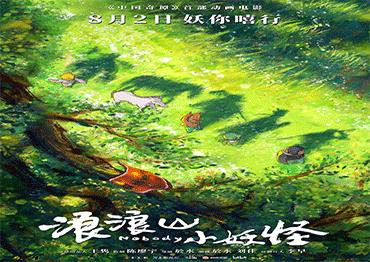
Nobody is a playful reimagining of Journey to the West, the 16th-century Ming Dynasty classic written by novelist Wu Cheng’en. The original novel is a fantastical retelling of the real-life Buddhist monk Xuanzang’s 7th-century pilgrimage to India to retrieve sacred scriptures. In the story, Xuanzang travels with three supernatural disciples: the Monkey King (Sun Wukong), pig demon Pigsy (Zhu Bajie) and river ogre Sandy (Sha Wujing), who protect him from countless monsters along the way.
Founded in 1957, Shanghai Animation Film Studio is China’s oldest. It has produced numerous works inspired by Journey to the West, such as Havoc in Heaven (1961), The Monkey King and the Fruit of Immortality (1981) and The Monkey King Conquers the Demon (1985). The films all center on mythic heroes, especially the mischievous Monkey King.
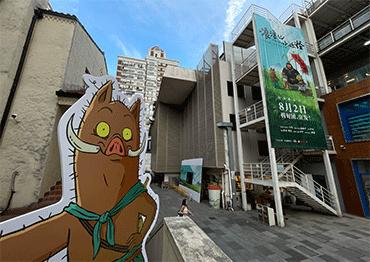
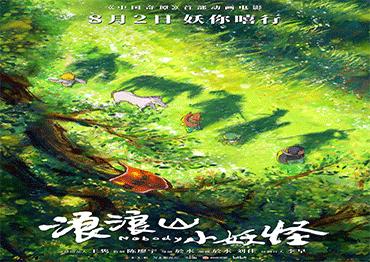
Nobody tells a different kind of story. It follows four nameless monsters living in obscurity on fictitious Langlang Mountain: a pig demon, a toad spirit, a weasel spirit and a gorilla monster. After offending the mountain’s king, they are forced to flee. Disguised as Xuanzang and his three disciples, they embark on their own westward journey.
The four little demons embody the struggles and ambitions of modern-day Chinese youth. The toad spirit dreams of a stable, predictable job serving the mountain king, much like young people who pursue security in government or State-owned enterprises, no matter how dull the work. The pig monster, unable to land a job on Langlang for years, seeks out other opportunities beyond the mountain, only to be repeatedly humbled by reality, a reflection of those chasing uncertain opportunities outside the system.
The gorilla, large and strong but socially awkward, finds it difficult to communicate or fit in. The weasel, an aimless chatterbox, gradually gains deep understanding about justice and the meaning of life.
“Through portraying these minor demon characters, I wanted to show the stories, struggles and predicaments of ordinary young people,” Yu Shui, the film’s director and screenwriter, told NewsChina. “They are grassroots underdogs on Langlang Mountain, and most people in the world are ‘nobodies.’ Naturally, their stories resonate with wider audiences.”
Executive producer and art director Chen Liaoyu agrees: “We’ve read and watched so many tales about big heroes in the past. But in reality, most of us are nameless and unknown. Isn’t it just as worthy to tell a story about us?”
The film earned a high score of 8.5/10 on Douban, China’s leading media review platform, with viewers praising its empathy and down-to-earth spirit. “They may be marginalized in society, but they’re the pride of their parents,” wrote netizen “Xiao Jin.” “They may be imposters on the road west, but they’re the true protagonists of their own lives.”
Another user, “Duduxiong,” shared: “The film is more moving than most live-action dramas. Beneath its humor lies a quiet sadness. These underdogs don’t even know what they’re fighting against. There are no lighthouses guiding their way, yet they still struggle to change their fate, even if nothing really changes. It’s an allegory of ordinary life.”
 Old Version