Old Version
Culture

Make Food, Not War

A restaurant becomes a refuge, cuisine is the language and an ordinary chef becomes an unlikely protector as war upends lives in Once Upon a Time in the Middle East

By Yi Ziyi Updated Nov.1

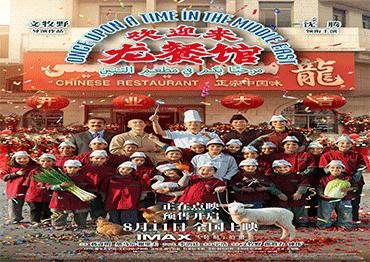
A poster for movie Once Upon a Time in the Middle East

In the fictional Middle Eastern city of Bahata, a boisterous wedding banquet is underway. The groom is the son of a local black market merchant and dozens of residents have gathered to celebrate. 

Chinese chef Xu Fu is busy preparing a special dish for the feast, combining iron-pot stew, a hearty specialty of Northeast China, with a local grilled fish dish. He adds spices into the mix as hot oil sizzles and splatters. 

This touching scene is from the latest blockbuster Once Upon a Time in the Middle East by director Wen Muye, known for his realist blockbusters Dying to Survive (2018) and Nice View (2022). 

The film follows Xu Fu, an ordinary Chinese chef who operates a restaurant in a conflict-torn Middle Eastern country in the early 2000s, only to become trapped in a sudden war where local orphans are being recruited as suicide bombers. 

Released on August 11, the film has been a box-office and critical success. By September 6, it had grossed 2.07 billion yuan (US$308m). 

Shot in China and Egypt and starring comedian Shen Teng, the flm’s light-hearted tone gradually gives way to a powerful yet restrained anti-war narrative. Rather than showcasing grand battle scenes, heroic individualism or political confrontation, it uses drama and dark humor to observe war from a civilian perspective.

‘Eat Well’
In the story, Xu Fu (Shen Teng) travels to the Middle East to work at a Chinese restaurant to pay of his family’s debts. Together with his business partner Ma Junsheng (Jiang Qiming), he turns the Loong Restaurant into a popular destination known for authentic Chinese food. 

The restaurant’s prosperity is cut short when war breaks out between the country and the US. During the conflict, it transforms from a place of business into a refuge for local orphans. One of the children, Seif, learns to cook Chinese food as Xu's apprentice. 

As the violence escalates, Xu is detained and interrogated by American forces because of his ties to his former boss Zaid, who became an armed insurgent after losing his family in the war. 

Food connects the film's plot, character development and themes. The line "eat well" recurs throughout, an everyday greeting in Chinese that carries added meaning in a wartime setting. 

"To eat well is actually a person's most genuine and unadorned desire," director Wen Muye said in an interview with newspaper Guangming Daily. 

In peacetime, Wen noted, the phrase is so commonplace that it often goes unnoticed, much like a casual greeting during a phone call with family. But in the war-ravaged Middle East, eating well becomes "an intensely urgent need, a wish," he said. 

Wen said the idea for the film took root shortly after he finished shooting Dying to Survive, a film about access to life-saving drugs. In preparation, Wen and his team traveled to the Middle East six times, interviewing people in refugee camps and speaking with Chinese restaurant owners and war veterans. 

Wen divides war films into two categories. The first is where characters hold their ground and complete assigned missions, as Saving Private Ryan (1998) and Fury (2014). The second is where characters are swept passively through war, moving from one environment to another, like Gone with the Wind (1939) and Steven Spielberg's War Horse (2011). "Our film is about a Chinese cook drifting through war," Wen said.

The location for the shoot of Once Upon a Time in the Middle East in China Movie Metropolis, Qingdao, Shandong Province, August 21, 2026 (Photo by VCG)

Feast for the Eyes
In the film, food becomes a language that overcomes differences. Multiple meal scenes drive the narrative while symbolizing cross-cultural understanding and longing for peace. 

This is tastefully portrayed through Chinese dining customs. "Chinese are accustomed to sitting at round tables and sharing meals, which are associated with Chinese ideals of family reunion and peace that deeply resonate with the film's themes," Wen said. 

In the first half of the film, an extended shot captures the bustling Loong Restaurant. Though modest, the restaurant has running water, electricity and good food during wartime, becoming a haven for local children and a gathering space for people from all walks of life, including American soldiers. 

The wedding feast reflects ordinary people's longing for a better life as war looms and marks Xu's growing connection with his local patrons. 

"This was the first time Xu truly integrated with the local people. We created a fusion dish combining Chinese ironpot stew and local grilled fish. Everyone at the Loong Restaurant pitches in and enjoys the festive mood of the wedding. This scene shows people's longing for a good life in the shadow of war," Wen told the Guangming Daily. 

The film has earned 8.7 out of 10 on Douban, China's leading movie and cultural review platform, which is considered a high rating for a domestic film. 

One leading comment by Douban user "Arzach" reads: "Chinese people have two principles in their DNA: the first is not to ruin food, and the second is not to torture children." 

"Most anti-war films focus on big battle scenes and fights over ideas. But this film looks at how war creeps into everyday life," another user "Xi Loucheng" commented.

In Good Taste
Many have praised the film for presenting an ordinary, sincere and warm image of overseas Chinese while using an equal and respectful cross-cultural perspective to observe foreign conflicts and civilian suffering. 

Critically, Once Upon a Time in the Middle East expands the boundaries of Chinese-language cinema's engagement with the world. It is not a story centered on Chinese triumphs overseas like the Wolf Warrior franchise. Instead, it uses a Chinese protagonist's perspective to reflect on a global crisis. 

"As the Tao Te Ching says, ‘Governing a large state is like cooking small fish.' Approaching a turbulent nation through the lens of cooking offers a distinctly Chinese perspective that feels remarkably original, putting forward fresh insights into anti-war themes. What is needed is education and cultural communication, not war. Spoons, not guns. Cooks, not soldiers," film critic Yu Xiaodao told NewsChina. 

"The film refrains from debating whether the war should have been waged. Nor does it attempt to assign blame or judge who is right or wrong. Instead, it turns its camera toward the faces of ordinary people: American soldiers longing to return home, fathers who have lost their children, starving kids and Xu Fu, who only sought to pay off his debts yet became trapped in the chaos. 
"When audiences watch the fates of these ordinary people, they fully get the film's anti-war message without the need for slogans," Yu said. 

Hu Runqi, a moviegoer from Beijing, expressed a similar view. 

"The film clearly blames the US for starting the war, but it also depicts how Xu Fu befriends a group of American soldiers who become patrons of his restaurant. These American soldiers are also sons and fathers. They are also victims of the war. 

"For insurgents like Zaid, Xu's former boss at the Loong Restaurant, the film shows how warm, friendly and family-oriented he was before his family was killed in the war. I think this is very subtle and profound. The film neither lectures nor simplifies. It simply shows how the cruelty of war overwhelms the lives of ordinary people. No one is essentially evil," Hu told NewsChina. 

"We met many people like Zaid whose countries had been invaded and who hoped to keep their families alive under such dire circumstances," Wen Muye told Cinema Art magazine about his pre-production trips to the Middle East. 

Some critics, however, argue that the film switches too abruptly between brutal violence and comic gags. Audiences may see a child die in an explosion one moment and encounter playful banter the next, and the result is jarring. 

Some viewers also feel that Xu Fu's character arc lacks depth. His transformation from a self-interested man is not accompanied by enough inner struggle, making his development feel somewhat abrupt. But Shen, one of China's most well-known comedians, has won acclaim from audiences and critics for his restrained, nuanced and serious portrayal of Xu Fu. 

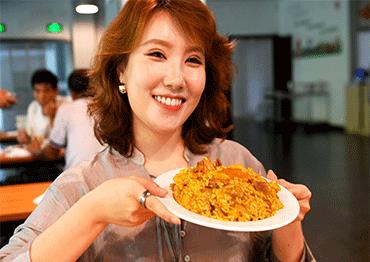
The film's popularity has also reached real-life menus, with some restaurants in Beijing offering dishes based on the film. The hashtag "Xu Fu's Stewed Rice," the dish behind some of the film's most tear-jerking moments, has amassed more than 11.62 million views on lifestyle app RedNote, with people sharing their own takes on the recipe. Chinese fast-food chain Tastien launched a "Xu Fu Beef Burger," which sold an impressive 4.27 million units, Reuters reported.
 
Li Hao, a faculty member at the School of Journalism and Communication at Northwest University in Xi'an, Shaanxi Province, said that while it is not unusual for films to drive food and beverage consumption, the resulting online homemade recreations and offline restaurant launches inspired by Xu Fu's Stewed Rice are worth taking note of for ways to market future films. 

"It demonstrates that film-driven consumption is extending beyond box-office revenue into everyday-life scenarios," he told the Xi'an Daily. "Audiences are no longer content simply to go to the cinema. They want to bring the onscreen experience into real life, and food and dining provide the most immediate and accessible way to do so," Li said.

A visitor tastes a dish dubbed “Xu Fu’s Stewed Rice” at China Movie Metropolis, Qingdao, Shandong Province, August 21, 2026 (Photo by VCG)

Print