Old Version
Life

Positive Awareness

As the number of senior citizens in China increases, doctors are seeing higher rates of HIV/AIDS, with many seniors unaware of the risks or the need to practice safe sex. More outreach is needed, experts say

By Niu He Updated Aug.1

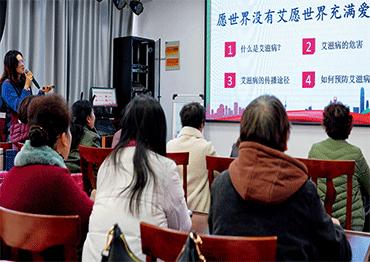
Zhoushan Hospital holds an AIDS awareness event for World AIDS Day, Zhoushan, Zhejiang Province, December 1, 2025 (Photo by IC)

Shao Ying still remembers how embarrassed one of her patients was when he was diagnosed HIV positive. 

Liu Hao, 56, had lived in his hometown alone for years after his wife's death before leaving for Beijing to care for his grandchild. He went to Beijing You'an Hospital, Capital Medical University for a minor procedure, when pre-operative screening revealed his status. His daughter was furious, asking Shao, a head nurse at Beijing You'an, whether it was appropriate for his father to live with them. The father hung his head and did not say a word, like a guilty child, Shao told NewsChina. 

Liu said that he used some savings to pay for sex several times when he was in his hometown. But he did not understand the trouble it would cause. 

Many HIV-positive elderly might see themselves reflected in Liu's experience. In recent years, although China's HIV rate is low overall, at 0.09 percent according to health authorities, the proportion of newly reported HIV infections and AIDS cases among the elderly has risen. People aged over 50 are usually defined as older adults in AIDS research. Research by Lü Fan, vice director of the AIDS prevention center of the Chinese Center for Disease Control and Prevention (CCDCP), published in the Chinese Journal of Epidemiology, indicates that the reported number of people aged over 50 living with HIV has risen every year, increasing from nearly 33,000 cases in 2015 to 52,000 cases in 2022. In the same period, the number of HIV-positive individuals over 60 rose from 17,000 to 27,000. 

Liang Xiaofeng, former deputy director of the CCDCP and current dean of the Institute for Disease Control and Prevention at Jinan University, Shandong Province, told NewsChina that as the population ages, the number of new HIV infections and AIDS cases among the elderly is likely to rise. He believes the issue needs urgent attention.

Increasing Infections
Bai Hua, founder of a support group for HIV-positive people, who also lives with HIV, said that he noticed an increase among HIV-positive older adults as early as 2011, though it failed to draw much attention at the time. 

According to Lü's research, between 2015 and 2022, new cases of HIV-positive elderly people are mainly reported in provinces hit hardest by HIV in southwestern or southern China. Zhao Ting, who works at a county-level disease prevention center in Southwest China, noticed an evident increase in the number of older adults living with HIV in recent years, with dozens of new cases emerging every year. Most are at an early stage of infection. 

Disease control centers in Guangdong and Zhejiang provinces saw a significant increase in the proportion of HIV cases among the elderly in 2025. In Zhejiang, people aged 50 and above accounted for 39.2 percent of newly reported HIV cases. In Guangdong, 20 percent of cases reported in the first 10 months of 2025 were around 60 or above, rising from 12.4 percent in 2015. 

Data released by Chongqing in December 2025 shows a year-on-year decrease of 8.6 percent in newly reported HIV infections and AIDS cases between January and October 2025. But among new cases, people aged over 50 accounted for 77.2 percent. 

Even in areas with lower HIV prevalence, rates among seniors are increasing in provinces like Jiangxi, Fujian and Hebei. According to Shao, Beijing You'an Hospital, a leading hospital for infectious diseases, is treating over 13,000 HIV cases, nearly half the city's total. In recent years, patients aged 50 and above have accounted for more than 20 percent of the hospital's caseload. 

Guo Wei, an infectious disease doctor from Tongji Medical College of Huazhong University of Science & Technology in Wuhan, told NewsChina that HIV infections among older people are often found when treating other conditions. Zhao Ting said the county she lives in provides free health check-ups for older adults and many infections are found this way. 

Sun Zhongyi, a doctor from Chongqing University Affiliated Renji Hospital who has also observed increasing rates of HIV infections among the elderly, told NewsChina that HIV in men is often diagnosed when they are undergoing treatment for prostate conditions.

Unsafe Sex
Despite the growing number of HIV infections among the elderly, this group has been neglected in AIDS prevention education. Liang Xiaofeng said that HIV awareness mainly focuses on young people, particularly those in school, where cases are relatively concentrated. Older adults may have lower literacy and poorer prevention awareness. "These are problems we must tackle head-on in the future," Liang said. 

Dean of Shenzhen Third People's Hospital Lu Hongzhou has identified reasons why the prevalence of HIV among the elderly is increasing. He noted that today a large number of older people live alone, but their sexual needs have long been neglected and there is little sex education targeting them. This leaves them more vulnerable, Lu told NewsChina. 

Li Zaicun, an infectious disease physician from Beijing You'an Hospital, said he treated a man over 80 who lived with HIV. The man said he had paid a middle-aged caregiver who once worked for him for sex. 

HIV-positive seniors have strong emotional needs, sometimes even stronger than those of young people, Bai said. But they usually have difficulty expressing that to their families, or their feelings might be poorly received. Some patients ask him if he can help find them a partner. 

Some older adults need emotional solace due to loneliness, or because of other issues such as long-term unemployment or death of a spouse. But they are too embarrassed to seek help through legitimate channels, Liang said. 

Their poor awareness about sexual health worsens the situation, according to Zhao. She finds that often, her HIV-positive patients do not practice safe sex. Liang believes that because of the availability and efficacy of current HIV antiviral treatments, this has reduced fear of the disease. 

Nurse Shao said it is normal that older active adults still have a sex drive. She told NewsChina that among new HIV-positive cases among the elderly, some live far from their children, some are in long-term separation with their partners and some are migrant workers. Migrant workers are a large population at high risk. 

"It is most difficult to intervene with this [migrant] group," Bai Hua said. In 2018, Bai established an online chat group for older patients which now has around 1,000 participants. During an event offering free check-ups for patients Bai organized in Beijing, they found some elderly patients were reluctant to go to hospital for further tests if they are tested HIV positive. 

Bai said it is hard to reach migrant groups as they often resist external advice and assistance. They fail to understand the need for diagnosis, taking regular medications or long-term management of their condition, partly because they might be unsure where they will live or work next month. As a result, migrants have become one of the most difficult groups to identify and track. 

Research published in the Chinese Journal of Epidemiology identifies sexual contact as the main method of infection for HIV-positive elderly people. Between 2015 and 2022, among newly reported infections in people over 50, heterosexual transmission accounted for over 90 percent, among which commercial sex made up 44.8 percent. But the proportion of infections through homosexual transmission may be higher than official data, as infected individuals may conceal their sexual orientation, experts said. 

Liang Xiaofeng pointed out that in the past, HIV screening primarily targeted the gay community. The situation has changed. A significant number of new infections now stem from commercial sex, which, due to its low cost and hidden nature, has become the main channel of HIV infection among the elderly. 

Older adults usually choose low-cost clandestine sex workers, Li Zaicun said. Some male patients said they had unsafe sex near construction sites. They do not use protection as the risk of pregnancy is low among these sex workers, who are usually in their 40s and 50s. 

Li Zaicun added that besides commercial sex, non-marital and non-commercial sex are also major sources of infection. Some seniors form relationships with people they meet during leisure activities, like dance groups. In 2020, he treated an elderly male patient who had been in a sexual relationship with a dance partner for 10 years. After he was diagnosed, he tried to persuade his partner to get a check-up, but she refused. 

Many people are unaware of their positive status, which means they may have been transmitting the virus to others without knowing it, Zhao Ting said.

A healthcare worker holds a seminar about HIV/AIDS at an adult learning center, Nantong, Jiangsu Province, December 1, 2025 (Photo by VCG)

Prevention Challenges
With significant advances in antiviral treatment, HIV/AIDS has become a manageable chronic disease. In 2003, China began providing free antiviral drugs to patients, starting with five types of medication. 

Today, dozens of drugs are available globally, which can be combined in various ways in antiretroviral therapy, a crucial treatment for HIV. 

Li Taisheng, director of the Department of Infectious Diseases at Peking Union Medical College Hospital in Beijing, told NewsChina that there are currently around 1.3 million HIV-infected individuals undergoing treatment in China, among whom 65 to 70 percent use free antiretroviral drugs. However, there are significant differences between patients in their 20s and 30s and infected elderly in terms of medication adherence and long-term treatment effect. Treatment plans for elderly patients cannot be simply copied from younger populations, and specific optimizations require further research. 

Many elderly people suffer from several chronic diseases at the same time, so they need multiple medications. 

Compared to the general population, HIV-infected seniors have a higher risk of developing hypertension, diabetes and malignant tumors, as well as liver and kidney failure and cognitive decline, Li Zaicun said. Although there are few types of antiretroviral drugs, rapid advances in chronic disease treatments mean even specialists may not know the details of many new drugs. 
For this group of patients, while undergoing antiviral treatment, medication safety for underlying conditions such as diabetes must be taken into consideration, and interactions between different drugs require repeated careful evaluation. 

The average incubation period (time from HIV infection to AIDS symptom onset) for untreated AIDS is two to 10 years. But with treatment, experts noted that the life expectancy of HIV-infected individuals now is comparable to the general population, as long as the infection is detected early and treated appropriately. 

However, elderly individuals are often infected for some time before diagnosis. Lu Hongzhou noted that elderly people can develop AIDS much quicker than younger individuals. Because of their age, they are often misdiagnosed with skin diseases or pneumonia, leading to significant delays. 

Compared with young people, HIV-positive older adults are less willing to seek medical treatment and are reluctant to reveal the route of transmission. Lu said one of his senior patients felt deeply ashamed and hid his status from his family. "I'd rather die than lose face like that," the patient said. He peeled the label off his pill bottle and never took them in front of his family. 

Lu noted that doctors can use medication to control HIV in such patients, but it is difficult to address deep-seated psychological barriers. 

Bai Hua said the stigma and discrimination against people living with HIV remains severe. He said that the majority of HIV-infected patients still face discrimination in hospitals that are not officially designated for antiviral treatment, and they face difficulties if they need surgery or treatment unrelated to HIV/AIDS. 

In 2022, Wang Haidong, director of the Department of Aging and Health at China's National Health Commission, said that the population over 60 will exceed 400 million by 2035. The growing number of seniors who are single, widowed or living alone will make AIDS prevention and control not only a medical problem but also an urgent social issue. 

It is challenging to carry out health education among the elderly, Liang Xiaofeng said, adding that current methods often fail to reach this group. 

Li Zaicun said he has participated in multiple events to promote HIV awareness, but few come forward for a consultation. He suggested introducing targeted HIV testing among older adults, such as those engaged in certain professions or closely associated with entertainment venues, to increase the chance of detection and intervention in the early stages. 

Most HIV starts with people who are unaware of the risks and do not practice safe sex, Liang said. It is therefore crucial to enhance training among doctors to tell seniors how to prevent infection and encourage those at high risk to get tested. "Meanwhile, attention should be given to how to better reach older people, for example by involving them in non-profit or government projects, provide them with easy-to-follow health education, and help them increase their sense of self-worth and learn to protect themselves in their later years," she said.


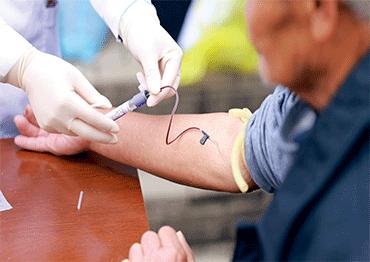
A senior undergoes free HIV screening offered by health authorities, Tongren, Southwest China’s Guizhou Province, December 1, 2023 (Photo by VCG)

Print