Museums are gateways to the past. They are places where objects, stories and ideas allow us to step beyond the boundaries of our own time. It's why I have always loved museums, and thankfully, China has an extraordinary variety of them. Indeed, many of the world's largest and most visited museums are in China. From the 7 million annual visitors who experience the massive National Museum of China in Beijing which covers almost 200,000 square meters, to the 6 million visitors who enjoy the 85,000 square meters of the Nanjing Museum, in Nanjing, Jiangsu Province, China has plenty of megamuseums to explore.
In fact, according to the Themed Entertainment Association (TEA), 14 of the top 20 museums in the world are in China, with the three most visited museums in the world all in the country. According to TEA, the Louvre Museum in Paris, France, long regarded as the world's most visited museum, has now been overtaken by the Palace Museum (Forbidden City) in Beijing, which sees 17 million annual visitors, while the honor of second-most visited museum in the world has been claimed by Chengdu Wuhou Shrine Museum, with Emperor Qinshihuang's Mausoleum Site Museum in Xian, Shaanxi Province, coming in third.
However, China is also home to many smaller, less internationally famous museums, which are often rather unique. In many ways these smaller museums offer an even more intriguing insight into Chinese life and Chinese culture than their larger cousins. One of my favorites is the Former Qing Dynasty Post Office, which is in Zhujiajiao Ancient Water Town near Shanghai. Although the museum covers only 70 square meters, it offers a fascinating glimpse into how daily life in China slowly modernized across the eras of the Qing Dynasty (1644-1911), the Republic of China period (1912-1949) and the early stages of the People's Republic of China (1949-present).
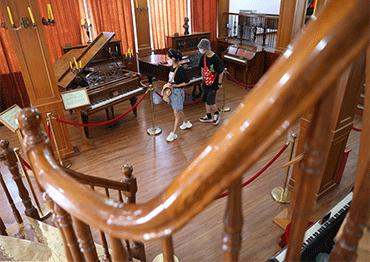
Another fascinating museum is Gulangyu Piano Museum, located on Gulangyu Island, Xiamen in Southeast China's Fujian Province. This intriguing museum presents, displays and promotes the island's unique musical tradition, which fuses European and Chinese elements. The museum includes two separate buildings, which are filled with an assortment of rare and magnificent pianos including everything from miniature models to elongated grands. Many of the items in the collection feature intricate and colorful designs. The Piano Museum is directly connected to Shu Zhuang Garden, an eccentric paradise of curiosities, with a single ticket required for visitors to enjoy both attractions.
China also has several major museums that are dedicated to specific historical figures or events. These include the Museum of Dr Sun Yat-sen in Zhongshan and the Opium War Museum in Dongguan, both in South China's Guangdong Province, and the Military Museum of the Chinese People's Revolution in Beijing. These museums highlight the incredible importance of certain events and individuals in shaping the course of Chinese history. Spending time understanding these museums and their contents is one of the most accessible ways for international visitors to better appreciate how the events of the past have shaped modern Chinese people and modern Chinese culture.
For those interested in Chinese military history there is no shortage of museums to whet their appetite. Within the category of military history, my personal favorite is Zhongshan Warship Museum in Wuhan, Central China's Hubei Province. This museum has been entirely constructed around the SS Zhongshan, a massive Chinese gunboat built in 1910, which was sunk by the Japanese in October 1938 during the Battle of Wuhan. The wreck was salvaged from the bottom of the Yangtze River on January 28, 1997, before being relocated to its present site. As a time-capsule, visibly representing an important period in Chinese history, the Zhongshan now stands at the heart of this fascinating museum. Today, the monumental ship is surrounded by the stories of those who experienced the terrors, virtues and upheavals of that pivotal era.
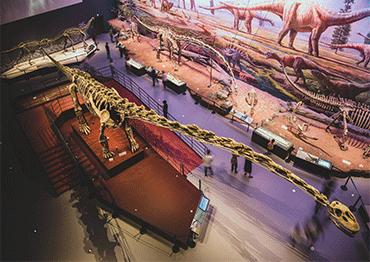
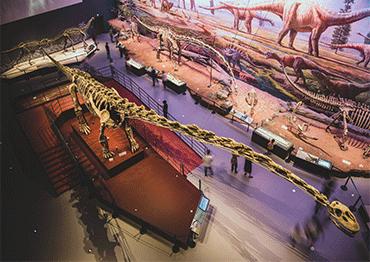
However, not all museums in China are dedicated to the story of human history. Some of the most fascinating museums in China are part of the country's collection of natural history museums. Established museums include the Chengdu Natural History Museum, Sichuan Province, which includes one of the largest substantially complete dinosaur fossils in Asia, the Chongqing Natural History Museum, which has an excellent collection of Jurassic-era fossils, and the Shanghai Natural History Museum, one of China's leading museum attractions. I should also add to this list the Shenzhen Natural History Museum in Guangdong, which only opened in July 2026. Although I have not yet had the chance to visit this new museum, it promises excellence, with a massive building area of over 100,000 square meters. Nevertheless, of all the museums in China dedicated to nature, the National Natural History Museum in Beijing remains my personal favorite, in large part thanks to the ginormous and terrifying animatronic dinosaurs, which inhabit the atrium's jungle.
If you are looking for something a little more offbeat, unusual or quirky, there are plenty of curious and unusual museums and exhibitions in China. One that I enjoyed recently is the Nanyue King Museum in Guangzhou, which includes an extensive exhibition of ceramic pillows. Needless to say, the idea of sleeping on a cold solid block of ceramic directly challenges every notion of comfort and sleep that I have learned in my life thus far. However, my favorite "niche" museum in China is the Yak Museum of Lhasa, capital of Xizang Autonomous Region, which charts the extensive, historic and symbiotic relationship between the yak and the people who cohabit the plateau.
Fortunately, there are still plenty of other unique museums that I am yet to explore, but keen to experience. Morbid fascination means that I am especially looking forward to visiting Xinjiang Uygur Autonomous Region Museum in Urumqi, which comes highly recommended in part due to its display of well-preserved, and interestingly dressed, corpses known as the Tarim Basin Mummies. I also have a (possibly unhealthy) curiosity about the China Abacus Museum in Nantong, Jiangsu Province, which claims to be the foremost museum in the world dedicated entirely to the abacus. However, the next museum I intend to visit is the China Watermelon Museum in Beijing, which celebrates China's long and intriguing relationship with watermelon cultivation, and probably deserves the prize for the oddest and most niche museum in all of China.
 Old Version