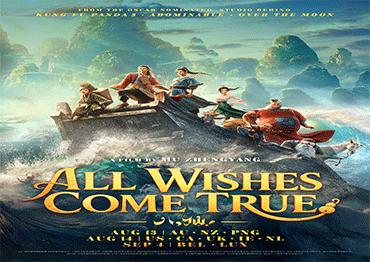
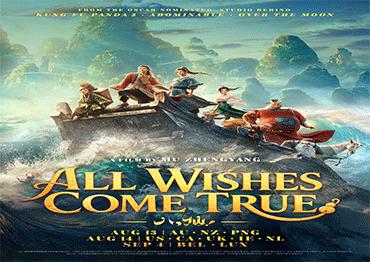
The Eight Immortals is one of China's most iconic folk legends, appearing in oral traditions, operas, paintings and literature over the centuries.
The best-known story, "The Eight Immortals Crossing the Sea," is detailed in the Ming Dynasty (1368-1644) novel Dongyouji (Journey to the East) by Wu Yuantai.
Each is a legend in his own right. Li Tieguai is a beggar with an iron crutch who heals the sick. Bare-bellied Zhongli Quan has a magic fan that can revive the dead. Eccentric Zhang Guolao rides his white mule backward. The group's leader, Lü Dongbin, wields a magic sword that repels evil.
After attending a grand gathering of immortals on Mount Penglai, the crew decides to return to the mortal world by crossing the East China Sea. To make the trip, each demonstrates their unique magical abilities: Li Tieguai turns his crutch into a boat, Zhongli Quan floats on his fan and Zhang Guolao rides his donkey on the waves.
The tale spawned the common Chinese idiom, "When the Eight Immortals cross the sea, each displays their own magical powers," which is used to describe people drawing on their individual talents and strengths to accomplish a shared goal.
Part of the Eight Immortals' appeal comes from their humble origins. Unlike other heavenly deities, they are mortals from different backgrounds who attained immortality through cultivating virtue and overcoming hardship.
It is this largely unexplored period of their lives that director and screenwriter Mu Zhengyang wanted to bring to the screen.
"Everyone has heard the story of ‘the Eight Immortals Crossing the Sea,' but very few people know what they actually went through before attaining immortality," Mu wrote in an article published in the People's Daily. "So we want to fill in that missing chapter."
The film begins with Taoist swordsman Lü Dongbin enlisting Zhongli Quan, a cursed wanderer living as a thief, to break into the divine treasury on Penglai and recover a magical lamp. Along the way, they recruit six more companions who together plan to pull an Ocean's Eleven-style heist while posing as immortals.
Their change from schemers to celestials is central to Mu's adaptation.
"In my view, the Eight Immortals are a rare group in Chinese mythology that embodies ‘mortals attaining immortality.' They were not born as deities, nor did they possess innate magical powers," Mu wrote. "They were ordinary people who emerged from the mundane world, each with their own background, trade and flaws."
The film takes that idea further by giving Penglai a touch of the mundane. Instead of an infinite paradise, Penglai is a sprawling bureaucracy. Heavenly officials deal with complaints, chase quotas and struggle with the trivial frustrations of office life. Interestingly, Taoist traditions themselves often portray the heavens with departments, officials and courts that mirror the earthly realm.
The joke has landed well with younger audiences, who shared their stories on social media comparing the film's Penglai to their own workplaces.
"That scene where Cao Guojiu (an administrator in Penglai and one of the Eight Immortals) makes a routine office call and has to fake a polite voice while not smiling was so relatable to an office drone like me," Yvonne commented on RedNote.
Film critic Chen Tong called it one of the film's most creative elements. "The concept is both funny and an imaginative fusion of mythology and contemporary life," he told NewsChina.
 Old Version