Economies at the forefront of the latest technological revolution have also experienced widening gaps between fast-growing technology industries and more traditional sectors. In the US, for example, AI has widened this gap over the past few years. South Korea has experienced a similar divide as booming semiconductor exports increasingly contrast with sluggish domestic demand.
But some economists argue that China's economy differs from other major economies in significant ways.
Speaking at the 121st China Macro-economy Forum (CMF) seminar in June 2026, Wu Ge, chief economist at Changjiang Securities, argued that while the US' K-shaped pressures stem from a series of supply-side cost shocks, China's are driven primarily by weak demand.
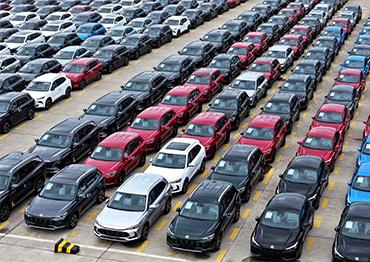
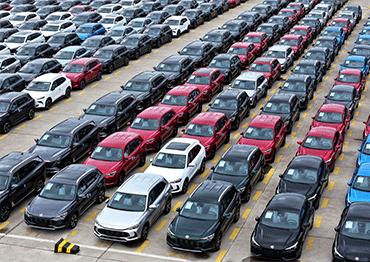
In the US, while technology and AI investment have driven growth, higher energy prices, tariffs and other factors have pushed up production costs and consumer prices. In China, strong exports and growth in high-tech and emerging industries have supported the economy, but domestic demand, including consumption and investment, has failed to keep pace.
The bigger question for economists is whether the K-shaped pattern is a transitional feature of structural adjustment or could harden into a longer-term divide. Some warn that the divergence could weigh on employment and consumer confidence, further weakening domestic demand and reinforcing the pattern.
Others argue that China is undergoing a longer-term shift from a manufacturing-led economy toward one increasingly centered on services and advanced industries.
"It is a misinterpretation to treat the short-term ‘temperature gap' created by structural adjustment as a permanent structural divide," said Liu Yijun, an economist from the Capital University of Economics and Business in Beijing, in an article on Beijing Daily's web portal on July 23.
Liu argued that while China's emphasis on "new quality productive forces" has led to rapid growth of new industries and business models, these drivers have yet to reach a scale and level of maturity sufficient to fully offset the adjustment of traditional ones. "The shift from old to new growth engines is rarely a smooth handover," Liu said.
Describing the current problems as "short-term growing pains," Liu argued that with the right policies, China's ongoing industrial transformation will be able to help raise total factor productivity and improve the quality and sustainability of growth in the long run.
Liu's view was echoed by Liao Qun, chief economist at Hong Kong's Sino Group. In a column published on Sina. com on July 23, Liao argued that China's K-shaped recovery reflects two structural transitions taking place simultaneously.
The first is the technological shift driven by the digital and green revolutions, which is contributing to K-shaped divergences globally. The second is China's longer-term industrial upgrading from an economy dominated by lower-end manufacturing toward one increasingly driven by services and high-end manufacturing. While this transition has largely been completed in developed economies, Liao noted, it is still unfolding in China.
"The overlapping of these two transformations makes China's K-shaped economic divergence especially pronounced," Liao said. As both are "inevitable" trends for China's future economic development, he argued, K-shaped divergence is a "positive, forward-looking, and aggressive" form of development rather than a sign of economic failure.
The policy challenge is to strengthen the links between the old and new. Liao called for traditional industries to be upgraded through digital and green technologies, while encouraging emerging industries to create new sources of employment and absorb workers displaced by the structural shift.
 Old Version