The city of Dongguan, in South China's Guangdong Province, is typically associated with industry. Indeed, Dongguan is an industrial powerhouse and is one of the highest-ranking cities in China in terms of international exports. This might explain why it is visited every year by thousands of international business delegations, but not by tourists. So when I booked my trip there, ostensibly to attend a networking event, my hopes were not high. Nevertheless, having never visited before, I ensured that my stay was extended, so I'd have the opportunity to explore the city for a few days. That proved to be an excellent decision, and now I am delighted to advocate for Dongguan as a city with plenty to offer any curious traveler.
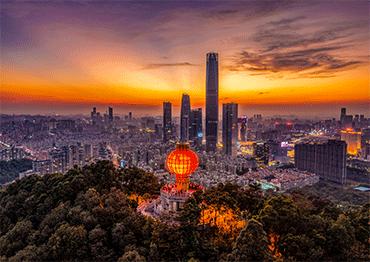
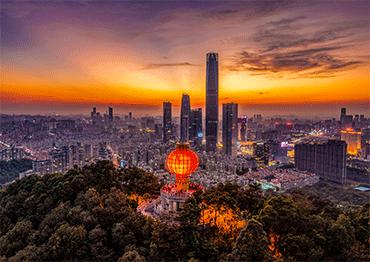
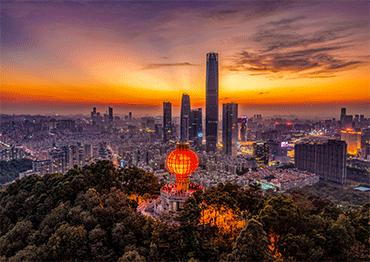
The first thing that surprised me was how green and spacious Dongguan felt. Perhaps because of its manufacturing prowess, I'd imagined the city would feel dense, crowded and industrial. Instead, I was greeted by a city of wide, tree-lined boulevards, immaculate displays of flowers and extensive, lush parks. Dongguan Central Park has been rightly praised for providing the central business district with easy access to many hectares of lush fauna, wetland boardwalks and green stepped plazas. An even bigger green space, easily accessible from the city center, is Qifeng Park. It features an extensive wooded area, multiple hills and numerous ponds. The park hosts many architectural features including an iconic hilltop Red Lantern, taking a short hike to the top, but worth it for the city views. However, for a green space with deep cultural heritage, there are few better places than Keyuan, Dongguan's historic garden. Keyuan is considered one of South China's Great Gardens, and boasts exceptional examples of Lingnan garden architecture, a style typical of Guangdong Province.
As a trading city, Dongguan's history is closely related to the maritime trade routes of the Greater Bay Area. Nowhere is this more visible than in the Humen Town district of the city. Humen Town, which sits directly on the Pearl River Delta, features a number of now ruined historic forts, and includes a naval museum dedicated to the history of the 19th century Opium Wars. It was in this city that the great Qing Dynasty (1644-1911) official Lin Zexu supervised the destruction of large quantities of seized opium in 1839, demonstrating and cementing his reputation for ‘holding the moral high ground' in the face of extreme challenges. Given this fascinating history, and Dongguan's current leading status, this city provides a fantastic example of China's dramatic history, and its spectacular rise within the world of international trade.
Nowhere can the era of international trade be more visible than in Dongguan's South China Mall, the largest shopping mall in China, and currently reported as the fifth-largest in the world. While the mall's initial opening period was marked by low levels of occupancy and negative press, it's now buzzing with retail, catering and entertainment. The mall has capacity for approximately 2,350 stores, and includes themed zones based upon international locations.
Another clear example of Dongguan's leading position within the global economy comes from perhaps the most bizarre, but also wonderful, tourist attraction in all of China, Huawei's office complex. Tech giant Huawei was founded in 1987 and is based in the Greater Bay Area. In order to establish new offices and facilities in the heart of Dongguan, Huawei built 12 large European themed towns around a pristine central lake, connected by three full-sized tramlines, which combine to create an entire European-style city district. This professional district helps to represent the frontline position of Dongguan in the battle for international technological supremacy, while also representing the intertwined trading relationships between China and other countries across the globe.
Unfortunately, gaining access to European Town can be difficult, and permission must be sought ahead of time. However, even for those who are unable to access the town, the European cityscapes are so magnificent that they are clearly visible from multiple surrounding viewpoints, which are ever popular with influencers and others taking glamorous photographs. Meanwhile, for those who are lucky enough to gain access to the vast enclosure, an entire paradise awaits.
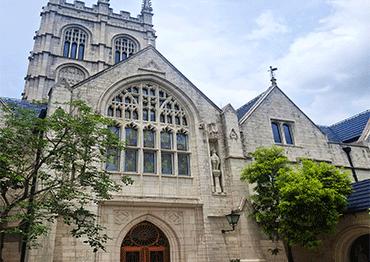
Where else in the world could you jump on a tram and travel from "Bologna" to "Český Krumlov" to "Paris" and to "Oxford" in just a few minutes? In this unique utopia the ancient Czech castles of central Europe are only a short distance from the immaculate plazas of Italy, and the Gothic churches of medieval England. While this may sound a little bizarre, the district is a living and breathing working space. Behind the artistic and historical facades of the buildings are real offices, housing real professionals engaged in cutting edge work. Here, the Parisian boulevards and cobbled streets of Bruges contain restaurants, convenience stores and functional spaces for business meetings. The aim of this creation is not to impress visitors, it is to provide qualified professionals with a comfortable and mindful environment in which to work. Perhaps it should then be no surprise to anyone around the world that companies in China have created so many leading innovations, when so much effort is clearly being invested in the well-being of staff.
Rather than clump all the buildings together, the architects ensured that the different districts are spaced apart with immaculate parkland. Every corner provides curious pathways down which you are invited to wander, to be at ease, find solace and meditate upon your latest ideas. All this is achieved, of course, without any of the burden of tourists, traffic and mayhem which plagues these destinations in their original forms. In fact, a friend commented that it was only possible to tell it wasn't really Europe is because everything was so clean and well-maintained.
Finally, one cannot talk about Dongguan without acknowledging its delicious food. The local cuisine is a well-regarded subbranch of Cantonese food, with a focus on fresh ingredients, savory profiles with slight sweetness and hearty rustic dishes. Local specialities include roasted goose with lichee wood, Daning crab roe congee and Zhongtang fish dumplings. Dongguan is also home to a vibrant and welcoming international community, with excellent culinary options for those who seek international cuisine. Among the many options available are Liberty Brewing, who offer excellent American style barbecue, Pauly's Kitchen, who offer sublime Italian food in an authentic European setting, and Alan's World who offer British cream teas among other homemade delights. With so much variety, and so many unique opportunities, a visit to Dongguan promises to offer excitement, inspiration, and intrigue for every sense of the body.
 Old Version