Old Version
Culture

Paper Trails

Low-budget indie film Dear You has gone viral in China, touching millions of viewers with its authenticity and storytelling based on the UNESCO-listed letters of the Teochew (Chaoshan) diaspora

By Yi Ziyi Updated Aug.1

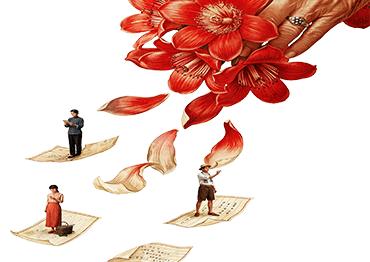
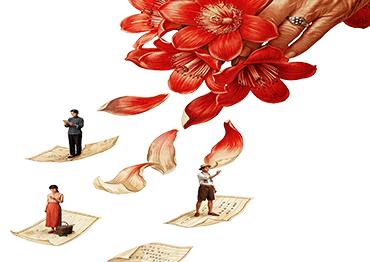
A poster for Dear You

Since May, a film about handwritten letters has been flooding Chinese social media feeds. 

"My gentle wife Shurou, may this letter find you in good health. I enclose 200 yuan. All is well with me, and business is thriving. Across 10,000 miles of rivers and seas, thinking of you makes the distance feel not so far." 

These viral lines come from Dear You, an indie film rooted in the unique culture of Chaoshan, South China's Guangdong Province. 

For generations, people from Chaoshan left to work overseas and sent money home enclosed in handwritten letters, or qiaopi. 

Unlike ordinary letters, qiaopi were mailed through private "letter and remittance shops" (piju) run by overseas Chaoshan communities as a safe way to wire money back home. These shops created an informal banking and postal network that spanned Southeast Asia and beyond, proving more efficient than official postal services for decades. 

Qiaopi recorded the happenings of countless lives, from the birth of children to the death of parents, as well as major historical events from ordinary people's perspectives, such as the Chinese People's War of Resistance against Japanese Aggression (1931-45). Their cultural significance earned an inscription in UNESCO's Memory of the World Register in 2013. 

Set between Chaoshan and Thailand from the 1940s to the present day, Dear You tells a slow-paced yet powerful story centered on qiaopi letters, as well as the secret acts of kindness they carried between two women thousands of miles apart. 

Directed by Chaoshan-born filmmaker Lan Hongchun, the film was released on April 30 in the Chinese mainland to surprise success both critically and at the box office. Despite its modest budget of 14 million yuan (US$2m), Dear You has brought in 1.64 billion yuan (US$240m) as of June 9, with ticketing platform Maoyan projecting final revenues of over 1.8 billion (US$266m).
 
In May, it was screened at the 79th Cannes International Film Festival and is scheduled for release in Hong Kong and Macao as well as Singapore, Malaysia and Brunei in June, along with screenings in the US, UK, Canada and Australia later. 

With its historically accurate settings and immersive storytelling, the film revives this rich history for modern audiences in attentive detail. The yellow envelopes, handwritten letters and postal marks of qiaopi letters reflect the hardships of these migrants, as well as their enduring love for family and community.

Starring Chaoshan
Sitting near the South China Sea coast, Chaoshan encompasses the cities of Chaozhou, Shantou and Jieyang on the Rong and Han river deltas. Chaoshan is a portmanteau of Chaozhou and Shantou. 

For centuries, the region developed a resilient culture distinct from the surrounding Cantonese, Han and Hakka traditions. It is home to the highly distinctive Teochew dialect, with "Teochew" being the historical name for Chaozhou and a self-appellation used by people from the region. 

It has unique cuisine and folk arts, such as Teochew opera and embroidery, and Teochew people are known for their seafaring skills. Importantly, Teochew culture emphasizes strong clan ties, which bolstered their business networks. 

But due to limited local resources and population pressures, millions of Teochew began leaving in the 19th century for Southeast Asia and beyond. 

The film Dear You highlights this culture through a touching story of three people connected through qiaopi letters over half a century. 

Zheng Musheng (Wang Yantong), a poor young farmer from a Chaoshan village, moves to Malaysia and then Thailand in the late 1940s to escape conscription into the Chinese Nationalist army and find work, leaving behind his wife Ye Shurou (Wang Xiaohui) and their three children. 

In Bangkok, Musheng befriends Xie Nanzhi (Li Sitong), a kind, unmarried woman of Teochew descent who helps her father run the boarding house where Musheng lives. Though illiterate, Musheng values education and encourages Nanzhi to learn Chinese. She gradually acquires enough to help Musheng write qiaopi letters to his wife Shurou. 

But when tragedy strikes, Nanzhi is faced with an ethical decision, and each qiaopi she sends to Shurou is laden with a secret she carries for decades. 

Dear You is the third feature film in Lan's "Chaoshan trilogy." 

Born in Shantou in 1985, Lan earned a degree in Chinese language and literature. He later worked as a director and editor for Hong Kong's Phoenix Satellite Television, producing several documentaries on Chaoshan. In 2016, he left to start his own production company. 

Lan's two previous feature films, Proud of You (2018) and Back to Love (2022), both focused on Chaoshan families and culture. In January 2026, his culinary documentary series Teochew was released, which spotlights 100 dishes and traces the histories of 50 Teochew families across six countries. 

"Teochew culture is the endless source of nourishment for all my creations," Lan said at a screening event held at Peking University on May 19. "As a creator raised in Chaoshan, stories of our ancestors' journeys to Southeast Asia have always lingered in our minds. I believe every local artist, as their craft matures, carries a desire to tell this story. It is a shared memory of our entire community."

Accurate and Authentic
One feature of Lan's directing style is his use of amateur actors. Most of Dear You's cast are Chaoshan locals without any formal training or experience, including the two female leads Wang and Li, who are both college students. 

"My experience making documentaries taught me to prioritize authenticity," Lan said. "I cast these young actors because I trust their empathy and emotional sensitivity. My job is to draw out those genuine feelings. When actors are surrounded by real settings and genuine feelings, their performances come naturally," Lan added. 

Rather than relying on dramatic twists, the film spotlights everyday details to recreate these lived-in worlds, like ancient banyan trees in villages, traditional snacks and folk dances. 

"For props, our crew collected real everyday artifacts from local villages," producer Zheng Xuanxuan said at the Peking University event. "These well-worn objects carry the textures of real life, which is why every scene feels so authentic." 

The film, released in Teochew and standard Chinese versions, highlights the importance of language in cultural transmission. 

Twenty qiaopi letters drive the film's narrative, all written by Lan. The closing credits show alongside real examples of qiaopi, each a glimpse into the enduring bonds between Chinese families spread overseas. 

A recurring theme is language education among migrant communities, and the risks it entailed. 
In the film, Musheng is a regular at the Teochew-run letter and remittance shop in Bangkok, where worker Di Gong writes letters for him to his wife. The two become close, and in secret establish a small Chinese language school for children in Nanzhi's boarding house. 

Between the 1930s and 1950s, teaching Chinese in Thailand was heavily restricted due to waves of nationalism, discriminatory policies and the country breaking diplomatic ties with China in 1949. Restrictions officially ended in 1992. 

"In places where Chinese is not the official language, learning it may seem impractical, but for ethnic Chinese, preserving our mother tongue is a duty," Lan told NewsChina. "Elders often recall learning Chinese in cramped rooms back then, where teachers told them: what seems useless is actually the most useful." 

"Back then, in Chinatowns, there was a shared belief: Only by mastering Chinese can we preserve our identity. That understanding ran deep, passed down silently through generations," Lan said.

Surprise Acclaim
Dear You has proven budget does not determine impact. On China's leading media review website Douban, it earned an impressive 9.2/10 from 853,000 viewers, making it the site's highest-rated film in the past decade. 

"This film is like a ray of light in our modern era of conflict, division and dwindling human warmth," commented Douban user "Zhishi," who claims Teochew heritage. 

Another viewer "Dongjie" posted, "The first half uses qiaopi as its narrative thread, but unexpectedly the latter half reveals a deep bond between women that transcends blood ties. What's rare is that the narrative avoids melodrama." 

But some critics claim the opposite, accusing the film of romanticizing the women's struggles, particularly those of Shurou. "Audiences shed tears over the letters, but have we truly recognized these women's suffering?" netizen "Hemaweiba" wrote on WeChat. 

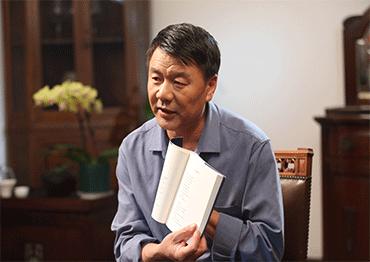
Chen Pingyuan, a Peking University Chinese professor of Teochew descent, was deeply moved by the film. Having spent 30 years researching Teochew culture, Chen praised its authentic depiction of overseas Chinese life in Southeast Asia. 

"Many audiences in the Chinese mainland focus on qiaopi culture, yet the film's most compelling part lies in its depiction of life in Southeast Asia, the human bonds, daily life, local atmosphere, children learning Chinese, hardships, resilience and endless longing for their homeland," Chen told NewsChina. 

Last November, Chen joined 20 scholars in compiling a 10-volume anthology, The Complete Collection of Teochew Studies, in which he details decades of findings that earned high acclaim in academic circles. 

"It has taken us 30 years of preparation to reach this point. Countless scholars, literati, officials and residents have worked wholeheartedly to preserve Teochew culture. Now this film has brought our culture nationwide attention," Chen said. 

The film's success has sparked broader discussion about the state of Chinese cinema. 

"In an era of intense competition and widespread anxiety, audiences have grown weary of formulaic, melodramatic and hollow productions. They crave realistic works that stay close to life, heal the heart and convey genuine kindness," Deng Huaru, former deputy editor-in-chief of Hunan Broadcasting System, wrote in an essay for rednet.cn. "The miraculous success of the film is not accidental. It signals a return to the true aesthetic roots of film and television." 

"The film challenges the industry's superficial pretenses and redefines what makes a great movie. A truly outstanding work needs neither flashy effects nor hype. Sincerity alone can break through barriers and move millions," Deng wrote. 

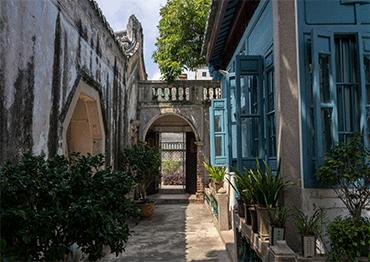
Shot entirely in Chaoshan, the film has boosted local tourism, with featured locations such as Shantou Small Park, Chaozhou Thai Buddhist Temple and Jiefang Road in Minahu, Jieyang County becoming popular destinations for movie fans. 

"I feel honored that the stories of our ancestors and the emotions in their letters have touched so many people nationwide," Lan said during the Peking University event. "We worried that the local dialect might be a barrier for audiences outside Guangdong Province. But I'm overjoyed that the emotions in these words and stories have transcended regional differences." 

"To see the whole nation embrace this work is a wonderful surprise. It reinforces our belief that art with sincerity can touch hearts. Our persistence has paid off, and that is deeply reassuring," Lan said.

With the huge popularity of Dear You, a themed street inspired by the film has been created in Shenzhen, Guangdong Province, May 27, 2026 (Photo by VCG)

The Ancestral Hall for the Chen Clan, one of the filming locations of Dear You, has become a popular tourist destination, Shantou, Guangdong Province, May 19, 2026 (Photo by VCG)

Print