Old Version
Economy

Final Cut

After years of failed expansion strategies, Huayi Brothers faces bankruptcy as billions in losses and unpaid debts threaten to collapse what was once China’s leading film powerhouse

By Xu Ming , Wang Shihan Updated Aug.1

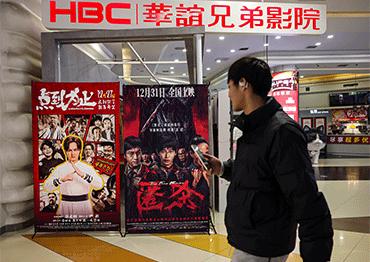
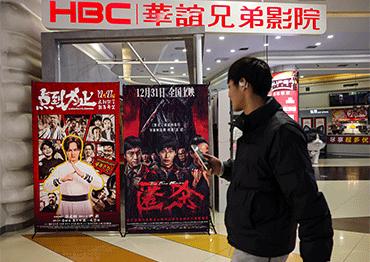
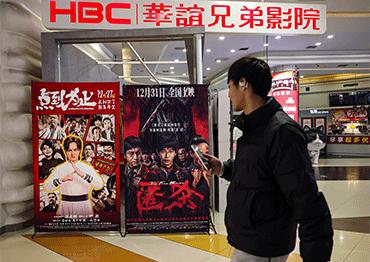
A man walks past a Huayi Brothers cinema, one of the more than 20 cinemas built by Huayi Brothers, Shenyang, Liaoning Province, December 17, 2025 (Photo by VCG)

When brothers Dennis Wang Zhongjun and James Wang Zhonglei founded Huayi Brothers in 1994, China's film industry was far from a packed house. 

The company started in advertising before turning to film investment in the late 1990s. Partnering with director Feng Xiaogang, their commercial success helped to establish Huayi as China's first private film juggernaut. 

Over the next two decades, the studio grew alongside China's booming market, working with some of the country's biggest names in entertainment while kick-starting the careers of A-listers like Fan Bingbing. 

By the time Huayi Brothers listed on the Shenzhen Stock Exchange in 2009, it had built a sprawling entertainment empire spanning film production, artist management, music, distribution and real estate. At its peak in 2015, its market value neared 90 billion yuan (US$13.3b). 

Today, that empire is on the verge of collapse. 

In April, a Chinese court accepted a restructuring petition against Huayi Brothers after the company failed to repay an overdue 11.4 million yuan (US$1.7m) debt stemming from an advertising contract. The same month, the company reported overdue debt of 56.4 million yuan (US$8.3m) with the Bank of Hangzhou. 

These are only the latest signs of a decline years in the making. Since 2018, the group has accumulated more than 8.2 billion yuan (US$1.2b) in losses. 

Its stock price also continues to suffer. On June 10, Huayi Brothers' shares opened at 1.82 yuan (US$0.27), giving it a market cap of 5.05 billion yuan (US$745.6m), far from its 70.81 yuan (US$10.5) closing price debut 17 years ago. 

Facing delisting risks and mounting creditor pressure, the Wang brothers' remaining shares and corporate assets have been frozen, and a judicial auction for their holdings began in early May. So far, neither brother has released a statement. 

"It's a pity, but not unexpected," An Yugang, a former business associate who once marketed Huayi films, told Southern Weekly. "As a representative of the old generation of film companies, it has already been left behind."

Disney Dreams
Pictures seem to have always been part of Wang Zhongjun's story. Born in Beijing in 1960, Wang went to art school, worked as an art designer and later a news photographer before leaving to study mass communications in the US. He returned to Beijing in 1994, and with his art skillset and new degree, started an ad company with his younger brother Zhonglei. 

This first iteration of Huayi Brothers landed clients like Bank of China and Huaxia Bank, which brought their firm tens of millions of yuan. But Wang Zhongjun's chance meeting with director Feng Xiaogang led to Huayi investing in one of his early films, Sorry Baby (1999). 

This first foray in the industry created a partnership that dominated the 2000s, with Feng behind nearly half of Huayi's box office earnings. They scored massive hits like A World Without Thieves (2004) starring Andy Lau and rom-com If You Are the One (2008) with long-time Feng collaborator Ge You. 

When Huayi rang the bell on their 2009 IPO, the company and China's movie industry seemed unstoppable. The domestic box office had reached a total of 6.2 billion yuan (US$916.3m), while Huayi had built an industrial chain covering screenwriters, directors, actors and distribution. By 2012, Huayi alone accounted for more than a quarter of domestic film's box office in the Chinese mainland market. 

Now looking back, analysts trace Huayi's decline to decisions made at the height of this success. 
During the company's 20th anniversary celebrations in 2014, Wang Zhonglei announced a strategy out of Disney's playbook, aiming to monetize Huayi's IPs through theme parks, gaming, artist management and licensing. 

Elder brother Zhongjun handed over command of Huayi's film business to Zhonglei, freeing him up to focus on these new revenue streams - and his growing art collection, which included Van Gogh's Vase with Daisies and Poppies acquired for 377 million yuan (US$55.7m). 

Their strategy reflected the optimism of China's blockbuster era. Investors including Alibaba and Tencent backed the company with billions of yuan, while the domestic box office expanded at breakneck speed. 

Flush with capital, Huayi went on an acquisition spree. The number of companies under its umbrella ballooned from just six in 2009 to 117 by 2018. 

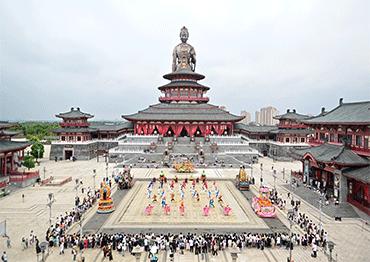
The company envisioned film-themed parks across 20 Chinese cities. Its flagship project, Huayi Brothers Movie World in Suzhou, Jiangsu Province, opened in 2018 as China's first homegrown IP film park, a 3.5 billion yuan (US$516.7m) investment. But the project struggled from the start and ultimately entered bankruptcy proceedings in 2024. It was fully acquired by a South Korean-owned company in 2025. 

"It's not wrong to diversify," said former Huayi associate An Yugang, "but the company expanded too fast and too broadly, which weakened its cash flow." 

The costs of these bets would not fully surface until several years later.

Tourists watch a performance at Huayi Brothers Movie World in Suzhou, Jiangsu Province, September 2024. Its name was changed to Suzhou Yangcheng Peninsula Theme Park after being sold to HHAN Entertainment in 2025 (Photo by VCG)

Reaching for the Stars
Huayi's rise had been fueled on star power. Feng Xiaogang and Huayi had released 12 films between 1999-2013, 10 of which were among their respective year's top earners. All of them feature star-studded casts. 

But securing those stars came at a huge premium. In 2015, it spent 1.05 billion yuan (US$155.2m) acquiring Feng's Dongyang Meila Media, which at the time had negative net assets. Huayi also bought a 70 percent stake in Dongyang Haohan, a company founded by a cohort of A-list actors including Li Chen, Angelababy (Yang Ying) and William Feng for a whopping 756 million yuan (US$111.7m) despite it having only existed for one day. Both acquisitions were tied to performance agreements requiring future profit targets. 

When growth slowed and those targets were missed, Huayi was forced to record substantial losses and impairment charges, creating a strain that would haunt the company. 

The studio soon lost its market edge. Huayi's share fell from 13.6 percent in 2012 to just 4.5 percent in 2015, ranking seventh in box office earnings below Wanda Pictures, Enlight Media and Bona Film Group. 

Their strategy had depended on a film industry that could keep growing indefinitely. Instead, the market shifted. Huayi's first year in the red was 2018 - the year Chinese tax authorities launched a sweeping crackdown on the film industry. The company was on the hook for losses of 1.09 billion yuan (US$161.1m), with its net profits down by 231.9 percent year-on-year. 

The Wang brothers attempted to repay debts through transferring equity stakes of the company's subsidiaries and selling shares. To fill the coffers, elder brother Wang Zhongjun even auctioned off his own paintings and some of his private collection, including his Van Gogh. 

By 2019, Huayi was not leading a single film project. In a letter to staff, Wang Zhonglei described this as a "fatal mistake." Late that year, Wang Zhongjun returned to lead daily operations, refocusing on film and core businesses while shedding non-core assets.
 
But that did not stop the bleeding. From 2020 to 2024, Huayi's film and TV entertainment revenue shrank from 1.3 billion yuan (US$192m) to 443 million yuan (US$65m). 

"We've failed to produce a single blockbuster film or TV show [this year], and short-form dramas have yet to emerge as a second growth driver," Wang Zhonglei wrote to staff in late 2025. "Coupled with tight cash flow and heavy historical debt, these challenges serve as constant reminders that Huayi is still weathering a storm." 

But revenue from a single blockbuster was never likely to extricate Huayi from its financial mess. The company's last hit was war epic The Eight Hundred (2020), which grossed 3.15 billion yuan (US$465m). But Huayi still posted a net loss of 1.05 billion yuan (US$155m) that year. 

"The actual returns from a blockbuster are not as lucrative as they appear," Zhang Shule, an entertainment industry analyst, told NewsChina. "Its profits are insufficient to sustain the long-term operations of a large film group." 

Xiang Kai, a prominent playwright and director active in arts education, said the crisis trapped Huayi in a downward spiral. "The more it lost, the more afraid it was to invest. The less it invested, the fewer blockbusters it produced," Xiang said, adding the company also faces talent drain as its stars and management resources continue to leave.

Divided Attention
By the time Huayi Brothers refocused on film, internet companies had entered the fray, using ticketing data to inform production. "People get old. Their taste will not suit every generation," An told Southern Weekly. 

Capital also withdrew, especially after the 2018 government crackdown on tax evasion that exposed the industry's shady bookkeeping and exorbitant salaries of film talent. 

In a 2021 dialogue with Yu Minhong, founder of education giant New Oriental, Wang Zhongjun cited an unreleased Huayi Brothers film as the industry's turning point. 

Directed by Feng and starring Fan Bingbing, production for Cell Phone 2 began in 2018. But when accusations of "double contracts" and other illicit dealings for the film surfaced online, authorities struck hard, with media focusing on Fan's accumulated fortune. A court later ruled she pay 884 million yuan (US$130m) in owed back taxes and fines or face criminal charges. 

It was a reckoning for the industry's golden age. Analysts say the investigation burst Huayi's long accumulating stock price bubble, all while exposing its operational risks and strategic vulnerabilities. 

But Huayi's troubles are not solely self-inflicted. The year of the crackdown, investment in the film market had peaked at nearly 12 billion yuan (US$1.8b). The pandemic then sent the industry reeling with nearly six-month theater closures in 2020. By 2024, investment had fallen below 2 billion yuan (US$296m), according to data firm iiMedia Research. 

Audience attention was also fragmenting as short videos, short dramas and AI-generated content competed for viewers. In 2024, total market scale of short dramas in China reached 50.4 billion yuan (US$7.4b), surpassing the annual box office for the first time, according to Shenzhen-based data provider DataEye. 

Huayi Brothers entered the short drama market in 2025, leveraging game IPs including RPG franchise Dungeon & Fighter and battle royale title Game for Peace, but it was too late. "The market was already saturated by the time Huayi entered," said industry analyst Zhang Shule. "Its strategy was largely imitative and lacked innovation. It was outperformed by more creative small studios."

Life in Pictures
Though Huayi Brothers paid off about half of its supply chain payables and recovered a large portion of client debts from late 2021 to Q3 2025, its interestbearing liabilities remain around 1 billion yuan (US$147.8m). Further pressure comes from four ongoing cases in which Huayi or its subsidiaries failed to comply with mediation agreements and 20 pending lawsuits spanning TV production to consulting services. 

"It's still too hard for a company that has been losing money for nearly eight years to repay debts through its own operations," an accountant who has followed Huayi Brothers' financials for nearly five years told NewsChina on condition of anonymity. 

Since the preliminary restructuring process began on April 23, a court-appointed fiduciary has taken on asset investigation, auditing and valuation of the company. 

Tan Mintao, a lawyer at Beijing Zhongwen (Xi'an) Law Firm, said the restructuring process is a rescue measure, not bankruptcy, giving Huayi a final chance to avoid liquidation while administrators seek investors and evaluate its assets. 

For Huayi, upcoming projects are critical to attracting investors, Tan said. 

Currently, the studio has four films in production and 12 in development, with multiple TV dramas, web series and short dramas in the works. Its core corporate attributes - listed status and operating licenses - are scarce, attractive resources. 

But Tan said that without a robust slate of unreleased films and creatives, investors are unlikely to take the reins. "The court will examine whether the company can retain key talent, such as directors and production teams. If not, it will be nothing more than an empty shell," Tan said. 

Huayi's decline marks the end of an era. Q1 2026 financial reports show over 60 percent of A-share film and TV companies are in the red. 

Besides Huayi Brothers, Bona Film, established in 2003, also posted losses for 2022 through 2025 despite producing blockbusters like war film The Battle at Lake Changjin (2021). 

Zhang Yi, CEO of iiMedia Research, called Huayi's decline a "wake-up call for the entire industry." "Refocus on core content, ensure stable cash flow, adopt industrialized production and prudent management, and avoid high-leverage, disorderly expansion," Zhang told the Shenzhen Economic Daily in May. 

Both brothers are currently under court-ordered consumption restrictions, limiting them from non-essential spending. 

In late 2025, younger brother Wang Zhonglei and his wife began building a social media presence focused on lifestyle and culture. Their posts feature products such as crystals, beaded bracelets and tea, which some speculate could be preparations for livestream sales. 

Wang Zhongjun has maintained a much lower profile. During his 2021 dialogue with Yu Minghong, Wang said he hoped to be remembered as someone who helped transform China's film industry into a market-driven business and who produced many classic films along the way. 

"Many entrepreneurs we know have experienced dramatic ups and downs," he told Yu. "Some bounced back, while others never recovered from the fall. Yet I don't see anything tragic about it." 

Wang ended their discussion on painting, saying it "may leave the deepest mark in my future. It's my greatest joy in life." As Huayi's story enters its next act, Wang may already be sketching what comes next. 
Print