Old Version
Economy

Race to the Top

China’s motorbike industry is looking to ZXMOTO’s World Superbike victories to boost the sector, though insiders say more technology R&D, brand building and policy support is needed

By Chen Weishan , Xu Ming Updated Jul.1

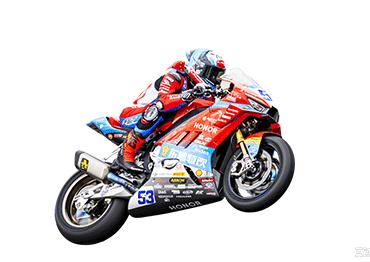
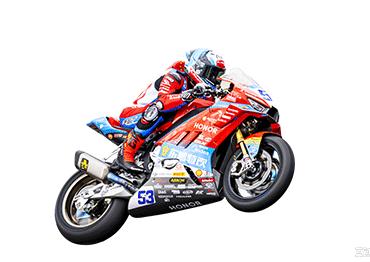
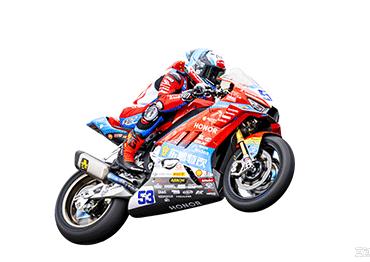
French rider Valentin Debise (No.53) of team ZXMOTO (Zhang Xue Motorcycles) competes in Race 2 of the WorldSSP series at the TT Circuit racetrack, Assen, Netherlands, April 19, 2026 (Photo by VCG)

Tears streaming down his face, Zhang Xue, founder of startup motorbike manufacturer ZXMOTO, looked on as his Chinese-developed model racing bike crossed the line in first place in the World Supersport category at the Portuguese round of the WorldSBK. It was the first time a Chinese manufacturer had won at this level, and it was a dream of decades in the making for Zhang. 

French rider Valentin Debise, on the racing version of ZXMOTO's 820RR production model, claimed a double victory in superbike races on March 28 and 29. His wins broke the decades-long monopoly of international giants like Italy's Ducati and Japan's Yamaha. On May 16 and 17, ZXMOTO and Debise scored another double victory at the Czech round of the WorldSBK, after posting a third win in the Hungarian round of the championship on May 3. The five wins mean Debise has 147 points, sitting in 2nd place. ZXMOTO are eyeing overall victory. "What are we gonna do since we're getting used to winning," Zhang said, according to media reports. 

The success has fired up the domestic industry, which has struggled due to competition from ebikes and sweeping bans on fuel motorbikes in most urban areas of China. On April 20 at the 139th Canton Fair, the motorcycle section was packed with buyers from across the globe, many of whom came especially to see ZXMOTO's models. 

"Customer traffic has noticeably increased. We've even got older men in their 60s coming to see what our 820RR model looks like," a salesperson from an ZXMOTO store in Beijing told News- China in April. 

ZXMOTO's orders surged after the double victory. Although the 2026 version of the company's 500RR and 820RR production models was launched on March 21, by early April, the company had over 10,000 orders. The delivery date for an 820RR bike is estimated at July 30. The company is mulling expanding its monthly capacity from 5,000-6,000 to 10,000, founder Zhang told Start Market Daily in late April. 

Before its championship wins, the company, founded just two years ago, sold around 20,000 bikes in 2025. Founder Zhang Xue, who gave his initials to the company's name, is seen as a new hope for revitalizing the Chinese motorbike industry. 

His personal story has been intertwined with his professional life since he was a teenager. After the historic win, people discovered Zhang's inspiring backstory, a now 39-year-old who has dedicated his life to motorbikes, and view his victory as well-deserved after years of efforts. 

The Chinese motorbike industry has been in the doldrums for decades, with strict rules on their use and declining sales. The market for big-bore bikes, with engines over 250cc, is dominated by brands from Europe, the US or Japan. Revving up the domestic industry needs more efforts in brand building and R&D, and changes to motorcycle bans, experts said. 

An expert on the motorcycle industry, who spoke to NewsChina on condition of anonymity, said that some Chinese companies saw early success in international motorbike competitions through sponsoring teams, but this was mainly for marketing purposes. Foreign manufacturers dominated engine technology. 

But in recent years, some Chinese companies have been developing their own racing motorcycles.

Inevitable Victory
ZXMOTO's winning bike at the WorldSBK is powered by its self-developed 150-horsepower inline three-cylinder engine, their second independently developed engine. 

Si Hui, a senior engineer familiar with the motorcycle industry, said Zhang's engine is not simple copying. Instead, he made special technical designs, such as using a TiAl aluminum alloy valve independently developed by Ji Hua Laboratory in Fuzhou, Fujian Province. Si believes this engine stands out among others with the same displacement, which means the greater the cc volume, the greater the displacement. This translates to greater engine output, or horsepower. 

This means ZXMOTO's bike can compete with the big brands on the racing circuit. Of course, Si added, the skill of rider Valentin Debise was able to "maximize the advantages of both the rider and the motorcycle" to win the races. 

Li Xueping, vice director of the Chongqing Automobile and Motorcycle Industry Association, believes that victory was only a matter of time for the startup, given Zhang Xue's expertise and persistence in designing his own engines. 

With a passion for racing motorcycles, Zhang, who hails from a rural part of Central China's Hunan Province, started out as an apprentice bike mechanic at 17. After his team's win, 2006 footage of Zhang resurfaced, when as a 19-year-old, he followed a van from Hunan TV on his motorbike for 100 kilometers in the rain, hoping he would get noticed by a racing bike team. His scheme worked, and he joined a team as a mechanic and rider. 

In 2013, he moved to Southwest China's Chongqing, a Mecca for motorcycle manufacturing. He began making and modifying bikes, and sharing videos online. He founded Kove Motor with partners in 2017, which saw early success in the Supersport 300 World Championship, a tier below the Supersport World Championship. 

"Zhang Xue is an expert. He knows everything about engines, and that's why he's so skilled at improving medium- to large-displacement engines," said Li Xueping, who has known Zhang for 20 years. "As a rider, he knows what a racing motorcycle requires. Meanwhile, as former CEO of Kove Motor, he's also in a managerial position. Few people have this skillset in this circle." 

Although Kove Motor was doing well, Zhang exited the firm in 2024. "Zhang and his partners differed on whether to continue developing their own engines, which needs huge investment. Investors complain if there are no short-term results," Li said. 

Determined to find success alone, Zhang Xue established ZXMOTO the same year. "He often said self-developed engines could surpass those of foreign brands," Li said. 

Being in Chongqing is a big part of this success. Known as China's "Motorcycle Capital," the megacity that sits astride the Yangtze and Jialing Rivers has been a center of motorbike manufacturing since the 1990s, with joint ventures established with firms like Yamaha. Zhang sources 80 percent of key components locally and can find professional suppliers to develop parts quickly for low cost. 

According to Chongqing authorities, the city has over 40 vehicle manufacturers and more than 400 parts suppliers capable of producing a total of 10 million vehicles and 20 million engines annually. One in every three motorcycles exported from China is made in Chongqing, Chinese media reported. 

But despite the huge increase in capacity since the 1990s, most factories are original equipment manufacturers (OEMs), supplying bikes and parts for export. In Chongqing, around 70 percent of Chongqing's motorcycle exports are OEM-based, with only about 30 percent own-brand exports, according to Li Yao, vice president of Zonsen Group, which has been manufacturing bikes and parts in Chongqing since 1995.

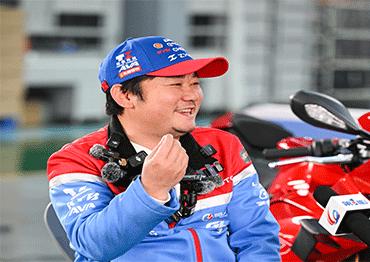
Zhang Xue, creator of the 820RR superbike, is interviewed by media at his factory in Chongqing, March 30, 2026 (Photo by VCG)

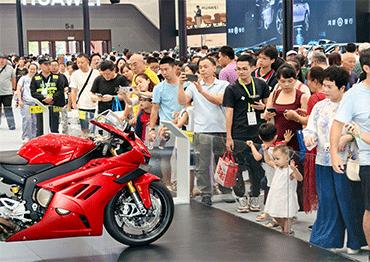
People gather to view the ZXMOTO exhibition at the 6th China International Consumer Expo in Haikou, Hainan Province, April 18, 2026 (Photo by VCG)

Back on the Road
Many see hope for China's motorbike industry after Zhang Xue's success, especially in large-displacement motorcycles. ZXMOTO is focused on bikes with displacement larger than 250cc, which despite being a small market, is growing fast. 

In China, motorcycles that can travel long distances were an important means of transportation. But starting in 2008, many areas banned motorbikes entirely. They could no longer be ridden in urban centers and tunnels or on elevated roads and city highways. Authorities cited noise, safety, pollution and public security as reasons for the bans. Later, the rise in cheaper and cleaner ebikes significantly dampened demand. 

Data released by Soochow Securities in May 2025 shows that between 2019 and 2024, domestic sales of fuel motorcycles fell from 7.71 million to 5.44 million units. 

But demand for large-displacement recreational motorcycles, bought for the thrill of riding, grew along with the development of outdoor sports and motorcycle culture. Between 2019 and 2024, domestic sales of motorcycles with engines larger than 250cc increased from 110,000 units to 400,000 units, with a five-year compound annual growth rate of 28.8 percent, while the penetration rate rose from 1.5 percent to 7.5 percent, according to the Soochow Securities report. 

Domestic large-displacement motorcycle sales moved toward higher engine capacities. While 250-400cc models led the market through 2023, the 400-500cc segment saw its share jump to 46 percent in 2024, according to the report. 

Statistics from the China Chamber of Commerce for Motorcycle shows that in 2025, sales of two-wheel motorcycles reached 19.16 million, a year-on-year rise of 10.32 percent. Among them, the sales of motorcycles above 250cc rose to 952,300, a year-on-year growth of 25.87 percent. This indicates that motorcycles in China are quickly shifting from being mere commuter tools to lifestyle vehicles. 

"China's motorcycle industry basically staggered forward for the last 40 years. The growth in large-displacement motorcycles is because the whole industry has upgraded," Li Xueping said. 
In January 2024, Chongqing released an action plan to upgrade the fuel motorcycle industry, encouraging traditional motorcycle companies to develop models above 250cc and build their brands. 

"Profit margins for motorcycles for general purposes are low, selling for only 5,000-6,000 yuan (US$736-884). Bikes with medium- to large-displacement sell for tens of thousands of yuan, with higher added value," Li said. But it can cost tens of millions of yuan to develop such a bike. 
The current global market for largedisplacement motorcycles is dominated by Japanese brands, who take almost half the total market. Honda takes about 20 percent, with Yamaha, Kawasaki and Suzuki also world leaders. European brands like BMW and Ducati take another 20 percent. 

Apart from urban bike bans, manufacturing large-displacement engines is much harder, Li said. 

"The difficulty jumps at every level. For example, as displacement rises, so do temperatures, thus requiring a far better cooling system," said Zhao Jiang (pseudonym), a former engineer at Zonsen and Jialing, also headquartered in Chongqing. Engineering an engine above 250cc is a real challenge. 

"Unlike small-displacement motorcycles, there's a huge quality gap between large-displacement bikes," Si Hui noted. "The entry barriers are high - not every motorcycle manufacturer can break into this space. Most smaller firms can at best build 125cc or 150cc motorcycles." 

It was not until the early 2000s that Chinese manufacturers started developing large-displacement products. 

Today, the top domestic manufacturers like Qianjiang Motorcycle, Chunfeng Motor and Loncin all have large-displacement models. These companies have steady sales both at home and abroad, though they do not focus on racing like ZXMOTO. 

In the first 10 months of 2025, the penetration rate for models over 250cc at home hit a record 11.1 percent, while exports reached 449,000 units, a yearon-year rise of 59.1 percent, according to Guolian Minsheng Securities. 

The head of a motorcycle company, who asked for anonymity, told NewsChina that the urban ban on motorbikes, as well as competition from cars and ebikes, has had a knock-on effect on the development of high-end models. He suggested that Chinese firms focus on developing export models. "We can only improve quality and technology through exploring international markets," he said.

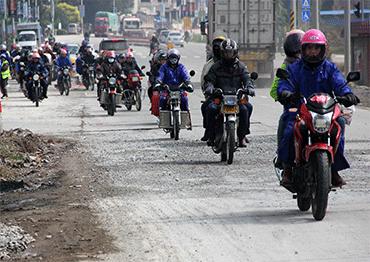
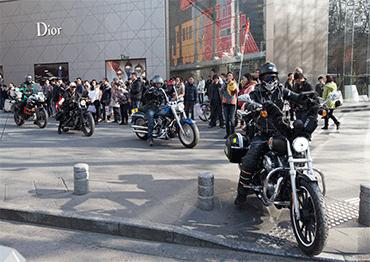
People ride motorcycles to their hometowns to celebrate Chinese Lunar New Year, Wuzhou, Guangxi Zhuang Autonomous Region, January 30, 2016 (Photo by VCG)

Motorcycle enthusiasts riding different brands of bike gather in Xinjiekou, Nanjing, Jiangsu Province, January 2, 2015 (Photo by VCG)

No Easy Ride
After ZXMOTO's first victories in the WorldSBK, media quoted Zhang Xue as saying that "in the next five years, we will take over more than 50 percent of the large-displacement market share from international brands." In February, Zhang set a goal of at least doubling retail sales in China in 2026. 

ZXMOTO's disclosed supply chain data shows that the 820RR base model is 97 percent domestically sourced, with 100 percent self-sufficiency in engines, electronics and frame, indicating a solid foundation for motorcycle manufacturing in China. Its victory and popularity are expected to benefit the Chinese industry as a whole. 

"Its win will no doubt boost the brand image of domestic motorcycle manufacturers. There are more short video reviews of ZXMOTO on social media and its orders are increasing," said Zhang Wei, a motorbike enthusiast based in Beijing. He said review videos show that ZXMOTO's motorcycles are definitely among the best in China. 

Zhang Wei bought a domestically produced motorcycle two years ago and found the quality was better than he expected. "Domestic motorcycles are much better than they were 10 years ago," he said. 

But he noted that ZXMOTO alone cannot change the domestic industry. Before Zhang Xue and his company went viral, domestic motorcycle manufacturers had been stuck with the "low-end" label. 

Zonsen engineer Zhao Jiang, a witness to how Chinese motorcycle companies explored overseas markets, said the domestic motorcycle industry started with the Chongqing-based Jialing Factory's success in assembling the CJ50, a 50cc moped, by copying from Honda motorcycles it bought from Japan in 1979. Before that, motorcycles were rare and mainly for military use. 

Later, Jialing and Honda established the joint venture Jialing-Honda Motors Company. Jialing paid commission to Honda for every bike sold. The factory introduced Honda production lines, and adhered to the Japanese producer's standards. 

"At that time, the overseas market was basically dominated by Japanese companies. Jialing looked at where Honda sold well and put forward appropriate models," Zhao said. 

The industry was very successful, and by 1993, China overtook Japan to become the world's largest motorcycle producer. 

But at the same time, urban motorbike bans started to shrink domestic demand. Manufacturers increasingly looked overseas to absorb excess capacity. By 1997, Chinese manufacturers led by Jialing opened up the market in Vietnam, undercutting Japanese models by half. For a time, Chinese companies accounted for 80 percent of the Vietnam market, squeezing out giants like Honda and Yamaha. 

But the good times did not last. Without core technology and brand awareness, some companies started price wars, and lowered profits left little room for quality or service investment. Some firms cut corners on frame thickness, key components and brakes, and product quality plummeted, while after-sales services were largely absent. China-made bikes started getting negative reviews, while Japanese brands raised their game, recapturing nearly all their lost ground by 2005. 

Since then, domestic brands started to focus on improving product quality, increasing R&D investment and optimizing overseas services, with an eye on more exports. In 2025, China's exports of motorcycles reached 13.37 million, continuing its first place in global export volume that it has held for at least 20 years since it overtook Japan again. 

Factories specialize in almost every part, which is why the industry is so efficient and low cost, Zhao Jiang noted. 

Yet Chinese motorcycle manufacturers invest too little in brand establishment. "Japanese companies started out by copying too," Zhao said. Some companies, like Zonsen, started out by producing their own engines and selling them to other motorcycle brands, not paying enough attention to brand-building. 

The situation in India is different, Zhao said. "Indian companies rarely do OEM work. They focus on building their own brands overseas. Despite higher initial costs, this strategy gives them a longterm advantage in certain foreign markets," he said. 

Li Yao of Zonsen suggested enhancing top-level design to build brands overseas, through special funding to support globalization or by buying internationally known brands. 

Currently, exports of Chinese motorbikes account for over half of total sales. Some of the biggest export markets include Southeast Asia, Latin America and Africa. 

Given the relatively slow growth in domestic sales, industry insiders and economists are calling to lift motorbike bans in cities to boost domestic demand. 

Professor Li Daokui with Tsinghua University noted in a video on WeChat the significance of providing a supportive environment for entrepreneurs like Zhang Xue. He called for changing bans in over 100 cities and scrapping the policy that bikes over 13 years old or with 120,000 kilometers must be retired. This would stimulate industry development and increase demand. 

"These policies made sense at the time out of safety and environmental protection concerns. But the problems have fundamentally changed or are better addressed today," Li Daokui said, who is an avid motorcycle rider. He suggested shifting the focus of management from motorcycles to drivers and making reforms to driving licenses to ensure safety. He also advised adopting a more thorough vehicle inspection system to phase out motorcycles that exceed emission standards or are unsafe. 

"It will stimulate the development of the motorcycle industry and related industries and make motorcycle companies more motivated to develop high-end motorcycles, changing the status quo where the global high-end market is dominated by foreign brands," Li Daokui said.

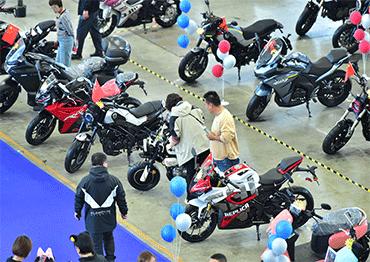
People view displayed motorcycles at the Shenyang Motorcycle Exhibition in Shenyang, Liaoning Province, October 3, 2024 (Photo by VCG)

Print