"The most sci-fi moment is when the deepest secrets of the universe are uncovered. For instance, when we suddenly realize that the entire universe and ourselves are merely programs made up of lines of code."
Sci-fi author Liu Cixin answering a question on "what the most sci-fi thing in the future might be" during the 2026 China Science Fiction Convention held in Beijing from March 27 to 29
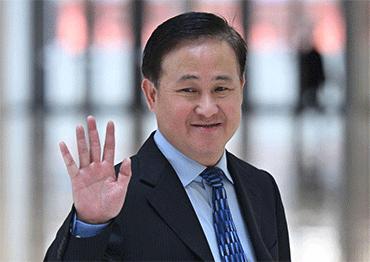
"China does not need to, nor does it intend to, gain trade competitiveness through currency devaluation. The People's Bank of China has always maintained clear positions: to uphold the decisive role of the market in the exchange rate's formation and flexibility, improve guidance of market expectations and keep the yuan exchange rate fundamentally stable at a reasonable and equilibrium level."
Pan Gongsheng, president of People's Bank of China, at an economic meeting of the 14th National People's Congress held in Beijing on March 6
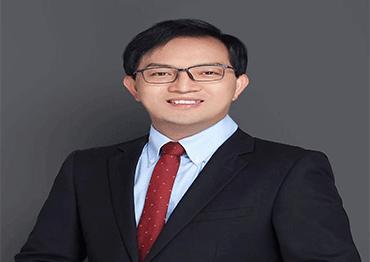
"Persistently high oil prices remain a gray rhino (high-impact, neglected threat) not yet fully reflected in market prices, and we should be alert to potential deep adjustments ahead."
Xiong Yuan, member of the Young Forum of China Finance 40 Forum (CF40) and chief economist at Guosheng Securities, at a capital market forum held by Guosheng in Wuxi, Jiangsu Province on March 25
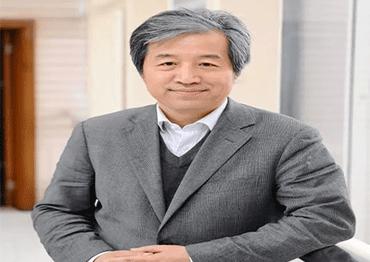
"The AI boom is not an iron law of the new economy, but a fragile mix of low interest rates, high risk appetite and technological narratives. Conflicts in the Middle East have triggered risks in energy, inflation and interest rates, accelerating the collapse of this mix."
Sun Lijian, director of the Financial Research Center of Fudan Development Institute, in a recent interview with Phoenix TV
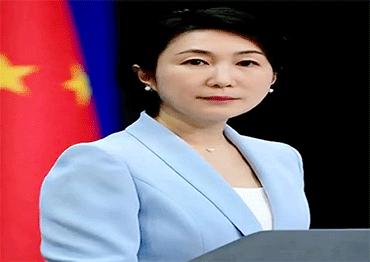
"In recent years, the US, by overstretching the concept of national security, has deliberately disrupted normal China- US sci-tech exchanges and cooperation, and wantonly gone after Chinese students and scholars. Such practices will only backfire and dampen the US's own innovation dynamism."
Mao Ning, a spokesperson for China's Ministry of Foreign Affairs, responding to the US House Select Committee's launching a "whistleblower" reporting mechanism targeting research partnerships with Chinese entities engaged in national defense and industry
"As long as we all aspire for a better life and wish to live in a nice house, spending demand will always be there. So I think the real estate market will expand and remain a pillar industry. The only difference is that economic growth will no longer rely on rapid real estate expansion and investment. China's future economic growth may come from more diversified sectors."
Guo Kai, executive director of the China Finance 40 Forum (CF40) Research Institute, speaking on a CF40 podcast
"For more than 70 years since the establishment of the multilateral trading system, the general direction of WTO reform has been to promote trade liberalization and facilitation. However, when globalization ebbs and trade protectionism rises, WTO reform may be used by some countries to advance trade protectionism and reverse globalization."
Yi Xiaozhun, former WTO deputy director-general and former Chinese vice minister of commerce, at the Peking University Shenzhen Forum on March 28
"In the AI context, a legal system that insists on a single responsible party is bound to fail, like in autonomous driving, for example. In the new forms of power relations shaped by AI, how should the law identify and constrain those who hold power? A more feasible path is to identify who is exercising what kind of digital power in different governance scenarios, and then assign responsibilities accordingly."
Sun Xiaoxia, dean of the Institute of Digital Rule of Law, Zhejiang University, in an interview with The Paper

 Old Version