The most popular city in South China’s tropical island province of Hainan is, without a doubt, Sanya. You’ve got to give them credit for the good PR. So, of course, when I planned my tropical winter vacation, it was a trip to Sanya. In my head, I imagined pristine warm beaches, local snacks and just plain simple relaxation. But it wasn’t what I got. What I found felt more like a luxury-brand fever dream.
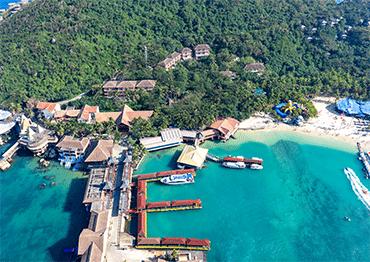
It felt like our entire shoreline was filled with luxury hotels, each promoting their own private slice of the oceanfront, which turned out to be way more windy than I expected. The soul of the island felt carefully packaged and sold. I was ready to write the whole trip off as a beautiful but commercial bust when a chance conversation changed everything.
On a whim, we decided to extend our trip to include a nearby city – Lingshui. We’d never been there but we had heard that there was a monkey island and also crystal-clear water, so we decided, why not?
With nothing to lose, we drove for about 40 minutes around the coast to the northeast and arrived in Lingshui. The transformation as we drove was gradual but profound. The manicured golf courses gave way to lush mango orchards pressed against the road.
Lingshui is not polished for international tourism. It’s more like an up-and-coming tourist destination that still mainly caters to locals and working on its international crowd with signs at the few tourist sites written in Chinese, English and Russian.
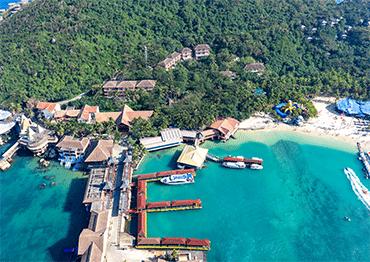
After settling in at a small, but insanely clean, beachfront inn for less than 200 yuan (US$29) a night, I went on a short walk and discovered that although my inn was fantastic, it wasn’t a hidden gem. There were plenty of local inns that were brand new, clean and super cheap. Come to think of it, there wasn’t a single international hotel brand in sight along the entire shoreline where we stayed.
Our first destination was the utterly surreal and delightful Nanwan Monkey Island. The adventure began with one of the world’s most scenic cable car rides, gliding silently over the harbor where you can see a ton of fishing boats. There’s also an option to take a boat across for a mere 8 yuan (US$1) per person, but they won’t take anyone over the age of 70 and since I had an 87-year-old in my group, we opted to hire a private car to drive us onto the island. These guys aren’t hard to find at all. Anyone lingering around is trying to offer their car for the ride onto the island for about 200 yuan (US$29).
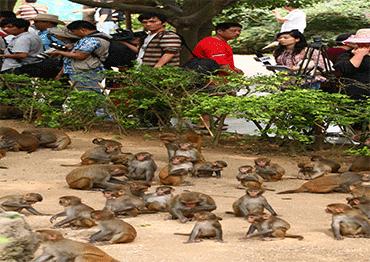
The island is not a zoo; we were the guests in the monkeys’ domain. I’m not exaggerating – the monkeys owned the place, and their confident, playful chaos was a welcome antidote to Sanya’s controlled perfection. There are plenty of fruit sellers with bananas and mangos, but they’re not for people. That’s just what the monkeys prefer. If you’ve got a little kid trying to feed the monkeys, give them a glove. These moneys aren’t shy at all.
At the sheer mention of going to Monkey Island, everyone will warn you not to mess with the monkeys and definitely not to hide food from them. These monkeys are notorious for stealing stuff from tourists.
There are also plenty of cows just roaming around everywhere and they’re not scared of cars at all. While you can’t really feed a cow, you can walk up and just say hi to one of these beautiful creatures.
Although the monkeys were awesome, our best time in Lingshui had to be our night time crabbing experience. After a relaxing day on the crystal clear water we headed to one of the beach combing shops.
It felt like a frat house. A bunch of 20-something year old guys set up shop to take tourists into the mangrove forest at night in search for crabs, shrimp, fish and whatever else you can find. Armed with a rubber onesie and a flashlight securely fastened on our head, we headed out.
Wading into the cold, shallow water, our world shrunk to the circle of light from our heads. The beach came alive at night. The beam would catch a frantic scuttle of a crab by a rock, a flicker as it reflected on the eyes of a fish, or a flash as a shrimp jumps out of the water.
It was definitely a one-of-a-kind experience that made you appreciate why fresh seafood is so pricey. It’s not easy catching them in the dark but it was worth it. After two hours of treading in the mangrove forest, we had our own bucket of fish, shrimp, clams, crabs, sea urchins and a ton of star fish that we didn’t know what to do with. Most places will offer to cook up your find right then and there for a small fee. If you go, I definitely recommend sitting down and enjoying your catch.
Then, about another 40-minute north at the other end of Lingshui, you can find a beach where you can literally hang out with rays. It feels different than in the aquarium. Rays crowd around your feet as you feed them chunks of fish.
Sanya gave me the perfect luxlife photos for Instagram with its five-star hotels each trying to out-do the other, but Lingshui gave me stories to tell. It reminded me that travel’s greatest reward is often found not in the destination sold to the crowds, but in the one you discover by accident just down the road. In Lingshui, the luxury wasn’t in thread-count or infinity pools, but in the gritty feel of sand between your toes at midnight, the taste of salty sea water and simplicity.
 Old Version