Old Version
History

Access to an Empire

From a smuggling hub to the only legally sanctioned port for private overseas trade during the 16th and 17th centuries, Yuegang was the world’s most important port in China and a cradle of early globalization

By Du Guodong , Long Min Updated Apr.1

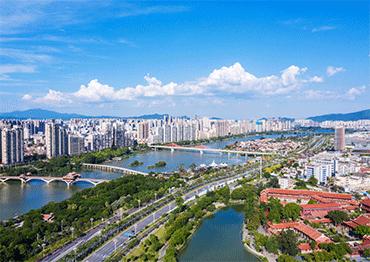
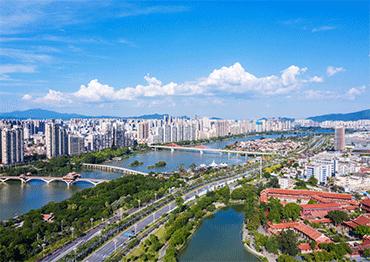
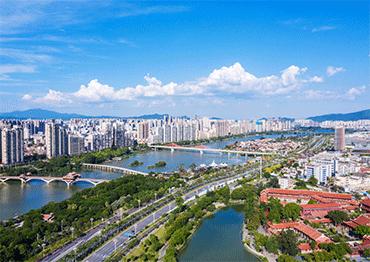
A view of Jiulong River, Xiangcheng District, Zhangzhou, Fujian Province (Photo by VCG)

In 2008, a rediscovered Chinese navigation chart kept at the University of Oxford quietly rewrote a chapter of maritime history. 

While on an academic visit to Oxford, American historian Robert Batchelor accessed a rare, silk map in the university’s Bodleian Library.  

The find launched a restoration project, and in 2011, the map was exhibited for the first time to fanfare from the academic world. Though untitled, it is known as the Selden Map, named after the English lawyer John Selden who left it to the Bodleian in 1659. Its true origins are still unknown.  

Dated to the reign of Ming Emperor Wanli (1573-1620), the chart reveals a web of sea routes spanning the South China Sea toward Southeast Asia. However, the chart’s revelation was not only the scope of China’s trade.  

The dozens of winding maritime routes converge on an unmarked point on China’s southeastern coast, which scholars determine to be the ancient seaport of Yuegang.  

Today, Yuegang exists as a quiet historical quarter within the city of Zhangzhou, Fujian Province. Its name, which means “moon harbor,” owes itself to the unique geography that defined its fortune – the crescent-shaped estuary where the Jiulong River meets the sea.  

During the mid-1500s, the Ming Dynasty (1368-1644) relaxed its longstanding restrictions on foreign trade, officially permitting merchants to sail from Yuegang into global waters. This transformed the once-unassuming port into the bustling epicenter of China’s private maritime commerce.  

From its wharves, the arteries of trade carried Chinese silks and porcelain to distant markets, while a lifeblood of silver flowed back, profoundly reshaping the empire’s economic foundations. 

Crescent of Silver 
To understand Yuegang’s spectacular rise as the dynasty’s economic experiment, one must first grasp the bleak context of the Ming Dynasty’s maritime restrictive policies.  

In the early Ming, Emperor Hongwu (1328-1398) enacted a sweeping maritime prohibition that banned private foreign trade and curbed seafaring activities to counter coastal warlord insurgencies and Japanese pirate raids.  

For generations, all foreign trade was funneled into the ceremonial framework of the tributary system, which operated primarily through the port of Guangzhou in south China’s Guangdong Province. This state-monopolized exchange functioned primarily as a political instrument. Though affirming the empire’s central authority, it stiffed genuine commercial growth.  

Economic strangulation bred systematic defiance. Prohibited from legal trade, many coastal seafaring populations in Fujian leveraged their abilities into large-scale, organized smuggling networks. Once dismissed in official records as “a remote coastal corner... beyond civilization,” Yuegang’s maze of waterways provided both perfect access and perfect cover for smugglers’ junks.  

By the mid-16th century, Yuegang had evolved into a major smuggling hub, where Chinese goods flowed out and foreign silver flowed in, creating an alternate economy that fatally undermined the Ming’s fiscal and political control.  

Now the empire found itself caught between two relentless pressures: a shadow economy and the momentum of early globalization.  

The 16th-century Age of Discovery thrust European navigators into the heart of Asian waters. The Portuguese reached the South China Sea by 1513, first establishing a presence near Guangzhou and later settling in Macao. In their wake, the Spanish and then the Dutch spun a web of maritime routes that linked Asia to global commodity and silver flows that recast the region’s economic geography.  

A watershed moment arrived in 1567, when Emperor Longqing (1537-1572) ascended the throne. He authorized a controlled opening of maritime trade, known as the Longqing Opening. To manage this experiment, the court carved out a new administrative county centered on the smuggler-infested Yuegang harbor. Thus, in an act of official sanction, Yuegang was transformed into the Ming empire’s sole legal gateway for private commercial trade with the outside world. 

The Longqing Opening represents a strategic recalibration in China’s engagement with the wider world, marking a deliberative shift from outright prohibition to controlled exchange. While maintaining a defensive posture against perceived foreign encroachments, the Ming court began to harness foreign trade to secure economic benefits and bolster political stability. 

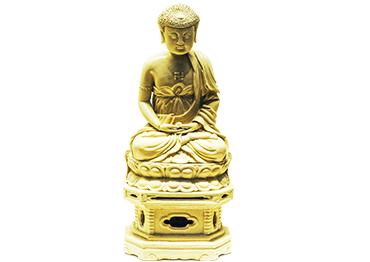
A white-glazed seated statue of Sakyamuni is exhibited at the National Museum of China, July 26, 2019. The statue dates back to 1615 during the Wanli reign of the Ming Dynasty (1368-1644) (Photo by VCG)

Connected World 
Four years after the Longqing Opening, the Spanish established colonial rule in Manila, Philippines, providing the crucial link for a globalized economic system. With immense wealth in silver from their American colonies and a pressing demand for luxury items, the Spanish turned to merchants from Yuegang. This partnership launched the Manila-Acapulco Galleon Trade, the world’s first and one of the longest-lasting trans-Pacific routes. 

Its global span was unprecedented. Yuegang junks would arrive in Manila, where goods were transferred to Spanish trading ships known as Manila Galleons. These massive ships then embarked on a perilous four-month voyage across the Pacific, riding the Kuroshio Current to Acapulco on Mexico’s west coast. From there, cargo was hauled overland to Veracruz, before sailing on to Seville, Spain and finally reaching European markets.  

Yuegang was the essential linchpin in this exchange, connecting Chinese production to global markets. Chinese exports, primarily silk and porcelain, defined luxury from the Americas to Europe. In return, a mighty river of silver in the form of Spanish pesos flowed back to China through Yuegang.  

The torrent of silver through Yuegang did more than enrich merchants. It recalibrated the Ming’s entire financial structure.  

In the dynasty’s early years, the imperial court introduced paper currency due to a copper shortage for minting coins, and prohibited private trade in gold and silver. However, unchecked over-issuance swiftly eroded its value. Lacking convertibility and fiscal discipline, the paper currency depreciated by approximately 1,000-fold over a century.  

The failure of the paper currency drove the expansion of silver use in private commerce, forcing the court to gradually recognize it as a de facto transaction medium. This market-driven trend was institutionalized later, particularly following the reforms of Zhang Juzheng (1525-1582), who served as Ming grand secretary. He implemented the Single Whip Law, which mandated the payment of most taxes in silver. This law decisively established silver as the official settlement currency of the Ming empire.  

During this period, historians estimate that up to one-third of the world’s silver supply found its way to China, which not only established China’s silver-based monetary standard, but also helped transform silver into a global currency. In this manner, Yuegang, a once peripheral harbor, assumed a pivotal role in the narrative of global monetary history.  

Managing this explosive trade volume required new institutions. Previously, the imperial court had established a coastal defense office at Yuegang, focusing on maintaining security. As trade tax revenues soared to reach an astonishing 35,000 taels of silver (equal to around 1,305 kilograms) in 1613, accounting for roughly half Fujian’s total provincial revenue, the office was renamed the Tariffs Collection Office and shifted to tax collection.  

Staffed by officials rotated from across the province, the office was an early form of customs. It developed a monetized tax regime that broke from the old tributary system and the simple model of percentage levies on goods.  

The tariffs system at Yuegang included three kinds of core taxes: a permit tax paid per trade voyage based on the declared goods and destination, a water tax calculated on the tonnage of the ship, and a land tax levied on the value of imported cargo. An additional levy was imposed specifically on ships returning from Manila.  

This system, implemented in the 1570s, was a groundbreaking experiment in that it replaced arbitrary exactions with a transparent, rules-based monetary customs system over a century before the Qing Dynasty (1644- 1911) established four official customs offices in 1684.  

Li Haiyong, deputy director of China Customs Museum, told NewsChina that the Tariffs Collection Office at Yuegang represents the earliest prototype of a modern customs authority. Its roles in inspecting import and export vessels, levying taxes and combating smuggling were all inherited by later customs administrations. “Its most revolutionary contribution was replacing taxation in goods with taxation in currency, a change of profound historical importance,” he said. 
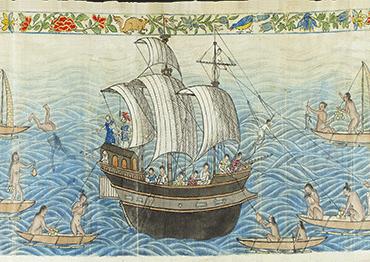
An artwork from 1590 depicts the reception of a Manila Galleon trade ship by the Chamorro people in the Mariana Islands (Photo by VCG)

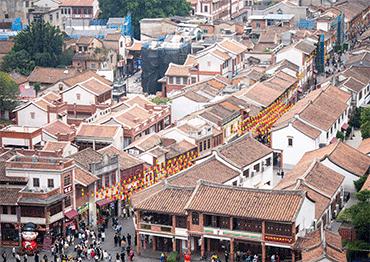
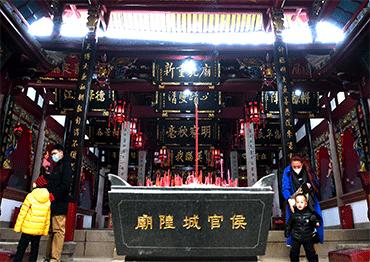
Zhangzhou Ancient City in Fujian Province bustles with tourists ahead of New Year’s Eve, December 30, 2023 (Photo by VCG)

Shore Changes 
Yuegang’s rise during the Longqing Opening freed the enterprising spirit of Zhangzhou. A substantial and sustained tide of merchants and sailors set forth each year, their junks stacked high with bales of sleek silk, chests of prized tea and stacks of distinctive Kraak ware, the blue-and-white Ming porcelain made for export. The name Kraak is a Dutch corruption of the word for the Portuguese ships (caracca) that carried them.  

Sold by merchants who spoke the Minnan dialect of Fujian, Chinese tea exerted an enduring global influence. In another linguistic imprint, the English words “tea” and “dimsum” originate from Minnan.  

A large and resilient Chinese merchant community took root in Manila, specializing in bilateral trade. But they were more than mere traders. They became vital agents of cultural exchange, introducing Chinese technologies, culinary arts and social customs across Southeast Asia.
  
Crucially, they became the first to bring New World crops into China. Documented history shows that sweet potatoes, corn, tobacco and peanuts arrived in China via Yuegang in the late 16th century – crops that would forever change China’s agricultural and demographic landscape.  

Sweet potatoes were first introduced to Zhangzhou. Remarkably adaptable to poor and sandy soils, they quickly spread across the farmlands of the Yangtze and Yellow River basins. Their large yields helped stabilize food supplies during wars and famines. Most importantly, they directly enabled the dramatic population surge of the Qing Dynasty during the 17th and 19th centuries, a demographic trajectory that would define modern China.  

Jiang Bo, director of Shandong University’s Maritime Archaeology Research Center, contrasted Zhangzhou’s unofficial, spontaneous trade with the state-controlled tributary system, emphasizing that such people-driven exchanges fostered deeper engagement and interaction between the East and West, creating a driving force for early globalization.  

In the end,Emperor Longqing’s decision to unlock Yuegang did more than open a port, it opened China to the world and the world to China, weaving its economy into a brand-new tapestry of global exchange. The rhythms it set, from silver flows to crop dissemination and cultural fusion, are still in motion today. 

Maritime Waves 
Yuegang shone brilliantly for about 70 years from the 1560s to the 1630s. However, its fate was inextricably linked to the stability of the Ming empire. As the dynasty itself began to fracture under internal rebellion and the rising pressure of the Manchus, its capacity to sustain this bold maritime experiment faded, and the port’s light flickered and died with the empire’s own.  

The final blow came in 1633, when Yuegang’s Tariffs Collection Office was closed in the wake of decades of wars that severed trade routes and redirected imperial priorities inland.  

Today, standing on the serene waterfront of old Yuegang, it is difficult to conjure its bustling past: the clatter of porters loading blue-and-white Kraak ware, the chime of silver pesos as deals were struck, and the billowing of towering junks bound for Manila.  

But the silent lines from the chart speak volumes. They capture a transformative moment when China, through a single port, helped shape the modern world.

Print