A slew of cases of corruption among staff at China’s big tech firms has prompted more corporate oversight and the attention of government regulators, in an industry that was famed for giving more leeway than is usual for Chinese firms to staff at all levels.
In some instances, bribes were counted in the millions of yuan, as people desperate to increase their online exposure struck deals in return for an algorithm boost.
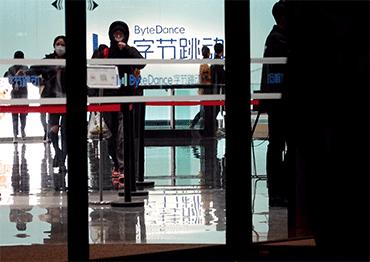
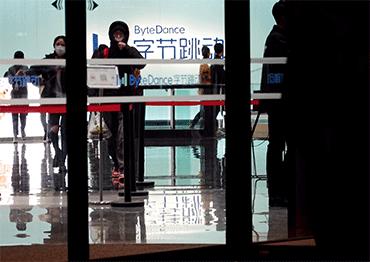
In a bid for increased transparency, ByteDance, parent company of TikTok, Douyin and many other apps, released its fourth ethics oversight bulletin for the Chinese mainland on December 25. The report disclosed employee violations during the third quarter of 2025, revealing that 120 employees were dismissed for violating company policies.
It also named 28 individuals it found had serious violations involving criminal activities and malicious damage to company interests. They were referred to judicial authorities, while all lost their stock options and were blacklisted across the industry.
In the past two years, internet giants and the judicial authorities in China have become more vigilant against rising market-distorting corruption committed by the lower ranked at internet companies.
Major tech companies, including Meituan, Alibaba, Bilibili, JD.com and Ele.me have either started to release reports on internal bribery and embezzlement or have publicly disclosed cases of employee misconduct.
On July 9, e-commerce platform Vipshop issued an internal notice disclosing that an operations director with the company surnamed Ma had been detained by police for allegedly accepting bribes from suppliers over an extended period. Vipshop also confirmed that its vice president Feng Jialu was under police investigation over suspected personal financial misconduct.
A week earlier on July 2, video-streaming platform Bilibili announced that Zhang Moumin, former general manager of its game cooperation division, had been arrested for serious job-related crimes, following an internal probe and a police investigation.
In January 2025, Tencent, one of China’s biggest tech companies, released its 2024 anti-corruption report, which revealed more than 100 employees were fired and over 20 were reported to public security authorities for suspected criminal offenses.
Tencent’s own data shows that violations have increased. The number of cases investigated by Tencent rose from around 50 in 2021 to more than 100 in 2024, a steady year-on-year climb that underscores the persistence of internal corruption issues within the internet giant.
A court in Beijing’s Haidian District, home to many major tech firms, handled 127 cases involving more than 300 million yuan (US$42m) between 2020 and 2024, according to a white paper released in May 2025. Over 70 percent of these cases involved employees of large internet firms, with the main charges being bribery by a non-State functionary, embezzlement and misappropriation of funds. Non-State functionary refers to entities within Chinese law that are not State-run or affiliated to State institutions. The punishments for bribery by a non-State functionary tend to be lighter than for employees of State entities.
According to Zhao Jun, a professor at the Institute for Criminal Law Science at Beijing Normal University, the “platform-based soft power” employees wield is a key factor behind the rising corruption in tech companies. This refers to virtual privileges such as the power to ban or reinstate social media accounts, manipulate trending topics, divert online traffic and influence algorithmic boosts.
“This kind of power doesn’t rely on tangible assets such as money or equipment,” Zhao told NewsChina. “Yet in the digital economy, it holds immense commercial value and can be readily monetized.”
In one case heard by the court in Haidian, an operations manager at a short-video platform surnamed Guo abused his authority by unblocking and whitelisting accounts for livestream hosts under his management between 2021 and 2022. In exchange, he solicited and accepted bribes totaling 3 million yuan (US$410,000), which he later spent on housing, cars, online games and other personal expenses.
In another case, a former employee of a video platform surnamed Li established an outside company with business partners. Leveraging his administrative privileges, he channeled platform traffic to the firm’s accounts in exchange for kickbacks. He has since been charged with bribery by a non-State functionary.
Another employee surnamed Shi, a user manager at a tech firm’s forum division, oversaw product design and client relations which gave him access to the company’s internal virtual assets. Shi struck a deal with a tech vendor involving virtual-currency rewards, receiving 6.08 million yuan (US$854,000) in cash bribes and cashing out company-owned tokens worth an additional 3.66 million yuan (US$514,000).
In these cases, the perpetrators were not high-ranking executives, but middle or even lower-level operators and managers, which Wu Xindong, a lawyer from Beijing DeHeng Law Offices, described as “minor position, massive corruption.”
Wu told NewsChina that compared to traditional firms, tech companies adopt a flat management style with fewer supervisory layers and decentralized decision-making, often leaving oversight gaps that lower-level staff can exploit, especially in critical business units. Combined with the rapid expansion of the platform economy in the past years, it creates fertile ground for internal corruption.
Beyond the “soft power” cases, corruption in traditional areas such as procurement and vendor management remains widespread, though increasingly shaped by digital dynamics, Wu told NewsChina. He cited four high-risk areas for internet firms – procurement, advertising, supply chains and content moderation, which are all marked by blurred authority, weak oversight and profit links tied to traffic metrics.
On July 24, 2025, Shanghai police announced a high-profile bribery case involving former Ele.me CEO Han Liu and his associates. Since July 2023, Han, along with two associates, had accepted bribes totaling over 40 million yuan (US$5.6m) from suppliers in return for favorable treatment.
Wielding significant authority over supplier selection, evaluation and subsidy allocation, Han was found to have accepted kickbacks from suppliers in exchange for securing logistics contracts across dozens of cities. Since 2023, he had allegedly taken millions of yuan in bribes to award contracts or grant preferential access to premium delivery zones.
In another high-profile case reported by State broadcaster China Central Television (CCTV) in May, an employee surnamed Wang at a major e-commerce platform in Hangzhou, Zhejiang Province, was found to have accepted bribes totaling more than 92 million yuan (US$12.9m) from over 400 merchants in just one year.
According to police, payments were made through online transfers, cash and even gold bars. Wang, who was in charge of approving businesses in the platform’s furniture category, allegedly traded approval rights for illicit gains.
According to Zhang Shule, an independent analyst of the IT and gaming industries, corruption involving vendor relations has long existed within platform companies.
“Internet companies often depend on individual employees to implement corporate policies,” Zhang told NewsChina. “When standards are vague or left to personal discretion, opportunities for rent-seeking inevitably multiply.
To curb internal misconduct, major tech giants including Alibaba, ByteDance, JD.com and Tencent have established dedicated ethics and compliance offices. JD.com went a step further in 2016 by setting up a 10 million yuan (US$1.4m) annual reward fund for whistleblowers, offering payouts starting at 5,000 yuan (US$720) for noncriminal violations and at least 50,000 (US$7,205) yuan for cases involving criminal offenses.
In 2017, JD.com, Tencent, Baidu, Lenovo and Xiaomi teamed up with the Criminal Law Research Center at the Renmin University of China to launch the Sunshine Integrity Alliance, a cross-company blacklist system designed to prevent employees dismissed for misconduct from being rehired within the network.
However, given that employee misconduct in major internet companies often takes place in cyberspace, where transactions are concealed and largely virtual, it is far more challenging for tech companies and law enforcement authorities to track.
“Unlike traditional offline bribery, misconduct typically runs through multiple stages, from contract signing to data operations, making it very difficult to detect,” Wei Jingfeng, a senior partner at Beijing Zhongdun Law Firm, told NewsChina.
In the bribery case involving Shi, the manager in the forum division, his misconduct went undetected for nearly seven years before being exposed by an anonymous tip. Similarly, Wang, the employee overseeing flagship store approvals on an e-commerce platform, was caught only after a whistleblower alerted the firm.
Zhao noted that even when companies uncover signs of corruption, verifying the misconduct poses another challenge. As private enterprises, tech companies lack the investigative powers of State authorities, and their internal investigations often risk infringing on employee privacy, which makes them hesitant to look into alleged misconduct.
Even when foul play is suspected, some companies prefer to handle matters quietly through internal settlements to avoid reputational damage that could hurt their brand image or stock price. As a result, many cases are never reported to the authorities.
Moreover, the use of cryptocurrencies like Bitcoin to launder illicit gains makes it more difficult for authorities to crack cases. In a high-profile case reported by State media the People’s Daily in July 2025, a former general manager of the e-commerce service at short-video and livestreaming platform Kuaishou, surnamed Feng, set a new record for corruption at major internet companies by embezzling 140 million yuan (US$19.6m).
Exploiting loopholes in the company’s subsidy policies, Feng and two other accomplices at the firm colluded with suppliers to submit false application materials and transfer company subsidy funds to accounts they controlled. He laundered the illicit funds into Bitcoin and other digital currencies through eight different cryptocurrency trading platforms. Feng was sentenced to 14.5 years in prison and over 90 Bitcoin were recovered by police.
According to Professor Zhao Jun, China needs to strengthen its anti-corruption legislation for private companies to tackle rising corruption in the internet sector.
“Historically, China’s anti-corruption legislation has primarily focused on State officials and executives of State-owned enterprises (SOEs),” Zhao said. “Private-sector corruption has received far less attention.”
This caution stems partly from the inherent complexity of economic crime cases, and partly from law enforcement’s concern about being accused of “interfering” in the internal affairs of private companies. As a result, many instances of suspected staff corruption within private enterprises goes unresolved.
In recent months, authorities appear to have adopted a more proactive stance. On March 1, 2024, seven amendments to China’s Criminal Law came into effect, three of which specifically target corruption in the private sector. Under the revised code, three offenses – illegally operating competing businesses, unlawfully securing benefits for relatives and associates, and abusing authority to sell or transfer assets at below-market prices for personal gain – were extended to cover executives in private companies. Previously, these charges applied only to leaders of State-owned enterprises.
In September, an executive surnamed Zheng became the first private-sector corporate leader convicted of illegally operating a competing business. As general manager of a lighting company, Zheng established a rival firm and diverted numerous orders from his employer, causing an estimated 2 million yuan (US$281,000) loss in profits. He was sentenced to 10 months in prison and fined 300,000 yuan (US$42,140).
According to data released by the Supreme People’s Procuratorate, more than 10,000 individuals were prosecuted in 2024 for corruption within private enterprises, a 25 percent year-on-year increase. Of these, 3,298 held key managerial positions.
While law enforcement authorities have stepped up anti-corruption efforts in the private sector, experts argue for stronger and clearer legislation. Wu Xindong, the Beijing-based lawyer, noted that despite the criminal law amendments, many concepts and terms are not well-defined, leaving many ambiguities. He called for clearer judicial guidelines and model cases to standardize enforcement.
In May 2025, the Law on Promoting the Private Economy came into effect, which stipulates that “the State shall promote the construction of a system and mechanism for private economic organizations to prevent and control corruption at the source,” which paves the way for more detailed measures in fighting corruption in the private sector in the future.
Wu stressed that combating corruption in private enterprises requires both strict legal enforcement and robust internal compliance, with government authorities and companies working together to institutionalize anti-corruption efforts.
 Old Version