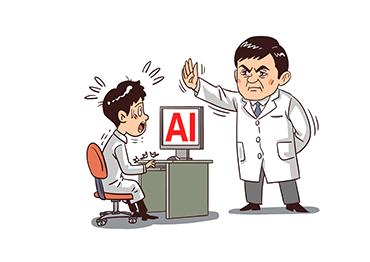
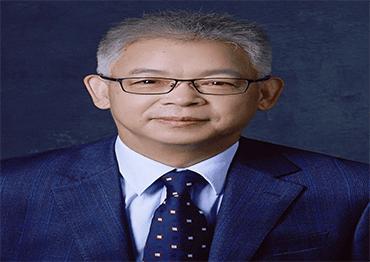
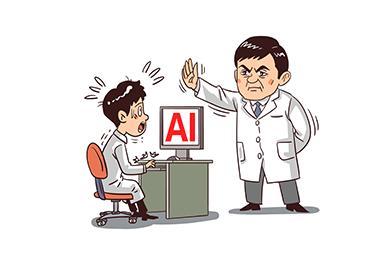
“If young doctors rely on AI during their internships, they will miss out on comprehensive clinical thinking training and may lack the ability to judge whether AI- generated diagnoses are correct.”
Zhang Wenhong, renowned physician at the National Medical Center for Infectious Diseases Shanghai Branch, during the 10th forum for the academic organization Global Academy of Science and Arts held in Hong Kong on January 10
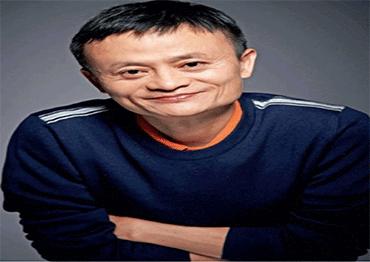
“In the AI era, the question is not whether to use AI in education, but how to teach children to use it well. Using AI does not mean asking children to compete with AI in calculation and memorization. Instead, it should help them preserve curiosity, because that is the true source of computing power. The huge gap in the AI era is not technological, but in curiosity, imagination, creativity, judgement and collaborative ability.”
Jack Ma, founder of Alibaba, during a recent online event hosted by the Jack Ma Foundation, which has run a rural education charity since 2015
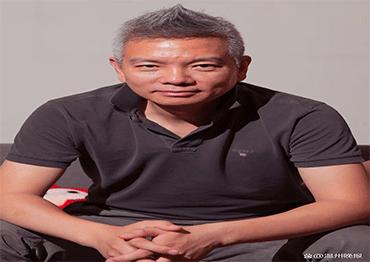
“Chinese cultural identity and styles should not be a burden for writers. Traditional aesthetics and Chinese styles do not necessarily have to only refer to painting, stone lions, red lanterns, paper cuttings or ink wash paintings... Traditional Chinese style does not conflict at all with imagination, or with the present and future.”
Chen Liaoyu, general director of the animated Chinese film Yao-Chinese Folktales in an interview with China Newsweek in late January
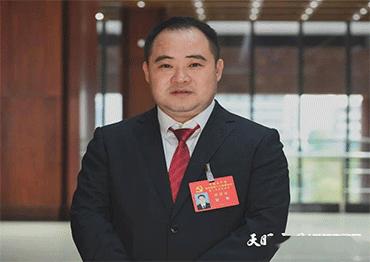
“There are indeed masters behind the Village Super League, and those masters are the people. When a village has a soccer team, it becomes more united and cohesive, and conflicts decrease. When a village has an additional cheer squad, there are fewer people sitting around mahjong tables, and rural communities become more civilized.”
Xu Bo, Party secretary of Rongjiang County, Guizhou Province, speaking with media before attending the fourth meeting of the Guizhou Provincial People’s Congress held on January 27
“As a major economy, whose export or import activities will have some impact on international markets, China’s sustainable approach involves thinking about how to grow together with its partners. The high-level opening-up that China discusses generally refers to institutional opening-up, namely that China wants to contribute to rule-making. But it is also necessary to consider how to develop alongside economic partners.”
Huang Yiping, director of the National School of Development at Peking University, at an event for the CF40 (China Finance 40 Forum) held on January 26
“A country can be a friend to both China and the US. This is not a zero-sum game. The Philippines does not need to choose sides, nor does it need to rely on one country to counter the other. The Philippines can maintain stable relationships with both China and the US as other ASEAN countries do, which best serves its fundamental and long-term interests.”
Jing Quan, Chinese ambassador to the Philippines, delivering a speech at the 2026 New Year Media Salon held by the Chinese Embassy in Manila on January 20
“As people in modern society become increasingly narcissistic and unwilling to give up their sense of subjectivity, the biggest challenge that love presents is how to transcend one’s own selfishness in order to love someone... What young people today perhaps need more than ever is emotional intelligence – the ability to truly love someone else.”
Li Qinyu, chief commentator of news portal The Paper in a commentary on January 24
“Any group, once it reaches a sufficient size, will naturally show diversity. It is understandable that we demystify overseas students, but the group should be viewed rationally. It is inappropriate to judge the entire group based on a few extreme cases.”
Publicity department of the Communist Party of China Zhejiang Provincial Committee responding on its WeChat account to remarks from netizens on recent viral social media posts that cast the private lives of Chinese students studying overseas in a negative light
 Old Version