Old Version
Cover Story

Off the Hook

Halfway through the 10-year fishing ban along the Yangtze River, there has been notable progress in reviving fish resources, though significant challenges remain

By Wang Yan , Qiu Qiyuan Updated Mar.1

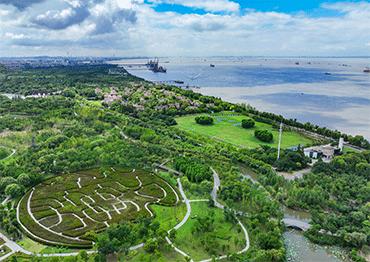
TheYangtze River in Chongchuan District, Nantong, Jiangsu Province, July 18, 2023. Thelocal government has been leading ecologicalrestoration and protection efforts along the river (Photo by VCG)

In the early morning of September 2025, ripples spread across the surface of the Yangtze River in Hubei Province. A Yangtze finless porpoise darted beneath the water. Moments later, it surfaced, flicked its tail and slipped back under. When it emerged, a 20-centimeter-long fish escaped its mouth.  

After several failed attempts, the porpoise lifted its head, opened its jaws and swallowed the fish whole before disappearing beneath the waves. A drone captured the entire scene, piloted by an environmental volunteer.  

“Scenes of this endangered species feeding freely were almost unthinkable five years ago, before the launch of the Yangtze River 10-year Fishing Ban in 2021,” the volunteer told NewsChina on condition of anonymity. Known as the “giant panda of the water,” the Yangtze finless porpoise is an apex predator in the river’s food chain. Highly sensitive to environmental change, it is a national first-class protected species and a key indicator of the Yangtze River’s ecological health.

New Schools 
For decades, the Yangtze finless porpoise suffered a steep population decline due to a combination of water pollution, overfishing, heavy vessel traffic and sand mining. Its population fell from around 3,600 in the early 1990s to about 1,800 in 2006. By 2017, a full basin scientific survey recorded just 1,012. The species was listed as critically endangered by the International Union for Conservation of Nature in 2013.  

Long degraded by overdevelopment, the Yangtze River experienced worsening water quality and a collapsing biodiversity integrity index. A 2018 evaluation by the Ministry of Agriculture and Rural Affairs deemed it near the critical “fishless” threshold, where a body of water can no longer sustain fish populations.  

To reverse this trajectory and restore biodiversity, China introduced a phased fishing ban along the Yangtze. In January 2020, a full fishing prohibition was implemented across 332 aquatic conservation areas in the basin. The next year, a comprehensive 10-year moratorium covering the river’s main stream and major tributaries took effect.  

The policy aimed to restore key aquatic habitats, boost fish populations and achieve a phased recovery of endangered species such as the Chinese sturgeon and Yangtze finless porpoise by 2025.  

The results were clear: A basin survey by the Ministry of Agriculture and Rural Affairs found that the Yangtze finless porpoise population had risen to 1,249 by 2023, an increase of 23.4 percent from 2017. Sightings have become increasingly common in the river’s middle and lower reaches, as well as in Poyang Lake in Jiangxi Province and Dongting Lake in Hunan Province. In 2023, 37 porpoise pods totaling 86 individuals were recorded in the Ma’anshan section, a 36-kilometer stretch in Anhui Province.  

A staff member involved in water monitoring for Anhui Province, who spoke to NewsChina on condition of anonymity, said that since mid-September 2025, monitoring vessels are deployed to collect samples along the 416-kilometer Yangtze stretch from Ma’anshan to Anqing.  

“We collect water samples, fish, bottom-dwelling organisms, phytoplankton and other aquatic life to track resource changes and evaluate the effectiveness of the fishing ban,” the source said. He noted a marked rise in fish abundance. “It is now common to catch silver and bighead carp weighing over 10 kilograms, which was rare in the past.”  

Fish populations are rebounding. Data shows that by 2023, the fish population size in the Ma’anshan section had increased by 1.5 times and resource density was double the pre-ban levels, while the anchovy population had quadrupled. “Anchovies feed on plankton and have small mouths, so their recovery signals a broader rebound in plankton,” Cui Shengxia, head of the First Brigade of the Ma’anshan Fishery Administration Law Enforcement Detachment, told NewsChina. “They are also a key food source for finless porpoises.”  

Fish species diversity has also improved. The endangered Yangtze tapertail anchovy has reappeared in the river’s middle reaches after an absence of nearly 30 years. Chen Yelin, deputy head of the Fourth Brigade of Wuhan Agricultural Comprehensive Law Enforcement Detachment, said that 48 fish species were recorded in aquatic surveys conducted in Wuhan in 2024 and 2025, up from 35 species in November 2023. Species once rarely seen in the Wuhan section, such as the Reeves shad and the longjaw grenadier anchovy, have become increasingly common in recent survey catches.  

Liu Huanzhang, a researcher at the Institute of Hydrobiology of the Chinese Academy of Sciences, said that the years of intensive fishing led to severe “miniaturization” of fish populations. Large individuals of many species were overharvested to near extinction, leaving ecosystems dominated by smaller fish, while large-bodied species virtually disappeared.  

The recovery observed in Ma’anshan and Wuhan reflects broader improvements across the Basin. According to the 2024 Bulletin on the Status of Aquatic Biological Resources and Habitats in the Yangtze River Basin, released by four ministries, the river’s main stream recorded a 9.5 percent year-on-year increase in resource quantity.  

Egg and larval numbers of the four major carp species in the middle reaches surged to 6.2 times pre-ban levels. From 2021 to 2024, monitoring identified 344 native fish species in the basin, 36 more than from 2017 to 2020.  

In late November 2025, Ministry of Ecology and Environment spokesperson Pei Xiaofei announced that national nature reserves had undergone a protection effectiveness assessment between 2022 and 2025. Ecosystem stability and sustainability in reserves across the Yangtze River Economic Belt showed a striking improvement, with an overall excellence rate of 98.62 percent. Pei noted that populations of rare and endemic fish, including the Chinese sturgeon and Chinese sucker in the upper reaches of the Yangtze, had increased markedly.  

Wang Kexiong, a researcher with the Cetacean Conservation Biology Research Team at the Institute of Hydrobiology, Chinese Academy of Sciences, said that before the ban, commercial fishing directly competed with finless porpoises for limited food resources. Overlapping activity areas also meant porpoises were frequently injured by fishing gear.  

“ After the ban, richer fish resources mean porpoises can feed more easily, face fewer human threats and occupy broader habitats,” Wang said. “This helps explain why they are now being seen more often.” 

A herd of elk walks in Hubei Shishou Elk National Nature Reserve, October 29, 2025 (Photo by VCG)

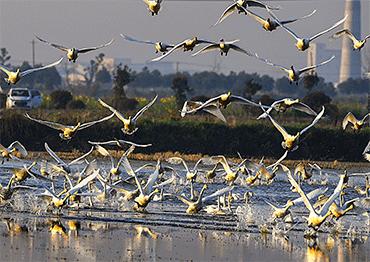
Hundreds of birds gather to forage in Longgan Lake National Nature Reserve, Hubei Province, February 20, 2021 (Photo by VCG)

Live Stream 
Liu Wei, deputy director of Ma’anshan’s bureau of agriculture and rural affairs, told NewsChina that prior to the ban, years of overexploitation had sharply depleted commercial fish stocks, leaving fishers with dwindling catches and declining incomes. 
 
Cui Shengxia noted that as early as 2003, Ma’anshan had introduced a seasonal fishing ban from April to June. However, the three-month window proved insufficient to restore fishery resources, making a full ban unavoidable. In May 2019, the city launched a complete fishing moratorium 18 months ahead of the national Yangtze River ban, which took effect in January 2021. The local campaign included dismantling fishing boats and prohibiting all fishing activities. By July 1 that year, Ma’anshan was the first city in China to fully enforce a year-round fishing ban on the Yangtze’s main stream and key tributaries.  

Xia Dejun, deputy director of the Aquatic Technology Service Center in Ma’anshan, told NewsChina that implementation was difficult. “Fishing has been the livelihood of these fishers for generations,” he said. “They are accustomed to living on boats. Some couldn’t even sleep without the movement of the water. When the policy was first introduced, resistance was strong.”  

After the fishing boats were dismantled, Xia said some fishers purchased derelict vessels from other cities, hid them beneath docks and fished illegally at night. “The docks were too low for law enforcement boats to access, so we sometimes had to strip down, jump into the water and pull the boats out ourselves,” he said.  

To transition fishers out of the industry, the central government had invested more than 26.9 billion yuan (US$3.84b) by the end of 2022. Ma’anshan moved quickly with targeted local measures, issuing subsidy policies covering social security, healthcare, housing, employment and education. Support included 9.64 billion yuan (US$1.38b) in local fiscal funds, “one stop” employment services and vocational training programs such as fishing to farming transitions. By 2019, all 10,757 local fishermen had moved ashore, one and a half years ahead of the national timetable.  

Xia noted that with strong policy backing and coordinated law enforcement, including Ma’anshan’s pioneering 24-hour patrols and multi department joint task forces, illegal fishing was effectively curbed by the second half of 2020.  

“Our officers work around the clock, and boats are dispatched immediately as soon as illegal activity is detected,” Qin Jiale, deputy head of the Ma’anshan Fishery Administration Law Enforcement Detachment, told NewsChina.  

At a 2024 press conference on the Yangtze River fishing ban hosted by the State Council Information Office, officials said that during the first three years of full implementation from 2021 to 2023, authorities nationwide maintained high-pressure enforcement. On average, more than 1,600 fishing-related administrative cases and around 500 criminal cases were handled each month.  

Despite these efforts, Qin and other officers said that unregulated angling has been the main challenge in the ban’s later stages. Many are disguising illegal fishing as leisure activity, involving prohibited equipment such as toxic baits and multi-hook fishing rigs, and selling catches to restaurants.  

“Illegal angling has become increasingly concealed, mobile and technology driven,” Qin said. Anglers now use high tech tools such as unmanned boats, underwater visual fishing rods and even drones, which allow precise targeting of fish.  

Most illegal activity occurs late at night in remote, complex waters, where offenders can quickly flee or discard equipment, complicating evidence collection and enforcement.  

One common illegal method is snag fishing. Using weighted, multi-pointed hooks, anglers pierce and catch fish on the outside of their bodies.  

Similar challenges have emerged in Wuhan, where in 2025 authorities uncovered nine such cases in the Yangtze’s middle reaches. “Illegal activities such as snag fishing and unregulated angling are extremely cheap, often costing under 100 yuan (US$14) for equipment, while law enforcement requires far greater resources,” Deng Xu, from Wuhan’s Office of the Leading Group for the Yangtze River Key Waters Fishing Ban and Fishermen Resettlement, told NewsChina.  

As a result, authorities say advanced monitoring technology is a must. Deng Xu noted that Wuhan has introduced AI-powered video analysis systems that automatically identify, alert and collect evidence of illegal angling.  

“The system now achieves over 90 percent accuracy in recognizing this behavior,” Deng said. Footage is transmitted to fishery administration command centers, where officers verify cases and formalize evidence.  

In May 2023, a surveillance camera automatically recorded an illegal snag fishing incident at the Fuhe-Yangtze confluence in Wuhan. When the suspect tried to flee on an electric scooter, law enforcement intercepted and detained him using the video evidence.  

Fishery regulation has also been strengthened. Chen Yelin noted that legislation such as the Yangtze River Protection Law provides firm legal support for enforcement. However, ambiguities remain, including deciding the appropriate fines for illegal fishing, catch thresholds for criminal prosecution and the definitions of “commercial fishing” and “commercial angling.”  

China launched revisions to its Fisheries Law in December 2024. Chen said the draft amendments propose measures such as catch traceability systems, an approved fishing gear catalogue and tighter regulation of illegal fishing vessels that are unregistered, uninspected or unlicensed. “Once revised, the law will provide stronger legal foundations for fishery law enforcement,” he said. 

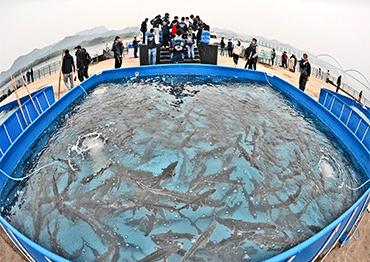
Chinese sturgeon are prepared to be released in Yichang, Hubei Province, April 10, 2021 (Photo by VCG)

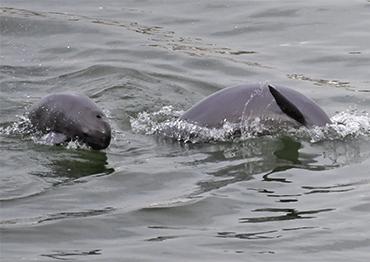
The increase in the number of Yangtze ffnless porpoises in recent years reffects the success of Yangtze River ecological restoration efforts, May 27, 2021 (Photo by VCG)

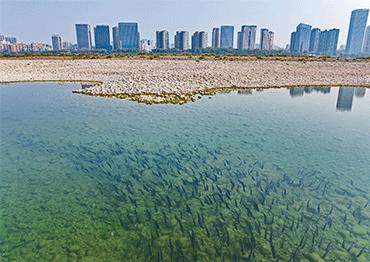
Schools of wild Yangtze ffsh swim in shallow waters during the dry season, a scene rarely seen before the ffshing ban, November 5, 2024 (Photo by VCG)

Toxic Relationships 
“If you release 100 fish into black, foul-smelling waters, none will survive,” Xu Jun, a researcher with the Ecosystem Ecology Research Group at the Institute of Hydrobiology, Chinese Academy of Sciences, told NewsChina. “That’s why the recovery of fish and other aquatic organisms depends not solely on fishing bans. Ecological protection of the Yangtze River requires a holistic approach.”  

In 2018, the General Office of the State Council issued opinions that faulted multiple human pressures for the river’s long-term biodiversity decline, including dam construction, water pollution, overfishing, waterway regulation, hardened riverbanks and sand mining.  

Xuejiawa, on the east bank of the Yangtze River in Ma’anshan, was once home to fishers, scattered polluting enterprises, illegal docks and livestock farms.  

“When you stepped on the ground, your shoes sank straight into dust. 

After rainfall, stagnant water flowed directly into the Yangtze River like sewage,” Hu Wei, deputy director of Ma’anshan’s bureau of ecology and environment, told NewsChina. These combined environmental threats caused severe loss of fish habitat. Villager Qin Jiale told the reporter that when he was a child, fish from the Yangtze tasted of tar.  

In April 2018, during an inspection tour of major Yangtze River cities including Yichang and Jingzhou in Hubei Province and Yueyang in Hunan Province, President Xi Jinping made it clear in Wuhan that “The Yangtze River is China’s Mother River, and we must protect it. We must move all polluting enterprises alongside the Yangtze with resolve... to root out the hidden dangers of pollution.”  

In the years that followed, cities along the Yangtze across multiple provinces rolled out rectification plans. Many provinces shut down chemical producers that failed to meet safety and environmental standards.  

Yueyang in northeastern Hunan Province, a major chemical industry hub along the Yangtze, has 163 kilometers of the river’s main stream, more than 1,600 square kilometers of Dongting Lake waters, and over 280 rivers within its jurisdiction. During the Yangtze River ecological protection campaign, 35 chemical enterprises along the river were ordered to relocate or shut down, accounting for 41.2 percent of Hunan’s total chemical companies and cementing Yueyang’s role as a key front in tackling water pollution.  

In 2020, Yueyang mandated risk assessments for chemical enterprises located within one kilometer of the Yangtze River shoreline. Outdated and non-compliant firms were targeted for closure or phase-out, while eligible manufacturers were guided to relocate to industrial parks outside the zone. The process was scheduled for completion in 2025 but finished two years ahead of schedule. 

“Since the relocation wrapped up in late 2023, we’ve continuously monitored the one-kilometer riverside zone using satellite imagery to prevent new chemical enterprises from setting up there,” Luo Ji of the Yueyang Bureau of Industry and Information Technology told NewsChina. 

Hunan Province has earmarked special funds to provide subsidies based on enterprises’ progress in dismantling equipment and resettling employees. “Companies that cooperate promptly with relocation and renovation efforts qualify for higher financial subsidies,” Luo said. “We also help arrange alternative jobs for employees of shuttered enterprises, though these measures cannot fully offset the losses incurred by businesses and individuals.”  

“There used to be many enterprises and makeshift docks built right on the river,” said Zhang Bo, president of the China Ecological Civilization Research and Promotion Association. “While these businesses drove local economic and social development, accelerated urban construction and boosted population growth, their withdrawal now comes at a considerable cost.”  

Cleaning up land left behind by relocated chemical plants is another tough task. Many sites contain heavy metals or organic pollutants that linger for years and are expensive to treat. Lu Yiliang, chief engineer of Yueyang’s ecology and environment bureau, noted that in Yueyang alone, 53 plots will need full remediation by late 2027, accounting for nearly one-third of Hunan’s total cleanup workload. “Preliminary estimates put costs at 1.5 billion yuan (US$210m). The main challenge is the funding gap, which we hope to address through national support,” he said. 

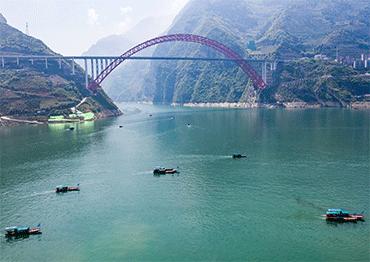
Fishery protection vessels from Zigui County, Yichang, Hubei Province conduct patrols in the upper reaches of Xiling Gorge, part of the Yangtze River’s scenic Three Gorges, April 15, 2021 (Photo by VCG)

Mission Forward 
The recovery of fish and other aquatic life in the Yangtze River has been driven by coordinated efforts among multiple stakeholders and systematic, cross-departmental governance.  

In Xu Jun’s view, recent gains demonstrate the Yangtze River’s ecological resilience. “Although the river’s ecosystem was severely disrupted by decades of human activity, it was not completely destroyed. Once human pressures ease, the ecosystem can restore itself through natural processes,” he said.  

However, experts cautioned that the observed increase in fish populations remains sporadic and does not yet signal a full recovery. Conservation and recovery of rare and endangered species such as the Chinese sturgeon and Yangtze sturgeon remain slow. While 36 native fish species have been newly recorded since the ban, 99 historically documented species have yet to be detected. Overall, the situation for aquatic conservation in the Yangtze remains grave.  

Liu Huanzhang noted that despite the fishing ban, several critical issues continue to undermine biodiversity conservation in the Yangtze, including habitat degradation caused by hydropower development, water pollution and fragmented river-lake systems. “Some water conservancy and hydropower projects block fish migration routes, alter hydrological regimes, delay downstream temperature fluctuations and reduce flowing-water habitats,” he said. “These changes disrupt fish reproduction and reshape community structures both upstream and downstream.”  

He stressed that future efforts must prioritize habitat restoration, including regulating unapproved small hydropower stations along tributaries, restoring ecosystems in major tributaries and lakes and reconnecting fragmented river-lake hydrological networks.  

Since September 2020, Yunnan, Guizhou and Sichuan provinces have launched campaigns targeting small hydropower stations along the Chishui River, a major Yangtze tributary. By late December 2022, 270 small hydropower stations covering 72.4 percent of the basin’s total had been dismantled.  

Wang Kexiong noted that while food resources for finless porpoises have recovered to some extent, underwater noise from shipping equipment remains a growing threat to their habitats and survival. “Finless porpoises are highly sensitive to underwater noise. It disrupts their navigation, communication and foraging, and may even prevent calves from hearing their mothers, raising the risk of stranding and hindering both population recovery and habitat improvement,” he said.  

Wang proposed establishing navigation-free zones in sandbar areas to reduce shipping interference. For example, navigation could be allowed on one side of a sandbar while prohibited on the other, creating a dedicated sanctuary for the porpoises.  

To illustrate the possibilities, Wang cited shipping arrangements near the Gezhouba Dam in Yichang, Hubei Province. “Despite heavy vessel traffic at the ship locks, finless porpoises have not been significantly affected. Their range now even extends close to the lock entrances,” he said. “This is because ships pass through slowly, moving single-file rather than side by side. Over time, the porpoises have adapted to this low-noise environment.”  

Liu Huanzhang added that fish population recovery is influenced by multiple factors, including the extent of historical population damage and climate change. This makes research into species biology and regional management conditions essential to developing sustainable, region-specific fishery conservation strategies.  

“While the fishing ban has delivered phased results, the overall effort still has a long way to go,” Liu said. He believes the policy should be extended beyond its current 10-year term: “Although fish resources have partially recovered, the revival of rare species remains slow. Resuming fishing would make it extremely difficult for these species to rebound.”

Print