Old Version
Cover Story

Logged Off Life

As more young people become hooked on online games, parents are struggling to access appropriate treatment as gamers retreat from social interaction

By Sun Houming , Hu Kexin Updated Feb.1

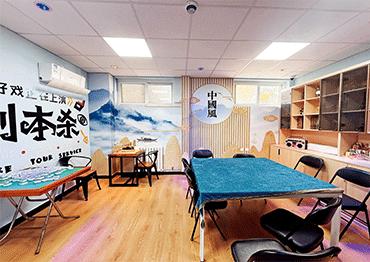
A behavior therapy room at Beijing Huilongguan Hospital, Beijing (Photo by CNS)

Feng Jun (pseudonym), a university sophomore, said he once played online games for 10 hours straight when he was a high school student. He was immersed so deeply in the virtual world that he got angry when his mother wanted him to log off.  

He knows obsessive gaming is a bad habit that is hard to overcome, but he never knew it is considered a disease. In 2019, gaming disorder was listed in the 11th version of the International Disease Category (ICD-11), falling in the category of “disorders due to addictive behaviors” just like gambling or smoking.  

Although the listing sparked controversy, many countries including China now offer treatment options. 

Diagnosis and Controversies 
Feng said he started gaming obsessively in junior high school, but in senior high school, his parents only allowed him to use a smartphone on weekends.  

“It had quite the opposite effect, so when I got my hands on the phone, I’d play for more than 10 hours a day,” he said.  

He saw other students at school with phones, and said he could not bear it. He saved up his pocket money to buy a secret phone. This meant he spent even more time gaming, and his grades suffered.  

Feng’s behavior shows clear signs of gaming disorder. According to the ICD-11, gaming disorder is a pattern of “persistent or recurrent gaming behavior” such that it takes precedence over daily life and continues despite negative consequences.  

“We have to simultaneously meet three characteristics to make a definite diagnosis of gaming disorder: first, being out of control, meaning you control when to start and stop gaming, and how and where they play. Then gaming has become the most important thing in one’s life, overriding other things like eating, sleeping, going to school and other interests, and finally one does not care about the bad consequences of gaming, even though they are clear about that,” Zhong Na, deputy director of the rehabilitation department at Shanghai Mental Health Center, told NewsChina.  

After gaming disorder was listed as a disease in 2019, some gaming companies in Europe and North America pushed back, issuing a joint statement which claimed there was insufficient evidence to support this diagnosis, and that it could be covering up other issues such as depression, media reported.  

Zhong said that controversies around gaming disorder concentrate on fears about minors being “labeled” or with “exaggerated diagnoses,” but she argued that gaming disorder was listed by the ICD because clinically, there is an enormous number of people in need of treatment.  

“Giving gaming disorder a disease diagnosis helps promote normative study and intervention,” Zhong said. “Generally speaking, the current diagnosis of gaming disorder is relatively conservative,” she added.  

Yang Kebing, director of the addiction medical center at Beijing Huilongguan Hospital, told NewsChina that physicians now have clear criteria for diagnosis and patients’ clinical manifestations, and the only area for discussion is how severe the addiction is.  

“Because some patients conceal key information like how long they play, we have to consult parents and teachers too. And not all different types of clinics have the same ability to diagnose mental health conditions like this as they don’t have experienced physicians, so there can be differences in diagnoses,” he said.  

Some experts believe gaming disorder is an evolving concept that may be adjusted in the future. Yang agrees, saying the problem is not just obsessive gaming but uncontrolled use of the whole internet, including social media and short video platforms like TikTok. The concept of “gaming disorder” may be too narrow to cover all those addictive behaviors.  

“In the future, we may develop a broader diagnosis, such as ‘internet use disorder’ to cover more complicated addictive behaviors,” he said. 

High Risk for Youth 
In July 2019, the psychiatry branch of the Chinese Medical Association and several other institutions published a “common understanding” on the prevention and treatment of gaming disorder, revealing that based on research, the prevalence of gaming-related disease was 3.5 percent to 17 percent, with the average rate of gaming disorder stable at around 5 percent. The common understanding also pointed out that the case rate of gaming disorder may be higher in Asian countries than in European and American countries, with males, children and teenagers predominating.  

Zhang Jintao, a physiology professor at Beijing Normal University, told NewsChina that people aged between 10 and 25 are at the highest risk for gaming disorder, lured by intense visual-audio stimulation and rapid, clear and abundant positive feedback.  

One game designer who spoke to NewsChina on condition of anonymity said when they design games, they set tasks that are precisely timed to provide rewards. Many of the development team studied psychology or are experienced gamers, and they understand what makes players continue gaming, which is one of their main aims.  

“Games have many positive functions, but it’s true that a great many professionals are trying hard to extend playing time,” Zhang said. 

Zhang pointed out that some brain functions do not fully develop until the age of 25, which is an added risk factor. The functions include rational thinking, planning ability and logical thinking. Games appeal to the young as they are more compulsive, adventurous and emotional than older people. But the case rate of gaming disorder gradually drops when people start working or get married.  

According to Yang Kebing, gaming disorder often goes alongside other symptoms, usually depression, attention deficit hyperactivity disorder (ADHD), anxiety and obsessive compulsive disorder (OCD), and sufferers can become violent.  

“Few of my patients suffer just from gaming disorder. Around 70-80 percent also have other mental diseases,” Yang said. “Many weren’t that interested in online games at first. But when those with depression, for example, are feeling low and have little interest in anything around them, gaming brings them happiness for a while, like a way of self-healing. When they stop, they find the real world is even darker than before so they become reliant on gaming until it develops into a disorder,” he added.  

“So, gaming disorder interplays with other mental diseases and they aggravate each other,” he said.  

According to Yang, the mechanism that makes people gaming addicts is similar to other addictive behaviors. It stimulates the brain’s reward circuit, and this constant stimulation develops into addiction. When the stimulation decreases, people display withdrawal symptoms like being uncomfortable, anxious and irritable.  

Gaming disorder patients are described as being highly impulsive, highly neurotic and introverted. But the disease is also influenced by biological, social and cultural factors.  

“The higher rate of gaming disorder in eastern and southeastern Asian countries is related to intense educational competition, the spread of electronic products, weakened social intercourse in the real world, and campus bullying – these easily drive children into the virtual world,” Yang said.  

Gaming disorder causes both physical and mental problems, according to Zhang. “Long-term gaming causes deteriorating eyesight, and being sedentary increases the burden on bones, muscles and joints. It also causes a vicious cycle of anxiety and pressure, and feelings of regret and isolation,” he said.  

“Research shows that gaming disorder changes the functions and structures in the brain. When there are changes to how the prefrontal cortex functions, people’s ability to rationally weigh advantages and disadvantages is impacted. They become addicted to the thrill of instant small returns,” he added.  

“Gaming disorder robs people of the best time in their life. Even if they’re no longer addicted when they get older, the damage is done. It can be hard to recover the injured [brain] functions, and in some severe cases, sufferers become socially withdrawn. For example, the otaku subculture in Japan is mostly addicted to online games,” Yang said. Otaku is used to describe young people who are obsessed with interests such as gaming, anime and manga, often to the detriment of social interactions. 
Acting Out 
Yang revealed his hospital can tailor treatment to each patient, and while there is no special intervention or medication, psychological treatment is generally effective.  

“Some patients really want to change and quit their addiction, but they don’t really understand the extent of the problem, so they act out,” Yang said.  

A mix of motivational talks and cognitive behavior therapy for those who also suffer anxiety might help them recognize and adjust their negative thinking and improve their mood and behavior, he said. Current treatment focuses on psychological treatment supplemented by medication, physical treatment and rehabilitation.  

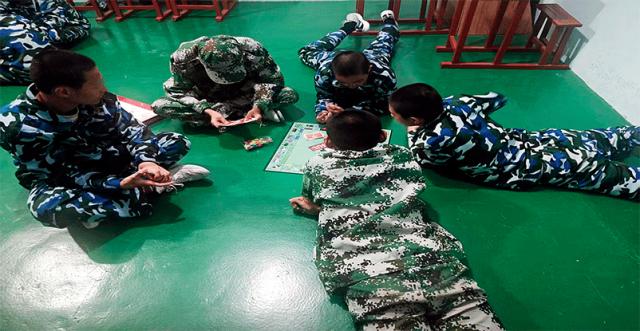
For some acute gaming addicts who experience withdrawal symptoms, Yang’s hospital uses “replacement therapy,” where non-electronic group games replace online games, such as dramatizations and role playing. This helps guide patients to acquire positive emotional experiences to reduce loneliness and establish interpersonal relations to replace the satisfaction patients get from online games.  

“Like quitting gambling and smoking, treating gaming disorder is quite difficult and it may easily recur. Parents should temper their expectations as their children probably won’t recover immediately when they’re admitted to hospital,” Yang said, adding treatment must be sustained and patients might be readmitted if they relapse.  

“The treatment doesn’t aim to stop them from ever playing a game again, we focus on controlling these uncontrolled behaviors,” he said.  

Yan Yunhe, a psychologist and social worker at the Inner Mongolia University of Finance and Economics in Hohhot, told NewsChina social workers play a big role in treating gaming disorder, as they can develop therapeutical interventions alongside family, classmates and teachers.  

“There’s been research on university students showing that self-awareness training may change a sufferer’s desire for and emotional response to online games and thus reduce their psychological reliance on games,” Zhang Jintao said.  

Feng Jun agrees, saying he now games much less after getting interested in outdoor sports. He gets a sense of achievement from climbing. “When I found new interests, I no longer desired the positive feedback from online games,” he said. 

Early Intervention 
What troubles physicians is that many patients refuse or resist treatment, and many parents have little knowledge about medical treatment options.  

It is a common problem worldwide. A 2023 report by the Japan Gaming Disorder Investigation Institute showed that only 30 percent of respondents would know who to consult if they fell victim to gaming addiction. Among them, only 1 percent have sought advice.  

In 2019, Shanghai Mental Health Center launched a small nationwide investigation and found 15 percent of the surveyed minors were at high risk. They had overused the internet but not yet reached the level of “addiction,” while another 5 percent already suffered from gaming disorder. 

“We found many minors that have reached the diagnosis criteria for gaming disorder don’t go to hospital, and many have already experienced serious functional impairment, self-isolating for a long time. It’s hard for them to get appropriate treatment,” Zhong Na told NewsChina.  

“Gaming disorder sufferers seldom seek help on their own initiative, and even though their parents might force them to go to hospital, they refuse to be hospitalized. Many parents even go to hospital alone, but the doctors can’t give accurate diagnoses without seeing the patient,” Yang said.  

“The majority of parents go to a hospital just to try, and the sufferers might ask to be discharged after just a few days’ treatment,” he added.  

“Many of my colleagues have a child that’s addicted to gaming, but they didn’t go to hospital, because they had no idea how effective the treatment is,” a mother of a junior high school student in Shenzhen, Guangdong Province, told NewsChina on condition of anonymity.  

Yang partly attributes parents’ misunderstandings about medical treatments for gaming to “addiction treatment centers” that have already been operating in China for many years.  

These institutions either have little effect, as their treatment is often not aligned with evidence-based medicine, or have been accused of multiple instances of abuse, including physical punishments. This has contributed to parents losing trust in all methods of treatment.  

Zhang emphasizes the importance of early treatment. “Compared to seeking help after there have been serious consequences, it’s far better to prioritize prevention and control,” he said.  

The “common understanding” puts emphasis on early recognition, early diagnosis and early intervention. It calls for medical institutions, schools, families and society to make joint efforts in prevention.  

“Shanghai Mental Health Center and several other institutions in the city launched joint prevention programs involving families and schools to identify potential addictive behaviors as early as possible and take measures to prevent them from developing into gaming disorder,” Zhong said.  

According to Yang, prevention of gaming disorder is clinically divided into three phases: recognition and public awareness, measures by schools and families to prevent gaming disorder, and intervention for those already diagnosed.  

“Parents should immediately seek help from a hospital if they find their child’s grades are slipping and their social interactions are declining. After an evaluation, even though a minor has not yet reached the diagnosis criteria for gaming disorder, doctors can help parents with time management and emotional control to help repair their relationships with their children,” he said.

Beijing Huilongguan Hospital uses sandplay as a mental health treatment (Photo by CNS)

Print