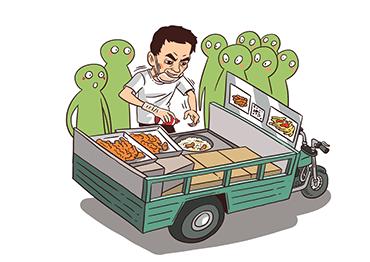
• Pre-made meals are completely unsuitable for Chinese cuisine. Anyone who cooks Chinese food regularly knows that most dishes taste best when freshly made. These meals are acceptable only at fastfood restaurants with low prices. Consumers won’t tolerate middle- or high-end restaurants charging premium prices for frozen food.
• I can buy pre-made meals at Sam’s Club and heat them at home. Why should I pay restaurant prices for something I can easily prepare myself?
• Restaurants can serve pre-made dishes, but such food shouldn’t dominate China’s catering industry. Authorities should set clear standards and strengthen supervision to ensure food safety and quality. Source: Zhihu
Zhu Yi, associate professor, College of Food Science and Nutritional Engineering, China Agricultural University: “In terms of taste, pre-made meals may not earn perfect scores, but they can at least pass. Consumers should set aside their prejudice against pre-made food and learn to read ingredient and nutrition labels. The key issue is ensuring consumers are clearly informed about whether pre-made meals are used and that their choices are respected.” Source: China Youth Daily
Ma Lihong, senior partner, Beijing DHH Law Firm: “It’s necessary to introduce laws and regulations requiring food manufacturers and restaurants to provide explicit labeling on pre-made food packages and menus, detailing additives, ingredients, nutritional information and reheating instructions.” Source: Legal Daily
People��s Daily, State-owned newspaper: “Restaurants should offer transparent information about premade dishes so consumers can make informed choices. The real challenge surrounding pre-made meals is not technical. It lies in rebuilding consumers’ trust.” Source: People’s Daily website
A prominent influencer’s post-meal complaint recently stirred up debate over pre-made meals that social media is still having trouble digesting, prompting a response from food safety authorities.
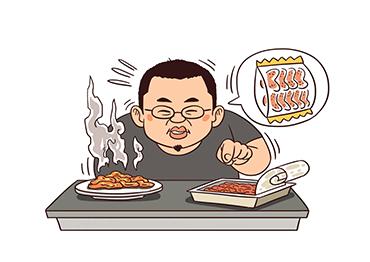
Luo Yonghao, a former teacher turned online celebrity, posted to Sina Weibo on September 10 about his “truly disgusting” dining experience at the nationwide chain Xibei, which serves northwestern Chinese cuisine.
Criticizing it for serving dishes that were “almost all pre-made and so expensive,” Luo also called on authorities to legislate mandatory labeling for restaurants to indicate whether pre-made meals are used.
The next day, Xibei’s founder Jia Guolong responded in an interview with Shanghai-based The Paper, stressing the distinction between “pre-prepared foods” and “pre-made meals.” He insisted his restaurants do not serve premade meals. Jia even invited diners to view the kitchens of Xibei’s nearly 400 outlets to prove his claim.
However, sleuthing netizens posted images seemingly confirming that Xibei used packaged and frozen ingredients. Xibei issued a public apology on September 15, admitting that its practices had fallen short of consumer expectations and pledging to improve operations.
The dispute sparked discussions about the growing use of pre-made food in China’s dining industry. Many netizens argued that pre-made dishes are not inherently unacceptable, but that restaurants mislead consumers by selling them at high prices without disclosure.
Some said they expect frozen pre-made dishes to be sold in supermarkets or convenience stores, but freshly cooked meals when dining out. Others took a more neutral stance, saying restaurants should not be banned from using pre-prepared ingredients as long as prices are reasonable and labeling is transparent.
On September 21, the State Council Food Safety Office announced plans to accelerate the introduction of standards for pre-made meals and labeling requirements for restaurants.
 Old Version