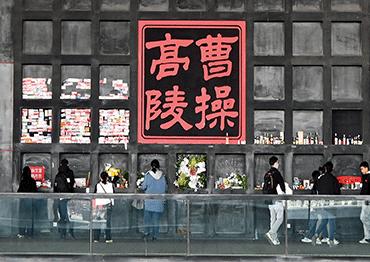
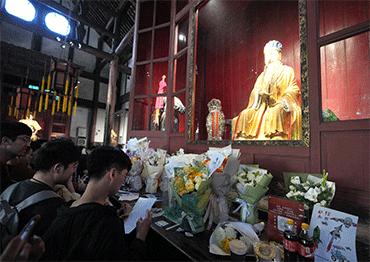
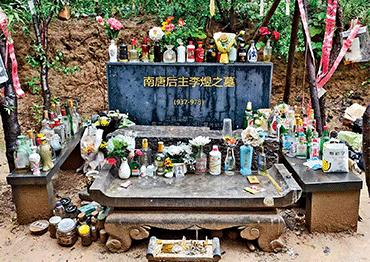
Most history fans first fall for ancient literature, then delve into their creators' lives. Zhu Qing adores Li Yu, captivated initially by his poetry and later by his life story. To her, he was a vivid, endearing person, defined by a fate steeped in regret: born a noble prince, forced to be emperor and dying a defeated ruler amid dramatic rises and falls. Offerings of soil and wine from his former homeland reflect visitors' sympathy for his lifelong sorrow and unfulfilled wish to return home.
Centuries apart, modern people empathize with these figures' struggles. When troubles arise, Zhu Qing looks to Li Yu and feels that his dramatic life makes ordinary worries feel trivial.
According to Zhu, nearly all beloved historical icons led imperfect, regret-filled lives. Li Yu is celebrated for both his literary talent and tragic downfall, and Huo Qubing for his military genius and early death. Others are admired for failed military or ruling ambitions, their unfinished stories inspire countless fan works. "We're drawn to them because their lives were never perfect," college student Yun Que said. Their stories never reached a satisfying conclusion. Their lives ended prematurely, leaving behind obvious regrets and gaps. Such empathy mirrors modern life: Tangled paths, limited choices and an uncertain future make unfulfilled dreams widely relatable. Many people find emotional comfort in these historical destinies.
French sociologist Maurice Halbwachs' Cultural Memory Theory states memory is not merely personal, but a social construct shaped by shared values and connections. Young people's tomb visits and fandoms embody this theory. They revive and redefine the collective memories of historical figures, engaging with them through heartfelt emotion.
The trend has transformed once obscure sites. In late 2025, history enthusiast Jiang Chengyu visited Huo Qubing's tomb in Shaanxi Province, where letters addressed to the "young general" now pile up. Just two years prior, only two bouquets and one card were laid there. The nearby Maoling Museum, where Huo Qubing's grave is located, put 80 of the letters on show, revealing that Huo Qubing is considered a new cultural icon.
At Zhuge Liang's tomb in Hanzhong, Shaanxi, a young mother shared her hardships balancing childcare and an unfulfilling job. She came to admire Zhuge Liang's perseverance, and asked him to send greetings to her late mother. Many visitors also wrote of setbacks in study and work, drawing inspiration from ancient figures to better themselves.
These historical icons serve as modern emotional anchors. Fandom for them is one-sided affection: People seek comfort in history and infuse it with their own feelings, with tomb visits becoming a heartfelt ritual.
Jiang Chengyu told NewsChina he has observed the trend growing since 2024. Even remote, little-known tombs now draw crowds, with travel tips and personal stories widely shared online. He views the movement positively, seeing it as a way for people to show reverence and reconcile the ancients' unfulfilled dreams, like a quiet dialogue with history.
Many have found peace and strength this way. Upset by family pressure to go on blind dates, student Yun Que visited the tomb of Liu Yuxi (772-842) in Henan. Exiled for decades, the Tang poet remained upbeat and open-minded. Reflecting on his life and listening to locals singing opera nearby calmed and cheered her. "His life was filled with hardships, yet he was renowned for his optimism and open-mindedness," Yun said.
During stressful exam periods, Yuan Wenyi found solace in poems by Yuan Zhen (779-831), a prominent poet, writer, and statesman of the Tang Dynasty, and Bai Juyi (772-846), another Tang-era poet and official of the Tang. Their perseverance reignited her drive.
A long-time admirer of Su Shi (1037- 1101) a literati-statesman of the Northern Song Dynasty, Jiang Chengyu draws wisdom from his optimism amid adversity. At the Guihai Stele Forest Museum in Guilin, Guangxi Zhuang Autonomous Region, he saw a stele that was carved to discredit Su Shi and other scholars, who ultimately won lasting respect from history.
"Life is much the same," he said. "Temporary gains, losses and criticism fade with time, but history delivers the final judgment. This is the greatest lesson historical sites have taught me."
 Old Version